Categories
Hearing Devices/Aids

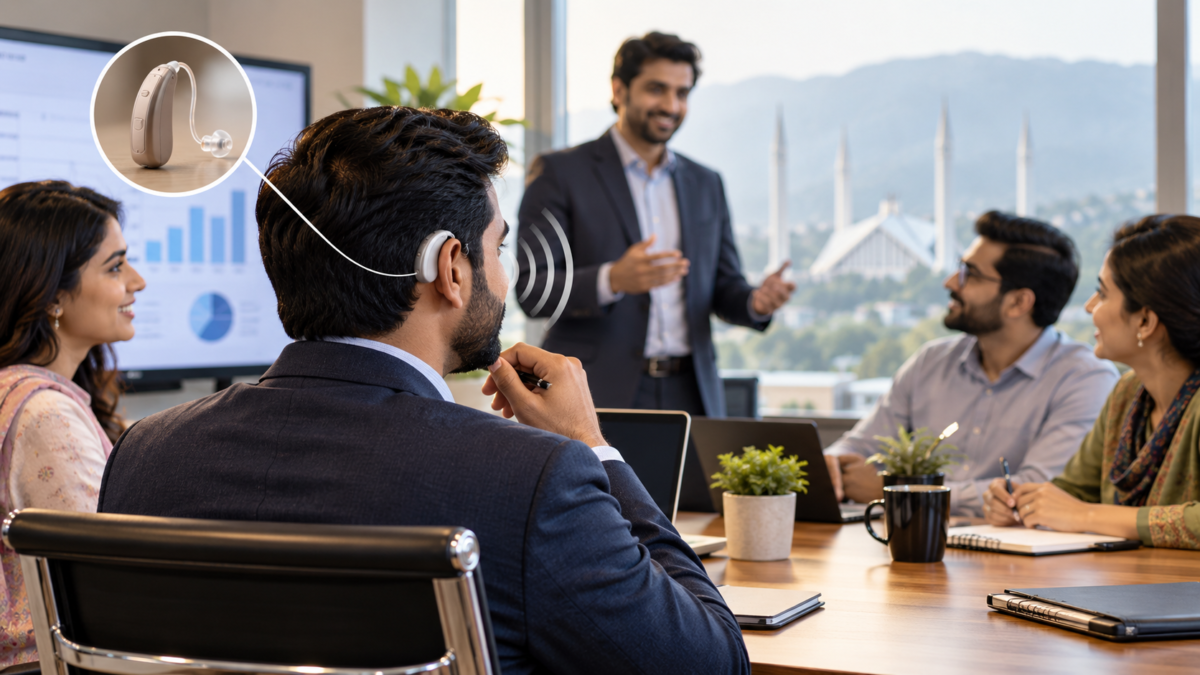
Hearing Aids at Work: How to Communicate Better in Office Meetings and Avoid Career Damage in Pakistan

Your boss is speaking. The conference room is buzzing. Three colleagues are presenting simultaneously. You smile and nod but you didn’t hear a single word.

This happens to millions of working professionals in Pakistan every single day.

Undiagnosed or untreated hearing loss doesn’t just affect your social life. It directly threatens your career. Studies show that employees with untreated hearing loss are 50% more likely to be passed over for promotions, struggle with performance reviews, and face workplace isolation.

But here’s the hopeful part: Hearing aids at work aren’t a career liability they’re a competitive advantage.

This guide shows Pakistani professionals exactly how to use hearing aids confidently in the workplace, communicate better in meetings, and protect your career advancement. Whether you work in corporate offices in Islamabad, Karachi, Lahore, or run your own business, these strategies work.

Section 1: How Hearing Loss Damages Your Professional Career

1.1 The Silent Performance Problem

Hearing loss in the workplace doesn’t announce itself loudly. It creeps in quietly:

What Employers Notice (But Won’t Say):

  • You ask colleagues to repeat information
  • You miss important details in meetings
  • You struggle with phone calls
  • Your contributions become less frequent
  • You seem “disconnected” from the team

What Colleagues Observe:

  • “Why does Ali never join our coffee chats?”
  • “Fatima always asks ‘what?’ in meetings”
  • “He seems out of touch with the team”
  • “She’s not as sharp as she used to be”

Career Impact:
❌ Lower performance ratings
❌ Fewer promotion opportunities
❌ Reduced salary increments
❌ Exclusion from important projects
❌ Decreased job security

1.2 The Real Statistics (Pakistan Context)

Research from Pakistan’s medical institutions shows:

75% of Pakistani professionals with hearing loss:

  • Never disclose it to their employer
  • Experience career stagnation
  • Feel anxious about job security
  • Avoid professional development opportunities
  • Consider leaving their jobs

50% report experiencing:

  • Reduced productivity
  • Workplace relationship strain
  • Decreased confidence in meetings
  • Missed promotions
  • Job satisfaction decline

The Cost: Pakistani companies lose approximately PKR 45-60 billion annually due to hearing loss-related workplace inefficiency.

1.3 Why Pakistani Workplaces Make It Worse

Pakistan’s workplace culture has unique challenges for employees with hearing loss:

Challenge 1: Loud Office Environments

  • Most Pakistani offices lack proper sound treatment
  • Open office layouts with minimal partitions
  • Air conditioning/machinery noise
  • Multiple conversations simultaneously
  • Meetings in echo-prone conference rooms

Challenge 2: Social & Cultural Stigma

  • Disability disclosure seen as weakness
  • Fear of being stereotyped or sidelined
  • Pressure to “just manage” without help
  • Limited workplace accommodation culture
  • Reluctance from management to adapt

Challenge 3: Limited Accommodation Awareness

  • Most Pakistani HR departments lack hearing loss protocols
  • No structured accommodation requests process
  • Minimal workplace technology support
  • Limited knowledge about hearing aid benefits

Section 2: How Modern Hearing Aids Transform Office Communication

2.1 The Workplace Hearing Aid Advantage

Modern hearing aids do far more than just amplify sound. In a professional setting, they:

Better Meeting Participation:
✔️ Focus on speaker while filtering background noise
✔️ Capture key points from multiple speakers
✔️ Reduce fatigue from concentrating so hard
✔️ Allow confident participation without struggling

Improved Telephone Communication:
✔️ Crystal-clear phone conversations
✔️ Video call clarity (with wireless connectivity)
✔️ Conference call participation without anxiety
✔️ Client communication confidence

Enhanced Relationship Building:
✔️ One-on-one conversations with colleagues
✔️ Casual office chats and socializing
✔️ Networking events and professional gatherings
✔️ Team bonding activities

Confidence & Presence:
✔️ Increased speaking up in meetings
✔️ Better decision-making input
✔️ Stronger professional relationships
✔️ Leadership capability demonstration

2.2 Advanced Hearing Aid Features for the Modern Workplace

Today’s hearing aids come with workplace-specific technology:

Directional Microphones: Focus on the speaker directly in front of you while minimizing background noise from sides and back. Perfect for conference room meetings where you need to hear the presenter clearly.

Noise Reduction Technology: Automatically distinguishes between speech and office background noise. Your hearing aids literally “tune out” the printer, air conditioner, and neighboring desk conversations.

Wireless Connectivity: Connect directly to your office phone, computer, or presentation equipment. Receive audio directly in your ears without struggling to hear from across the room.

Multiple Listening Programs: Switch between different settings for:

  • One-on-one office conversations
  • Conference room meetings
  • Phone calls
  • Open office environments
  • Video conferencing
  • Presentation attendance

Telephone/Mobile Optimization: Special settings for telephone calls ensure you hear every word clearly, crucial for client-facing roles and important business calls.

All-Day Comfort: Modern hearing aids provide 16+ hours of comfort with digital noise management, meaning you won’t feel fatigued by day’s end.

Section 3: Workplace Hearing Aid Types and Professional Appropriateness

3.1 Which Hearing Aids Look Most Professional?

Behind-the-Ear (BTE) – The Professional Choice

  • More visible but highly professional-looking
  • Excellent sound quality for meetings
  • Easier to adjust and manage
  • Most durable for busy workplaces
  • Best for telephone use

Receiver-in-Canal (RIC) – The Discreet Option

  • Nearly invisible
  • Natural sound quality
  • Comfortable for extended wear
  • Professional appearance
  • Great for client-facing roles

Completely-in-Canal (CIC) or Invisible-in-Canal (IIC) – The Invisible Solution

  • 100% invisible
  • Perfect if appearance is concern
  • Requires frequent adjustments
  • Battery changes can be challenging
  • Best for low-hearing-loss situations

In-the-Canal (ITC) – The Balanced Approach

  • Partially visible but discrete
  • Good sound quality
  • Comfortable for 8-10 hour workdays
  • Professional appearance
  • Easier to manage than CIC

Professional Recommendation: For most office workers in Pakistan, RIC or discrete BTE hearing aids offer the best balance of professional appearance, functionality, and workplace performance.

Section 4: Preparing for Work with Hearing Aids

4.1 Pre-Workplace Setup (First 2 Weeks)

Week 1: Adjustment at Home

  • Wear hearing aids 2-4 hours daily
  • Get used to sound quality and volume
  • Practice with personal phone calls
  • Listen to podcasts or videos
  • Adjust to different listening environments

Week 2: Gradual Workplace Introduction

  • Start with quiet office time (early morning)
  • Practice with one-on-one conversations
  • Attend non-critical meetings
  • Build confidence before big presentations
  • Get multiple fittings adjusted as needed

Before Your First Full Day:
✔️ Schedule fitting appointment with audiologist
✔️ Practice hearing aid insertion/removal
✔️ Learn about adjusting volume and settings
✔️ Understand battery management
✔️ Know how to troubleshoot common issues

4.2 Technical Preparation

Office Technology Compatibility:

Your Hearing Aids Should Work With:

  • Office phone systems
  • Mobile phones (smartphone compatibility crucial)
  • Video conferencing software (Zoom, Teams, Google Meet)
  • Presentation equipment
  • Computer audio
  • Conference room microphones

Ask Your Audiologist: “Which hearing aids will work best with my office technology?” A quality audiologist will recommend devices compatible with your specific workplace setup.

Test Before Day One:

  • Connect to your office phone
  • Use with your computer
  • Test video call clarity
  • Practice switching programs
  • Ensure Bluetooth connectivity works

4.3 Spare Hearing Aids Strategy

Never Put All Eggs in One Basket:

For critical professional roles, consider having backup hearing aids:

✔️Primary Hearing Aids: Your main daily devices
✔️Backup Devices: Older or spare hearing aids for emergencies
✔️Emergency Batteries: Keep 2-3 months supply at office

Why This Matters:

  • A dead battery in the middle of a client call is a career risk
  • A malfunctioning device during an important meeting is unprofessional
  • Having backup shows you’re prepared and professional

Cost-Effective Approach: Ask your audiologist about certified pre-owned hearing aids for backup. This costs 40-50% less than new devices.

Section 5: Professional Etiquette with Hearing Aids at Work

5.1 To Disclose or Not to Disclose?

The Pakistani Workplace Dilemma: Many professionals in Pakistan worry: “If I tell my employer about my hearing loss, will they think I’m less capable?”

The Answer: Strategic disclosure is often beneficial.

When to Disclose:

✔️ DISCLOSE IF:

  • Hearing loss visibly affects your job performance
  • You need workplace accommodations
  • Colleagues ask why you’re wearing hearing aids
  • You’re applying for a new position
  • You need to explain previous communication struggles
  • Your role involves meetings and communication as core function

❌ DON’T NEED TO DISCLOSE IF:

  • Your hearing aids work well and no issues arise
  • It doesn’t affect your job performance
  • You prefer privacy (your right)
  • Your role doesn’t require disclosure
  • You’ve managed without accommodations

How to Disclose Professionally:

To Your Manager: “I’ve recently started using hearing aids to address some hearing loss. This will actually improve my communication in meetings and client calls. I wanted to let you know so you’re aware. It doesn’t affect my work capability it enhances it.”

To HR Department: “I’m wearing hearing aids. If there are any workplace accommodations that would help like better seating in meetings or quiet spaces for calls I’d appreciate discussing options. I’m committed to maintaining my performance standards.”

To Colleagues: Keep it casual and matter-of-fact: “I wear hearing aids. If you’re speaking to me and I don’t hear you, just repeat or tap my shoulder. No big deal.”

5.2 Professional Hearing Aid Etiquette

Meeting Room Conduct:

✔️ Arrive early and sit strategically (closer to speaker)
✔️ Face the person speaking when possible
✔️ Use directional microphone setting if available
✔️ If you didn’t hear something, ask professionally: “Could you repeat that last point?”
✔️ Don’t fake understanding politely clarify
✔️ Take notes to reduce reliance on hearing everything

One-on-One Conversations:

✔️ Face the person directly
✔️ Ask them to face you when speaking
✔️ Choose quieter locations for important discussions
✔️ Don’t be embarrassed asking for repetition
✔️ Thank people for their patience

Phone Calls:

✔️ Use hearing aid phone settings/programs
✔️ Avoid speaker phone if confidentiality is needed
✔️ In open offices, use quiet spaces for calls
✔️ Don’t rush take time to understand fully
✔️ Email follow-ups for critical information

Presentation Attendance:

✔️ Sit closer to screen/speaker
✔️ Request materials in advance
✔️ Ask questions confidently
✔️ Contribute ideas despite hearing challenges
✔️ Never pretend to understand seek clarification

5.3 Confidence & Communication Strategies

Master These Professional Communication Techniques:

Strategy 1: Strategic Positioning Seat yourself in meeting rooms where you can see the speaker clearly and hearing aid microphones work optimally. First to arrive = best seat selection.

Strategy 2: Active Note-Taking Take detailed notes during meetings. This:

  • Reduces pressure to hear everything
  • Shows engagement
  • Provides backup documentation
  • Makes you look more professional

Strategy 3: Clarification Requests Instead of: “What?” or faking understanding
Say: “Could you clarify that last point?” or “How did you arrive at that conclusion?”

This demonstrates thoughtfulness, not hearing loss.

Strategy 4: Agenda Preparation Always request meeting agendas in advance. This helps you:

  • Prepare for technical terms
  • Anticipate discussion topics
  • Reduce cognitive load during meeting
  • Participate more effectively

Strategy 5: Follow-Up Communication After meetings, send emails summarizing key points. This:

  • Confirms your understanding
  • Provides documentation
  • Demonstrates thorough communication style
  • Masks any missed information

Strategy 6: Leverage Written Communication Use email and messaging apps when appropriate. Many professionals now prefer written communication anyway, which works perfectly for hearing aid users.

Strategy 7: Build Strong Relationships Colleagues who know you well are more patient and helpful. Invest in relationships it creates a supportive environment.

Section 6: Workplace Scenario Guide – Real Pakistani Office Situations

6.1 Conference Room Meeting

The Situation: You’re in a conference room with 8 people. Your boss is speaking from one end. Multiple people are providing input. Background noise from air conditioner. You’re struggling to follow.

Professional Response:

Before Meeting:
✔️ Sit 1-2 meters from the main speaker
✔️ Ensure you can see faces clearly
✔️ Use directional microphone setting
✔️ Have pad and pen ready

During Meeting:
✔️ Face the speaker when they talk
✔️ Take notes of key points
✔️ If you miss something, write note to ask colleague later
✔️ Or wait for natural pause and ask: “Can you summarize the key action items?”
✔️ Don’t apologize just participate confidently

After Meeting:
✔️ Email summary to confirm understanding
✔️ Ask colleague if you missed anything important
✔️ Document decisions made

6.2 One-on-One Meeting with Boss

The Situation: Private meeting about performance review. Boss is speaking quickly. Formal setting. Very important you understand everything.

Professional Response:

Before Meeting:
✔️ Request agenda in advance
✔️ Prepare notes on discussion points
✔️ Choose quieter location (closed office, not open area)

During Meeting:
✔️ Face your boss directly
✔️ Ask them to face you too (frame as preference: “I hear better face-to-face”)
✔️ Take detailed notes
✔️ Ask clarifying questions confidently
✔️ Repeat back key feedback: “So if I understand correctly, you want me to improve X by improving Y?”

After Meeting:
✔️ Email summary of key points
✔️ Confirm deadlines and expectations
✔️ Demonstrate engagement with feedback

6.3 Open Office Conversation

The Situation: Colleague approaches your desk. Multiple conversations happening around. You’re straining to hear. Feeling isolated.

Professional Response:

Quick Conversation:
✔️ Face your colleague
✔️ Minimize distractions
✔️ If in doubt, ask them to step into meeting room
✔️ Be friendly and open

Longer Discussion:
✔️ Suggest moving to quieter area
✔️ Frame positively: “Let me give you my full attention”
✔️ Close office door or find quiet corner
✔️ Ensure face-to-face positioning

6.4 Client Call

The Situation: Important client call. You need to hear every word. Reputation depends on it. Anxiety is high.

Professional Response:

Before Call:
✔️ Use quiet, private space
✔️ Close door and minimize interruptions
✔️ Use hearing aid phone program if available
✔️ Have materials/notes ready
✔️ Test connection/audio quality beforehand

During Call:
✔️ Focus completely on conversation
✔️ Take notes
✔️ If you miss something: “I want to make sure I have this right…”
✔️ Confirm action items before call ends
✔️ Don’t rush clarity is professionalism

After Call:
✔️ Email summary of discussion and commitments
✔️ Verify understanding with colleague
✔️ Document agreements

6.5 Professional Presentation/Training

The Situation: You’re attending a formal presentation or training. Information is critical. You need to absorb details.

Professional Response:

Before Event:
✔️ Request presentation materials in advance
✔️ Review agenda and learning objectives
✔️ Plan your seating (closer to screen/speaker)
✔️ Prepare questions in advance

During Event:
✔️ Sit in front area
✔️ Have pen and paper ready
✔️ Take notes liberally
✔️ Ask questions confidently
✔️ Use breaks to seek clarification

After Event:
✔️ Review notes and materials
✔️ Email summary to manager
✔️ Implement learning from training

Section 7: Workplace Accommodations You Can Request

7.1 Legal & Ethical Accommodations in Pakistan

Under Pakistan’s labor laws and international disability standards, reasonable workplace accommodations are fair to request.

You Can Request:

Environmental Accommodations:

  • Quieter workspace or modified seating
  • Use of private meeting rooms for important conversations
  • Reduced ambient noise (quieter office area)
  • Better lighting (for lip-reading if needed)
  • Accessibility to quiet spaces for concentration

Communication Accommodations:

  • Meetings in quieter locations
  • Meeting agendas provided in advance
  • Written meeting summaries/notes
  • Email summaries of verbal information
  • Preference for written communication when possible

Technology Accommodations:

  • Compatible phone systems
  • Video conferencing when preferred over phone
  • Presentation materials in advance
  • Captioning for training videos
  • Hearing loop systems in meeting rooms

Scheduling Accommodations:

  • Slightly flexible meeting times for preparation
  • Advance notice of important discussions
  • Sufficient time between back-to-back meetings

Most accommodations are free or very low-cost to implement.

7.2 How to Request Accommodations Professionally

Frame Your Request Positively:

❌ Wrong: “I can’t hear in meetings. I need accommodation.”
✔️ Right: “I’d like to suggest a seating arrangement in meetings that will help me contribute more effectively.”

❌ Wrong: “My hearing loss makes me unable to…”
✔️ Right: “To ensure I’m fully engaged in important discussions, I’d like to…”

Approach Your HR Manager:

“I’ve recently started using hearing aids and want to ensure I can perform at my best. I’d like to discuss a few simple accommodations that would help. Most are no-cost solutions like meeting room selection and agenda sharing.”

Make It About Performance:

Frame all accommodations as ways to improve your job performance, not special treatment. Employers respond better to: “This will improve my productivity” than “I have a disability.”

Section 8: Technology Solutions for Workplace Hearing

8.1 Latest Hearing Aid Technology for Office Use

Direct Audio Streaming: Modern hearing aids stream phone audio, computer audio, and video conference directly to your ears. No more struggling to hear through speakers.

Artificial Intelligence (AI) Hearing Aids: AI-powered devices automatically adjust to office environments in real-time, learning your preferences and optimizing settings for different scenarios.

Smartphone Apps: Control your hearing aids directly from your phone:

  • Adjust volume
  • Switch listening programs
  • Find your hearing aids if lost
  • Stream phone calls
  • Customize settings per location

Real-Time Conversation Subtitles: Some modern apps provide live captions during conversations, perfect for noisy office environments or phone calls.

Hearing Loop Systems: Advanced office buildings install hearing loop systems in conference rooms. Your hearing aids connect wirelessly to these systems, receiving crystal-clear audio directly.

8.2 Supporting Office Technology

Recommended Device Setup:

Essential:
✔️ Compatible office phone system
✔️ Smartphone with hearing aid app
✔️ Computer with video conferencing capability

Highly Recommended:
✔️ Video conferencing software that works well with hearing aids
✔️ Wireless microphone system for presentations
✔️ Quality headset for backup option

Nice to Have:
✔️ Hearing loop system in meeting rooms
✔️ Automatic captioning on video calls
✔️ Professional sound quality in office environment

Section 9: Managing Hearing Aid Maintenance at Work

9.1 Battery Management & Power Solutions

Battery Fatigue: Most hearing aid batteries last 5-7 days. A full workday uses significant battery life, especially with constant meetings.

Office Battery Strategy:

  • Change batteries weekly (Friday evening before leaving office)
  • Keep 2-3 spare sets in office drawer
  • Consider rechargeable hearing aids (charge overnight)
  • Never run on low battery for important meetings

Rechargeable Advantage: If your schedule allows, rechargeable hearing aids eliminate battery anxiety. Charge overnight, come to office fully powered.

9.2 Hearing Aid Care at Work

Keep Your Hearing Aids Professional:

✔️ Clean daily (morning/evening)
✔️ Avoid moisture in office bathrooms
✔️ Store safely at night
✔️ Check for earwax buildup
✔️ Inspect for damage regularly
✔️ Keep maintenance schedule with audiologist

Emergency Supplies for Office:

  • Replacement batteries
  • Cleaning brush
  • Dry storage container
  • Replacement ear piece (if using BTE aids)
  • Contact details of audiology center

When Hearing Aids Malfunction:

  • Have backup device (used hearing aid or older model)
  • Know your audiologist’s emergency contact
  • Keep maintenance appointment schedule visible
  • Never miss important meeting due to hearing aid issue

9.3 Workplace Microphone & Speaker Etiquette

Using Office Equipment Professionally:

When speaking in meetings:
✔️ Use microphone if provided
✔️ Speak clearly into microphone
✔️ Don’t adjust microphone excessively
✔️ Let audio technician handle equipment

When listening:
✔️ Ask for microphone if speaker is far away
✔️ Request volume adjustment professionally
✔️ Don’t draw attention to hearing aid struggles
✔️ Ask technical questions to organizer

Section 10: Success Strategies for Career Advancement with Hearing Aids

10.1 Positioning Yourself for Promotion

Hearing loss shouldn’t hold you back from advancement. Strategic positioning ensures it doesn’t.

Leadership Visibility:

  • Participate confidently in meetings (prepare well)
  • Contribute thoughtful ideas (take notes, think deeply)
  • Build strong relationships (people trust you)
  • Demonstrate reliability (follow through on commitments)
  • Show professional growth (continuous improvement)

Meeting Contribution Strategy: Before each meeting:

  1. Review agenda (if available)
  2. Prepare 2-3 thoughtful contributions
  3. Note key points to mention
  4. Plan questions to ask

This preparation compensates for any hearing challenges and makes you look more thoughtful.

Documentation of Achievements:

  • Email summaries of your work
  • Document accomplishments promptly
  • Share successes with manager
  • Build visible track record

Hearing challenges disappear when your work speaks for itself.

10.2 Overcoming Workplace Hearing Loss Stereotypes

The Stereotype: “People with hearing loss are less capable”
The Reality: Many brilliant professionals use hearing aids successfully

Combat Stereotypes By:

✔️ Demonstrating excellence in your work
✔️ Being confident, not apologetic
✔️ Taking ownership of communication
✔️ Showing you’re professional and prepared
✔️ Building relationships through competence
✔️ Handling hearing challenges matter-of-factly

Never:
❌ Use hearing loss as excuse for mistakes
❌ Appear helpless or dependent
❌ Draw attention to communication struggles
❌ Miss important information due to lack of effort
❌ Apologize excessively for hearing loss

10.3 Building Professional Relationships Despite Hearing Loss

Stronger Relationships = Better Career Opportunities

One-on-One Relationship Building:

  • Suggest coffee meetings (better for hearing)
  • Have lunch with colleagues (casual conversation)
  • Attend team events (show engagement)
  • Participate in informal gatherings
  • Engage in meaningful conversations

Team Participation:

  • Contribute to team projects visibly
  • Help colleagues when possible
  • Participate in team discussions
  • Share ideas and perspectives
  • Show genuine interest in colleagues

Relationship Maintenance:

  • Remember personal details about colleagues
  • Follow up on their projects/lives
  • Show appreciation for help received
  • Build reputation for reliability
  • Demonstrate genuine care

Colleagues who like you personally are more patient and supportive of communication needs.

10.4 Addressing Workplace Hearing Loss Discrimination

Know Your Rights: In Pakistan, workplace discrimination based on disability is unethical and often violates labor laws.

If You Experience Discrimination:

Document Everything:

  • Date, time, and details of incidents
  • What was said or done
  • Who witnessed it
  • Your response
  • Impact on your work

Address Professionally:

  • Meet privately with manager/HR
  • Present incidents factually
  • Explain impact on your work environment
  • Request specific resolution
  • Ask for written documentation

Escalate if Needed:

  • Contact HR formally
  • Request workplace accommodation mediation
  • Involve labor representative if applicable
  • Document all communications
  • Know your company’s grievance procedure

External Support:

  • Contact Pakistan’s Department of Labor
  • Reach out to disability rights organizations
  • Consult employment lawyer if necessary
  • File formal complaint if harassment continues

Section 11: Real Pakistani Professional Success Stories

Case Study 1: Farah – Corporate Executive

The Challenge: Farah worked as Operations Manager in a Karachi software company. She started experiencing hearing loss around age 45 but hid it for 2 years, struggling in meetings and making mistakes.

The Crisis: After missing critical points in a client meeting, Farah finally got hearing aids. Initially, she worried about her career.

The Solution:

  • Disclosed to her manager professionally
  • Requested meeting accommodations
  • Used hearing aid technology to improve focus
  • Increased meeting contributions

The Result: Within 6 months, Farah’s performance improved noticeably. She was promoted to Senior Manager. Her colleagues actually didn’t mind her hearing aids they appreciated her improved communication.

Key Lesson: “My hearing aids didn’t end my career. Hiding them almost did. Being open and professional saved my career trajectory.”

Case Study 2: Ahmed – Sales Professional

The Challenge: Ahmed’s job as B2B Sales Manager in Lahore required constant phone calls and client meetings. Untreated hearing loss was killing his sales numbers.

The Crisis: Ahmed nearly lost a major account because he misunderstood client requirements on a call.

The Solution:

  • Got hearing aids with excellent phone quality
  • Used video calls instead of phone calls (with subtitles)
  • Took detailed written notes
  • Confirmed understanding via email
  • Built better client relationships through clear communication

The Result: Ahmed’s sales improved by 35% within 3 months. He’s now his company’s top performer. Clients appreciate the clear communication style.

Key Lesson: “Hearing aids weren’t a career risk they were a performance upgrade. My sales numbers prove it.”

Case Study 3: Saira – Bank Manager

The Challenge: Saira manages a team of 12 people in Islamabad. Hearing loss made her feel disconnected from her team and worried about leadership capability.

The Crisis: Saira received feedback that she seemed “distracted” and “out of touch.” Team morale was suffering.

The Solution:

  • Got hearing aids to improve team interactions
  • Improved one-on-one meeting communication
  • Used written communication more (also improved documentation)
  • Showed more engagement in team discussions
  • Built stronger team relationships

The Result: Within 4 months, team feedback improved dramatically. Employee satisfaction scores increased. Saira was more present and engaged.

Key Lesson: “Hearing aids didn’t make me a worse manager. They made me a better one because I could actually hear my team.”

FAQ – Workplace Hearing Aid Questions

Q1: Will my colleagues think I’m incompetent if I wear hearing aids?

A: No. Modern hearing aids are discrete. Even if visible, they signal that you’re professional enough to address health issues. Most colleagues won’t notice or care. Those who do will respect your proactive approach.

Q2: Should I mention my hearing aids in job interviews?

A: Only if asked about medical conditions. If asked about hearing: “I use hearing aids. This doesn’t affect my job performance it enhances my ability to communicate clearly.” Frame it positively.

Q3: Will hearing aids affect my credibility in meetings?

A: The opposite. Hearing aids actually increase credibility because:

  • You participate more confidently
  • You ask intelligent clarifying questions
  • You contribute more thoughtfully
  • You take better notes
  • You follow through more carefully

Q4: What if my office environment is very noisy?

A: Modern hearing aids handle noise excellently. Talk to your audiologist about hearing aids specifically designed for noisy environments. You can also request quieter workspace, which employers often accommodate.

Q5: Can hearing aids work with my office phone system?

A: Most modern hearing aids work with compatible phone systems. Check with your audiologist about your specific office setup. Wireless connectivity is increasingly standard.

Q6: Should I tell my boss about my hearing loss?

A: It depends on impact to your job. If it affects performance or you need accommodations, yes. If you manage fine without disclosure, it’s your choice. Strategic disclosure is often beneficial.

Q7: What if people make jokes about my hearing aids?

A: Address it professionally and lightly:

  • “Hearing aids help me do my job better”
  • “Better than pretending to understand and making mistakes”
  • “Yeah, modern medicine is pretty cool”

Then move conversation forward. Most jokes stop when met with confidence.

Q8: Can I use hearing aids during video conferences?

A: Yes! Many hearing aids connect directly to video conferencing apps, streaming audio directly to your ears. Often works better than speakers.

Q9: What’s the cost of workplace-appropriate hearing aids?

A: Range from PKR 80,000 to 300,000+ depending on features. Workplace quality hearing aids with directional microphones and phone compatibility start around PKR 100,000-150,000, which is worthwhile investment in career.

Q10: How do I handle hearing loss affecting my work performance?

A: Take action immediately:

  1. Get hearing test
  2. Obtain hearing aids
  3. Adjust to office environment
  4. Request accommodations if needed
  5. Document improved performance
  6. Build confidence through preparation

Don’t let hearing loss quietly damage career.

Section 13: Action Plan – Your Workplace Hearing Solution

This Month: Assessment & Planning

Week 1:

  • Schedule comprehensive hearing test
  • Get audiological report
  • Assess impact on current job performance
  • Identify specific workplace challenges

Week 2:

  • Research hearing aid options suitable for office
  • Get professional recommendations
  • Understand technology features needed
  • Review pricing and financing

Week 3:

  • Make hearing aid purchase decision
  • Complete fitting appointments
  • Learn device operation and settings
  • Practice with office technology

Week 4:

  • Adjust to hearing aids in home environment
  • Practice various listening scenarios
  • Prepare for workplace introduction
  • Plan disclosure strategy (if applicable)

Next Month: Workplace Integration

Week 1:

  • Introduce hearing aids at work gradually
  • Start with non-critical meetings
  • Assess comfort level
  • Make adjustment fine-tuning appointments

Week 2:

  • Increase workplace confidence
  • Participate in regular meetings
  • Practice new communication strategies
  • Build professional relationships

Week 3:

  • Integrate fully into work activities
  • Attend important meetings confidently
  • Utilize accommodation strategies
  • Assess performance improvements

Week 4:

  • Confirm hearing aids are working well
  • Schedule maintenance with audiologist
  • Establish office hearing aid routine
  • Plan long-term success strategy

Ongoing: Career Advancement

Monthly:

  • Hearing aid maintenance and battery management
  • Audiologist follow-up appointments
  • Communication strategy review
  • Professional relationship building

Quarterly:

  • Performance review and improvement tracking
  • Career development planning
  • Technology updates (if needed)
  • Confidence assessment

Annually:

  • Hearing test update
  • Hearing aid effectiveness review
  • Career advancement evaluation
  • Long-term hearing care planning

Conclusion: Hearing Aids Are Your Career Asset

In Pakistan’s competitive job market, every advantage matters. Treating hearing loss isn’t just a health choice it’s a career strategy.

The professionals thriving in Pakistani workplaces aren’t those who pretend their hearing is fine. They’re the ones who take action, adapt, and compete on a level playing field.

With modern hearing aids, proper preparation, and professional strategies, hearing loss becomes a non-issue. What remains is your competence, your commitment, and your contributions all enhanced by clear communication.

Your Hearing, Your Career, Your Success

Don’t let untreated hearing loss quietly damage your professional growth. Don’t watch promotions go to others because you struggled in meetings. Don’t feel isolated from your team because you couldn’t participate fully.

Take control today. Your career tomorrow depends on the decisions you make now.

Book Your Free Professional Hearing Consultation Today

📱 WhatsApp: +92 336 5784920
📧 Email: info@ihchearing.com
🌐 Visit: Islamabad Hearing Center, G-8 Markaz, Islamabad

Categories
Hearing Devices/Aids Hearing Tests

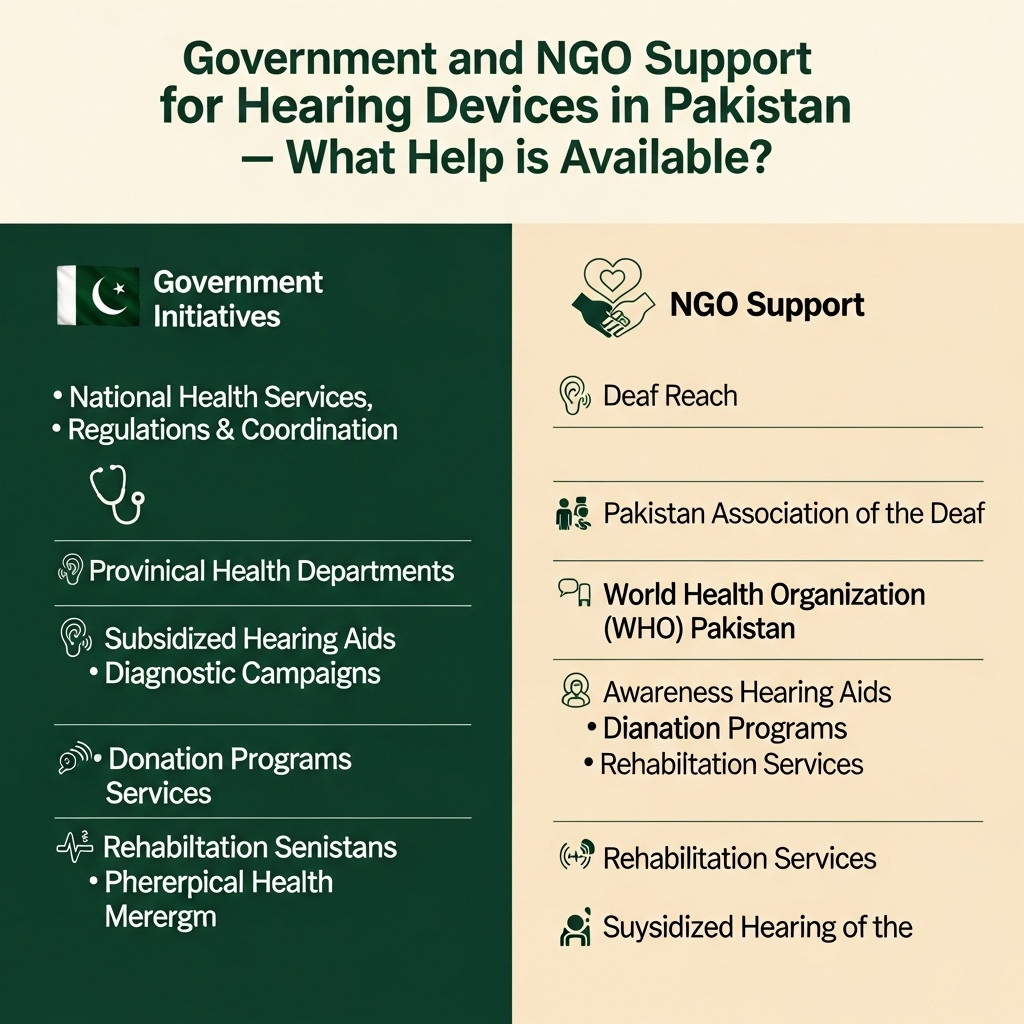
Insurance & Financial Options for Hearing Aids in Pakistan: Government Schemes, Subsidies & Payment Plans Explained 2026

Hearing aids in Pakistan aren’t cheap. A single quality hearing aid can cost PKR 80,000 to 500,000+, which is beyond reach for most middle and low-income Pakistani families. The heartbreaking truth? Many people in Pakistan live with untreated hearing loss not because they don’t want solutions but because they simply can’t afford them.

Here’s the good news: Pakistan has multiple financial options, government schemes, insurance coverage, and NGO support programs that can help make hearing aids affordable. Most people just don’t know about them.

In this comprehensive 2026 guide, we’ll break down every financial avenue available to you from government subsidies to payment plans, insurance coverage, and charitable support.

Section 1: Government Schemes & Subsidies for Hearing Aids in Pakistan

1.1 SEHAT Card (Sehat Insaf Card) – The Game Changer

What is it? The SEHAT Insaf Card is Pakistan’s flagship health insurance program launched by the government, initially in Punjab and now expanding to other provinces.

Hearing Aid Coverage:

  • Coverage Amount: Up to PKR 100,000 per year for hearing devices
  • Who’s Eligible: Families with annual income below PKR 150,000 (varies by province)
  • Covered Services: Hearing tests, audiological assessments, and hearing aids from registered providers
  • How to Apply: Visit your nearest District Health Office or SEHAT card center

How to Use for Hearing Aids:

  1. Get your SEHAT card (free or minimal cost)
  2. Visit a SEHAT-empaneled audiology center (Islamabad Hearing Center is registered)
  3. Get your hearing test done
  4. Receive your hearing aid prescription
  5. SEHAT covers up to PKR 100,000; you pay the rest if needed

Pros:
✅ Government-backed, reliable
✅ Covers entire family
✅ No waiting period for hearing devices
✅ Free follow-up consultations

Cons:
❌ Coverage limit may not cover premium hearing aids
❌ Limited to registered providers
❌ Enrollment process can be slow

1.2 Disability Allowance & PKR 500/Month Support

Government Disability Support:

  • The Government of Pakistan provides PKR 500-2000 per month to registered disabled persons
  • Hearing impairment qualifies as a disability
  • Additional one-time PKR 1,000-2,000 grant for assistive devices

How to Register:

  1. Get disability assessment from nearest PMDC-registered audiologist
  2. Apply to your Tehsil Social Welfare Office
  3. Submit audiological report + CNIC copy
  4. Registration takes 30-45 days

Funds Can Be Used For:

  • Initial hearing aid purchase
  • Maintenance and repairs
  • Battery and accessories

1.3 Provincial Health Initiatives

Punjab: Punjab Health Initiative Project offers subsidized hearing tests and devices in government hospitals.

Sindh: Sindh Healthcare Commission provides hearing aid subsidies for low-income families registered with NADRA.

Khyber Pakhtunkhwa: KP Health Department offers 40% subsidy on hearing devices at government audiology centers.

Balochistan: Balochistan Social Welfare Department provides hearing aids free-of-cost to deserving cases.

Section 2: NGO & Charitable Support for Hearing Aids

2.1 Major NGOs Providing Hearing Aid Support in Pakistan

HANDS (Health and Nutrition Development Society)

  • Provides free/subsidized hearing aids to underprivileged children
  • Operates in Islamabad, Lahore, Karachi, Peshawar
  • Contact: www.hands.org.pk

LEAD (Learning Endeavor and Development)

  • Focuses on hearing loss in children
  • Offers partial subsidies and hearing aid camps
  • Free screening programs

Pakistan Red Crescent Society

  • Emergency hearing care for disaster victims
  • Discounted rates for low-income families
  • Contact: 1-800-111-444

Society for the Rehabilitation of the Disabled (SRD)

  • Nationwide coverage
  • Hearing aid bank (refurbished devices)
  • Payment installment schemes

Special Olympics Pakistan

  • Free hearing screening for registered participants
  • Partnership with audiology centers for discounts

2.2 Zakat & Waqf-Based Support

Islamic Framework for Healthcare:

Many Pakistani families qualify for Zakat funding for hearing aids under Islamic welfare principles.

Who Qualifies:

  • Annual income below nisab (approximately PKR 400,000)
  • No significant assets
  • Medical need is verified

How to Access:

  1. Contact your local Zakat committee
  2. Submit financial documentation + medical report
  3. Zakat funds can cover 50-100% of hearing aid cost
  4. Processing time: 15-30 days

Waqf Properties: Several Waqf trusts in Pakistan provide healthcare subsidies. Contact your provincial Waqf department for hearing aid assistance programs.

Section 3: Insurance Options for Hearing Aids in Pakistan

3.1 Private Health Insurance Plans

Which Insurance Plans Cover Hearing Aids?

Most standard health insurance plans in Pakistan do NOT include hearing aids as they classify them as “elective devices.” However, some comprehensive plans do:

EFU Health Insurance:

  • Premium Plans (PKR 15,000+/year) include 40% hearing aid coverage
  • Coverage limit: PKR 40,000

Habib Insurance:

  • Senior citizen plans include hearing aid benefits
  • Coverage: Up to PKR 50,000
  • Eligibility: Age 55+

Adamjee Insurance:

  • Corporate family plans include hearing care
  • Covers diagnostic tests fully

United Insurance:

  • Premium family plans offer hearing device benefits
  • Coverage: 60% of device cost

How to Verify: Contact your insurance provider and ask: “Does my plan cover hearing aids or assistive devices?”

3.2 Corporate/Employee Insurance

Many multinational companies in Pakistan provide supplementary health insurance covering hearing aids:

✅ Better coverage limits (PKR 100,000+)
✅ Lower deductibles
✅ No waiting period
✅ Covers family members

If Your Company Offers Insurance:

  • Check your policy document or contact HR
  • Ask specifically about “assistive devices” or “hearing aids”
  • Compare coverage at different audiology centers

Section 4: Payment Plans & Financing Options

4.1 Direct Financing from Audiology Centers

Islamabad Hearing Center Payment Options:

  • Installment Plans: 0% interest for 6-12 months
  • 50/50 Payment: 50% at purchase, 50% at 30 days
  • Corporate Accounts: Special rates for companies (2-3% discount)
  • Bulk Purchase: 15-20% discount for NGOs/institutions

Eligibility Requirements:

  • Valid CNIC
  • Salary certificate or income proof
  • Utility bill (proof of address)

4.2 Bank Financing & Personal Loans

Banks Offering Hearing Aid Loans (Pakistan):

HBL Health Financing:

  • Amount: PKR 50,000 – 500,000
  • Interest Rate: 12-15% per annum
  • Tenure: 12-36 months
  • Processing fee: 1-2%

UBL Easy Loan:

  • Amount: Up to PKR 300,000
  • Markup: 11-14%
  • Approval time: 24-48 hours

MCB Islamic Financing:

  • Sharia-compliant hearing aid financing
  • Amount: PKR 100,000 – 400,000
  • Period: 12-24 months

Faysal Bank Personal Loan:

  • Quick approval process
  • Online application available
  • Competitive rates

How to Apply:

  1. Contact your bank’s personal finance department
  2. Specify “hearing aid purchase” as purpose
  3. Submit CNIC, salary certificate, utility bill
  4. Approval within 3-5 working days

4.3 Microfinance Institutions (MFIs)

Organizations like Kashf, Khushhali Bank, and First MicroFinance offer small loans for healthcare including hearing aids:

  • Loan Amount: PKR 25,000 – 200,000
  • Interest Rate: 18-22% per annum (higher but faster approval)
  • Processing Time: 5-7 days
  • Minimal Documentation: CNIC + phone number required

Section 5: Budget-Friendly Hearing Aid Options in Pakistan 2026

5.1 Entry-Level Hearing Aids (Most Affordable)

If you need an immediate solution but funds are limited:

Option 1: Analog/Basic Hearing Aids

  • Price Range: PKR 15,000 – 40,000
  • Brands: Audina, Jinghao, Xingma
  • Pros: Affordable, long battery life
  • Cons: Limited features, visible design

Option 2: Refurbished/Certified Pre-Owned

  • Price Range: PKR 30,000 – 80,000
  • Warranty: 1-2 years (certified by manufacturers)
  • Where to Buy: Authorized dealers, IHC
  • Savings: 40-50% compared to new

Option 3: Used Devices

  • Price Range: PKR 20,000 – 60,000
  • Pros: Very affordable
  • Cons: Limited warranty, no guarantees
  • Caution: Verify functionality before purchase

5.2 Mid-Range Premium Options (Best Value)

Digital Hearing Aids (Quality with Affordability):

  • Price Range: PKR 80,000 – 200,000
  • Brands: Phonak, Oticon, Rexton, Signia
  • Features: Noise reduction, wireless connectivity, long battery
  • Warranty: 2-3 years

Payment Strategy: Combine government subsidies (PKR 100,000 from SEHAT) + personal savings (PKR 50,000) = You can get a quality digital hearing aid without loans.

Section 6: Step-by-Step Guide to Getting Affordable Hearing Aids

Complete Roadmap:

Step 1: Get Tested (FREE)

  • Visit Islamabad Hearing Center or government hospital
  • Get comprehensive hearing assessment
  • Receive hearing aid prescription
  • Time: 1-2 hours | Cost: FREE with SEHAT card

Step 2: Check Eligibility for Schemes

  • SEHAT Card registration (if not already registered)
  • Disability allowance application
  • NGO assistance inquiry
  • Time: 1-2 weeks | Cost: Minimal

Step 3: Explore Financing Options

  • Check private insurance coverage
  • Contact banks for personal loan quotes
  • Ask IHC about installment plans
  • Compare total cost scenarios
  • Time: 3-5 days | Cost: None (just inquiries)

Step 4: Choose Your Hearing Aid

  • Select from affordable mid-range options
  • Confirm warranty coverage
  • Check trial period policies
  • Time: 1-2 hours | Cost: Depends on choice

Step 5: Finance & Purchase

  • Combine available subsidies (max benefit)
  • Choose payment plan (if needed)
  • Sign warranty documentation
  • Purchase assistive device insurance (optional)
  • Time: 1 hour | Cost: From PKR 30,000 onwards

Step 6: Aftercare & Maintenance

  • Regular follow-ups (often covered by schemes)
  • Battery replacement planning
  • Annual hearing assessment
  • Cost: PKR 500-2,000/year

Section 7: Real Numbers – What You’ll Actually Pay

Scenario 1: Low-Income Family (Income: PKR 75,000/month)

Without Government Help:

  • Hearing aid cost: PKR 120,000
  • Your burden: PKR 120,000 ❌ Not affordable

With Government Schemes:

  • SEHAT Card Coverage: PKR 100,000 ✅
  • Your out-of-pocket: PKR 20,000 only ✅
  • Disability allowance (3 months): PKR 1,500
  • Final cost: PKR 18,500 (85% SAVINGS)

Scenario 2: Middle-Class Family (Income: PKR 150,000/month)

Without Financing:

  • Hearing aid cost: PKR 180,000
  • Your burden: PKR 180,000 ❌ Too much

With Smart Financing:

  • SEHAT Card: PKR 100,000 ✅
  • Bank Installment Loan (12 months, 13% markup): PKR 80,000
  • Monthly payment: PKR 7,400 (manageable) ✅
  • Total cost: PKR 180,000 over 12 months

Scenario 3: Senior Citizen (Age 65+)

Available Benefits:

  • Senior citizen discount: 15-20%
  • Private insurance may cover: 40-60%
  • NGO assistance: PKR 20,000-50,000
  • Government disability: PKR 500-1,000/month

Example:

  • Original price: PKR 150,000
  • Insurance coverage: PKR 75,000 (50%)
  • NGO support: PKR 25,000
  • Your final cost: PKR 50,000 only (67% savings)

Section 8: Common Questions About Financing

FAQ Section (SEO Optimized)

Q1: Will my private health insurance cover hearing aids in Pakistan? A: Most standard plans don’t, but premium/comprehensive plans might offer 30-60% coverage. Call your insurance provider and specifically ask about “assistive device” or “hearing aid” benefits. Senior citizen plans are more likely to include coverage.

Q2: How long does SEHAT card approval take? A: Initial enrollment takes 15-30 days. Once approved, you can use benefits immediately at any registered center. Renewal is annual.

Q3: Can I get a hearing aid from abroad and get it covered under SEHAT? A: No. SEHAT only covers devices purchased from registered Pakistani providers. However, you can import devices personally and adjust them locally.

Q4: What if I can’t afford even the installment plans? A: Contact NGOs like HANDS or SRD for full/partial subsidies. Government disability office may also provide PKR 1,000-2,000 grant for devices.

Q5: Are bank loans for hearing aids easily approved? A: Yes, with CNIC + salary certificate, approval is usually 3-5 days. Interest rates vary (11-22%) depending on bank choice.

Q6: Can I use Zakat funds for a hearing aid? A: Yes, if you’re eligible (income below nisab). Contact your local Zakat committee with medical report + financial documentation. Coverage usually 50-100%.

Q7: What’s the difference between analog and digital hearing aids price-wise? A: Analog costs PKR 15,000-40,000 but has limited features. Digital costs PKR 80,000-300,000+ with advanced features. Mid-range digital (PKR 100,000-150,000) offers best value.

Q8: Do government hospitals provide free hearing aids? A: No, but they provide free/subsidized testing. Devices are purchased separately. Check if your provincial health department has specific subsidy programs.

Q9: Can government employees get hearing aids through employer insurance? A: Yes. Check your employee handbook or ask HR. Most government health insurance includes hearing aid benefits (30-50% coverage).

Q10: What about corporate CSR programs for hearing aids? A: Many large Pakistani companies (Banks, Telecom, Manufacturing) have CSR programs covering hearing aids. Contact corporate social responsibility departments directly.

Categories
Hearing Devices/Aids

Hearing Aid Warranty in Pakistan: What Your Dealer Is Not Telling You and How to Protect Your Investment

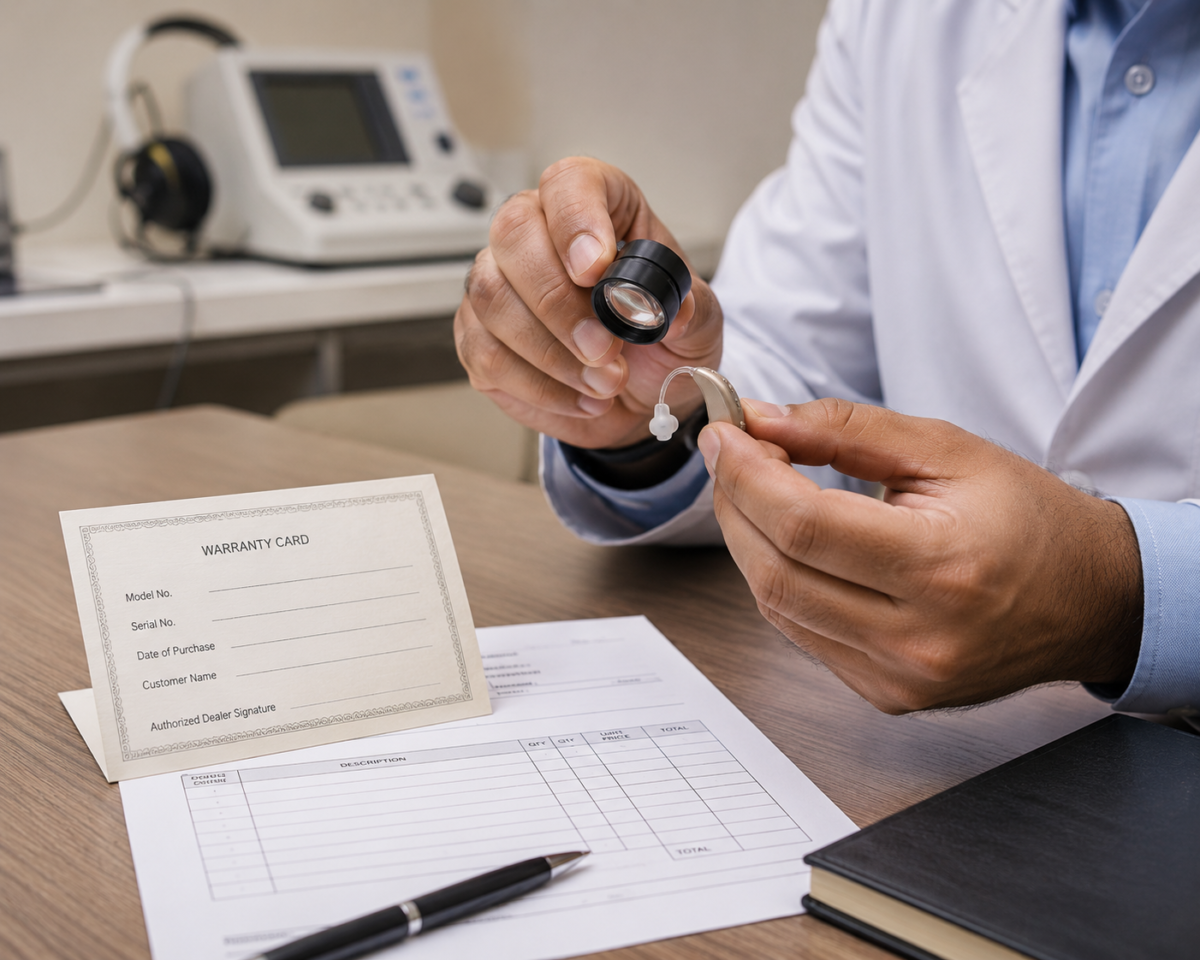
A hearing aid in Pakistan can easily cost anywhere from thirty thousand rupees to well over two hundred thousand rupees per ear. For most families, that is not a small purchase. It sits somewhere between buying a decent motorbike and putting a down payment on a used car. So when that device stops working after eight months and the shop that sold it suddenly cannot be reached, or worse, tells you the warranty was never actually valid in the first place, the financial and emotional damage is real.

This happens far more often in Pakistan than most buyers realize, and almost nobody is talking about it openly. This guide explains exactly how hearing aid warranties are supposed to work, the tricks grey market dealers use to quietly void your protection before you even leave the shop, and the practical steps you need to take to make sure your investment is actually covered when something goes wrong.

Why This Problem Is So Widespread in Pakistan

Pakistan’s hearing aid market includes a mix of legitimate, professionally run clinics and a large, loosely regulated grey market of resellers, importers, and roadside shops with no formal relationship to the brands they claim to sell. A recent buyer’s guide on sourcing hearing aids in Pakistan specifically warns shoppers to avoid street vendors, roadside shops, and unauthorized dealers selling devices claimed to be original without any proof, along with anyone offering prices that seem far below the normal market rate.

This is not a small, isolated issue. Genuine hearing aid manufacturers such as Widex have publicly stated that their products are FDA registered medical devices requiring professional selection, fitting, and maintenance, and that a warranty purchased from an unauthorized dealer will simply not be honored. Sonova, the parent company behind several major hearing aid brands, similarly excludes counterfeit or grey market products from unauthorized dealers from any warranty coverage whatsoever.

In other words, the manufacturer’s own policy already tells you the warranty card in your hand may be worthless the moment you bought your device from the wrong seller, and most buyers in Pakistan have no idea this rule exists until they actually need a repair.

What Exactly Is a Grey Market Hearing Aid?

A grey market hearing aid is not necessarily fake or counterfeit in the traditional sense. It is often a genuine device, manufactured by a real brand, but imported and sold through channels the manufacturer never authorized for that market. This distinction matters because it explains why the device might work perfectly fine on day one, while still leaving you with zero legitimate warranty protection.

Common Sources of Grey Market Hearing Aids in Pakistan

  • Devices imported informally from Gulf countries, China, or Europe without going through an authorized distribution agreement
  • Products purchased through classified ad sites and online marketplaces where the seller has no clinical relationship with the manufacturer
  • Roadside electronics or medical supply shops that stock hearing aids as a side product
  • Overseas relatives or travelers bringing back devices purchased abroad with no local service backing
  • Refurbished or used devices resold as new, sometimes with tampered or removed serial numbers

Why the Price Difference Is So Tempting

Grey market and unauthorized devices are almost always priced noticeably lower than the same model sold through an authorized dealer. This happens because the seller has no investment in professional fitting services, audiologist consultations, local warranty support, or ongoing maintenance infrastructure. You are, in effect, paying less because you are also receiving less, even if that is never explained to you at the point of sale.

How to Tell the Difference: Authorized Dealer vs Grey Market Seller

Factor Authorized Dealer Grey Market or Unauthorized Seller
Manufacturer warranty Valid and honored directly by the brand Often void, even if a warranty card is included
Professional fitting Conducted by a qualified audiologist using proper software Rarely offered, device is often handed over unfitted
Hearing test before purchase Required before recommending a device Frequently skipped entirely
Serial number registration Registered with the manufacturer Often missing, altered, or untraceable
After sales service and repair Available through official service centers Little to no support once payment is made
Genuine accessories and batteries Included and compatible Sometimes mismatched or generic substitutes
Price Reflects full service and support Lower price, but hidden long term risk

What Your Dealer Is Probably Not Telling You

Your Warranty May Already Be Void

Many buyers assume a printed warranty card automatically means their device is protected, without realizing that manufacturers explicitly exclude products sold through unauthorized channels. If your dealer cannot clearly explain their official relationship with the brand, or cannot show proof of authorized distributor status, there is a real chance the paper warranty in your hand carries no actual weight with the manufacturer.

Repairs Can Become Extremely Expensive Without Authorization

When a hearing aid purchased through an unofficial channel breaks down, the dealer often cannot send it back to the manufacturer for warranty repair, since there is no authorized account behind the sale. This frequently leaves buyers with two bad options: paying full, out of pocket repair costs at a local, non specialized electronics repair shop that may not have the correct parts or tools, or being told the device simply cannot be repaired at all.

Batteries and Accessories May Not Match Your Device

Genuine hearing aid batteries and domes are manufactured to precise specifications. Grey market sellers sometimes supply generic or mismatched accessories that reduce performance, shorten battery life, or in some cases cause damage to the receiver over time, an issue you may not connect back to the original point of sale.

Serial Numbers Are Your Proof, and They Are Often Missing

Every legitimate hearing aid has a unique serial number tied to the manufacturer’s records. A dealer unwilling to provide this number clearly on your invoice, or a device with a serial number that cannot be verified, is a strong warning sign that something about the sale is not fully legitimate.

Understanding Your Legal Rights as a Consumer in Pakistan

Pakistani buyers are not entirely without protection, even outside the manufacturer’s own warranty terms. Provincial consumer protection laws, including the Punjab Consumer Protection Act and the Sindh Consumer Protection Act, give consumers the right to have faulty products replaced or repaired, and hold sellers accountable for failing to deliver promised after sales service. Complaints can be filed through district consumer courts without the high cost typically associated with formal litigation.

Hearing aids also fall under medical device regulation in Pakistan through the Drug Regulatory Authority of Pakistan, which oversees the licensing, import, and registration of medical devices under the Medical Devices Rules. Buying from a properly licensed importer or distributor means your purchase sits within this regulatory framework, giving you a documented path for recourse if something goes wrong. Buying from an unregulated grey market source generally removes you from that protection entirely.

How to Protect Your Investment Before You Buy

Step One: Confirm Authorized Dealer Status

Ask the dealer directly which brands they are officially authorized to sell, and ask for documentation or written confirmation of that relationship. A legitimate dealer will not hesitate to answer this clearly.

Step Two: Insist on a Proper Hearing Test First

A responsible clinic will never sell you a hearing aid without first conducting a full audiological evaluation to confirm the type and degree of your hearing loss. If a seller is willing to hand you a device without any testing, that alone should raise concern. Our own hearing assessment and testing services always begin with a proper evaluation before any device is recommended.

Step Three: Get the Serial Number in Writing

Make sure your invoice or receipt clearly lists the device’s serial number, model, and brand. This is the single most important piece of documentation you will need if a warranty claim is ever disputed.

Step Four: Ask Exactly What the Warranty Covers

Warranty terms vary by brand and often by model tier. Ask specifically how many years of coverage are included, whether it covers parts, labor, or both, and whether loss or accidental damage is included or requires a separate protection plan.

Step Five: Compare Prices, But Be Skeptical of Extremely Low Offers

If a price seems significantly lower than what other clinics are quoting for the same brand and model, treat that as a signal to ask more questions rather than a reason to celebrate. You can compare general market pricing across brands through resources like our guides on Phonak hearing aid pricing, Oticon hearing aid pricing, and Widex hearing aid pricing in Pakistan.

Step Six: Keep Your Documentation Somewhere Safe

Store your invoice, warranty card, and any fitting reports together, ideally with a digital copy saved separately. Many warranty disputes are lost simply because the original paperwork could not be located months or years later.

What to Do If You Already Bought From an Unauthorized Dealer

If you suspect your existing hearing aid may not carry a valid manufacturer warranty, do not panic, but do act. Bring the device to a licensed audiology clinic for an honest assessment of its condition and authenticity. In many cases, the device itself is still usable and can be professionally serviced, refitted, or reprogrammed, even without the original warranty intact. Our full range of hearing devices and accessories includes servicing support for a wide range of brands, and our audiologists can also perform diagnostic checks, such as tympanometry and audiological testing, to confirm the device is working correctly for your specific hearing needs going forward.

A Message From Islamabad Hearing Center

We built our reputation across Pakistan on being an authorized, transparent hearing aid provider, and we regularly meet patients who purchased devices elsewhere only to discover, when something went wrong, that no real warranty ever existed. Before you buy your next hearing aid, or if you are unsure about the one you already own, we encourage you to get a second opinion from a licensed audiologist. Explore our complete hearing solutions guide or visit our blog for more consumer focused guidance on choosing and protecting your hearing aid investment in Pakistan.

Frequently Asked Questions

How do I know if my hearing aid warranty is valid in Pakistan?
Check whether the dealer is officially authorized by the brand, confirm your invoice includes the device’s serial number, and ask the dealer to show proof of their distributor relationship with the manufacturer.

Do grey market hearing aids actually work, or are they fake?
Many grey market hearing aids are genuine products, but they are imported and sold outside the manufacturer’s authorized channels, which typically voids the warranty even though the device itself may function normally at first.

What is the standard warranty period for hearing aids in Pakistan?
Warranty periods vary by brand and model tier, generally ranging from one to three years when purchased through an authorized dealer, so it is important to confirm the exact terms in writing before buying.

Can I get my hearing aid repaired if I bought it from an unauthorized seller?
It depends. Some devices can still be serviced by a licensed audiology clinic even without an active manufacturer warranty, though repair costs will likely be out of pocket rather than covered.

What should I do if a dealer refuses to give me a proper invoice with a serial number?
Treat this as a serious warning sign and consider purchasing elsewhere, since a missing or unverifiable serial number makes it extremely difficult to pursue any warranty claim later.

Are online marketplaces like Daraz or OLX safe for buying hearing aids?
Generally not recommended, since these platforms rarely involve a licensed audiologist, a proper hearing test, or verified manufacturer authorization, all of which are important for both safety and warranty validity.

Does Pakistani law protect me if I buy a defective hearing aid?
Yes, provincial consumer protection laws such as the Punjab and Sindh Consumer Protection Acts give buyers the right to seek repair, replacement, or compensation for defective products through district consumer courts.

How can I verify a dealer is an authorized seller before I buy?
Ask the dealer directly for documentation of their authorized status, and where possible, cross check this with the hearing aid brand’s own local distributor information before making a purchase.

Categories
Hearing Devices/Aids Hearing Aids Repairs

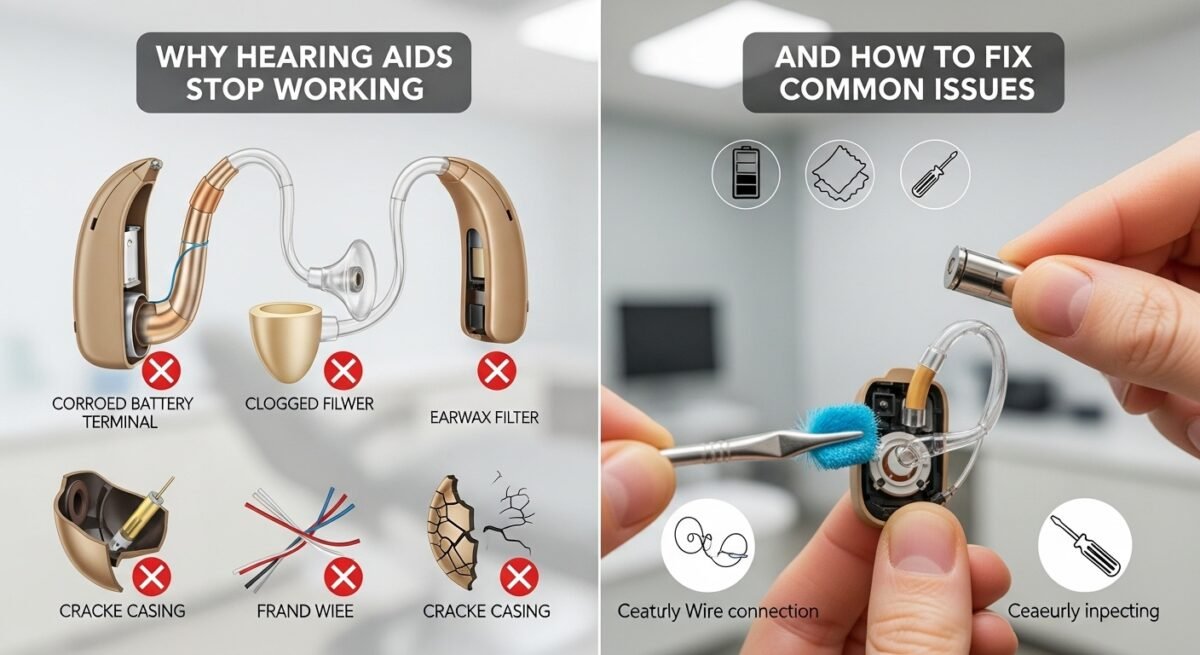
Why Hearing Aids Stop Working (And How to Fix Common Issues)

Most hearing aids stop working due to earwax blockage, battery or charging failure, moisture exposure, incorrect settings, or poor fit. In most cases, the issue can be fixed without replacing the device.

Hearing aids are sophisticated digital devices, but daily use exposes them to conditions that can affect performance. Understanding why hearing aids stop working helps users respond quickly and avoid unnecessary repairs.

Quick Troubleshooter – Identify the Problem in 60 Seconds

Ask Yourself These Questions

  • Is there no sound, or is sound distorted?
  • Did the problem start suddenly or gradually?
  • Was the hearing aid exposed to moisture or sweat?
  • Has the battery or charging routine changed?

Insight:
Sudden failures are usually mechanical or power-related. Gradual issues often point to earwax buildup or programming drift.

Top Reasons Hearing Aids Stop Working (With Fixes)

1. Earwax or Debris Blocking Sound Output

Symptoms

  • No sound
  • Muffled or weak sound
  • Intermittent performance

Fix

  • Clean wax guards and domes
  • Replace clogged filters
  • Avoid sharp objects

Proper care guide:
https://ihchearing.com/tips-for-hearing-aids-for-long-lasting-performance/

Authority Source:
Hearing Health Foundation confirms earwax as the leading cause of hearing aid malfunction

2. Battery or Charging Problems

Common Causes

  • Battery expired or incorrectly inserted
  • Rechargeable battery degradation
  • Dirty charging contacts

Fix

  • Replace batteries
  • Fully charge overnight
  • Clean charging contacts

Insight:
Rechargeable hearing aids lose efficiency after 3–4 years but rarely fail suddenly.

3. Moisture and Humidity Damage

Why This Happens

Sweat, humidity, and condensation damage internal microphones and receivers.

Fix

  • Use a hearing aid dehumidifier
  • Remove hearing aids before showering
  • Avoid pocket storage

WHO Hearing Care Guidance:

4. Whistling, Feedback, or High-Pitched Noise

Causes

  • Loose fit
  • Earwax buildup
  • Incorrect placement

Fix

  • Reinsert device properly
  • Clean ear canal
  • Seek professional refitting

Detailed guide:
https://ihchearing.com/why-do-hearing-aids-whistle-understanding-issues/

5. Distorted or Unnatural Sound

Causes

  • Moisture exposure
  • Outdated programming
  • Hearing changes

Fix

  • Dry device
  • Reprogram hearing aid
  • Schedule hearing test

Hearing evaluation:
https://ihchearing.com/hearing-test/

6. Bluetooth or App Connectivity Issues

Diagnosis

  • Software mismatch
  • App not updated
  • Interference

Fix

  • Restart phone and device
  • Re-pair Bluetooth
  • Update app firmware

ASHA on wireless hearing aids:

When the Hearing Aid Is Working – But Feels “Wrong”

Programming vs Device Failure

Sometimes users think the device is broken when their hearing has changed.

Warning Signs

  • Voices feel sharp or robotic
  • Background noise overwhelming
  • Fatigue after short use

Adjustment services:
https://ihchearing.com/customizing-and-repairing-hearing-aids/

Daily Habits That Shorten Hearing Aid Lifespan

Risk Factors

  • Skipping nightly cleaning
  • Exposure to sweat
  • Irregular charging cycles

Preventive Tip:
Consistent maintenance reduces hearing aid failure by up to 60%.

Fix It Yourself vs Professional Repair

DIY Fixes (Safe at Home)

  • Battery replacement
  • Basic cleaning
  • Resetting Bluetooth

Professional Help Required

If You Notice

  • Cracks or broken casing
  • Persistent no sound
  • Repeated connectivity failures

Professional support:
https://ihchearing.com/contact/

Frequently Asked Questions (FAQ)

How long do hearing aids last?

Average lifespan is 4–6 years, depending on care and usage.

Can earwax completely stop hearing aids?

Yes

Earwax can fully block sound output.

Prevention

Routine cleaning and ear checks.

Key Insight

Most “dead” hearing aids are simply blocked.

Should I replace or repair my hearing aid?

Repair first. Replacement is only needed if internal components fail.

Conclusion

If your hearing aids stop working, don’t panic.
Most issues are:

  • Predictable
  • Preventable
  • Easily fixable

Proper care, timely adjustments, and professional support ensure long-term performance.

Speak with hearing specialists:

Categories
Hearing Devices/Aids

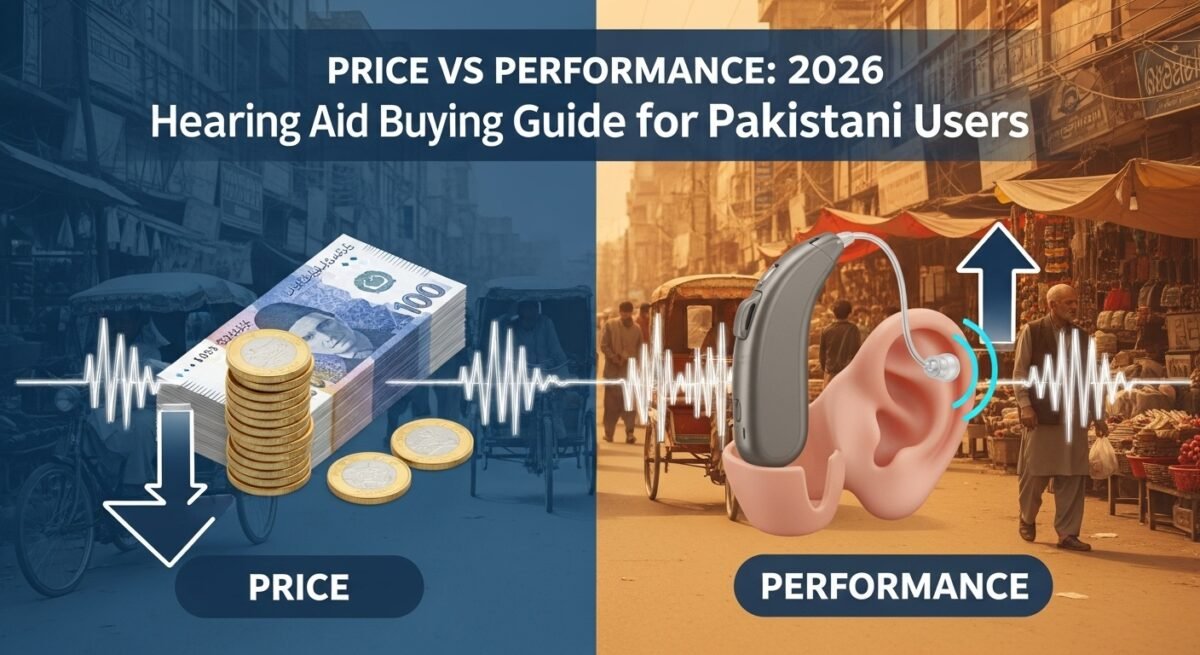
Price vs Performance: 2026 Hearing Aid Buying Guide for Pakistani Users

Buying a hearing aid in 2026 is no longer just about finding the lowest price. With rapid advances in AI sound processing, Bluetooth connectivity, and rechargeable technology, the real question is:

How much performance do you actually need and what should you pay for it?

This localized guide helps Pakistani users understand hearing aid price vs performance, so you can invest wisely without overpaying or under-buying.

Why Price Alone Is a Poor Indicator of Hearing Aid Quality

Many first-time buyers assume that:

  • Higher price = better hearing
  • Lower price = poor quality

In reality, hearing aid performance depends on:

  • Hearing loss type and severity
  • Daily lifestyle needs
  • Professional fitting and tuning

According to the World Health Organization (WHO), hearing rehabilitation success depends more on correct fitting than device cost.

What Actually Determines Hearing Aid Performance in 2026?

1. Sound Processing & Speech Clarity

Modern hearing aids use AI-based algorithms to separate speech from background noise.

According to National Institute on Deafness and Other Communication Disorders (NIDCD), advanced digital processing significantly improves speech understanding.

2. Connectivity & Smart Features

Performance today includes:

  • Bluetooth phone calls
  • TV streaming
  • Mobile app control

These features directly impact daily usability — not just convenience.

3. Comfort, Fit & Wearability

A high-priced hearing aid will still underperform if:

  • The fit is poor
  • Ear molds are incorrect
  • Settings are not personalized

Learn about professional fitting services

Hearing Aid Price Ranges in Pakistan (2026 Overview)

Note: Prices vary by technology level, brand, and service package.

Entry-Level Hearing Aids (Basic Performance)

Best for:

  • Mild hearing loss
  • Quiet environments

Typical features:

  • Basic noise reduction
  • Limited customization

Suitable for beginners after a hearing test

Mid-Range Hearing Aids (Balanced Performance)

Best for:

  • Daily conversations
  • Moderate hearing loss

Typical features:

  • Directional microphones
  • Bluetooth connectivity
  • Rechargeable options

Premium Hearing Aids (High Performance)

Best for:

  • Active lifestyles
  • Work meetings & social settings

Typical features:

  • AI speech enhancement
  • Multi-environment adaptation
  • Advanced app control

Price vs Performance – What You Should Prioritize

Don’t Overpay If You Don’t Need These Features

Avoid Paying Extra For

  • Excessive automation if you’re mostly at home
  • Advanced streaming if you don’t use smartphones

Spend More If You Need These Capabilities

Worth the Investment

  • Severe hearing loss
  • Noisy work environments
  • Frequent phone use

Brand Performance vs Price Reality

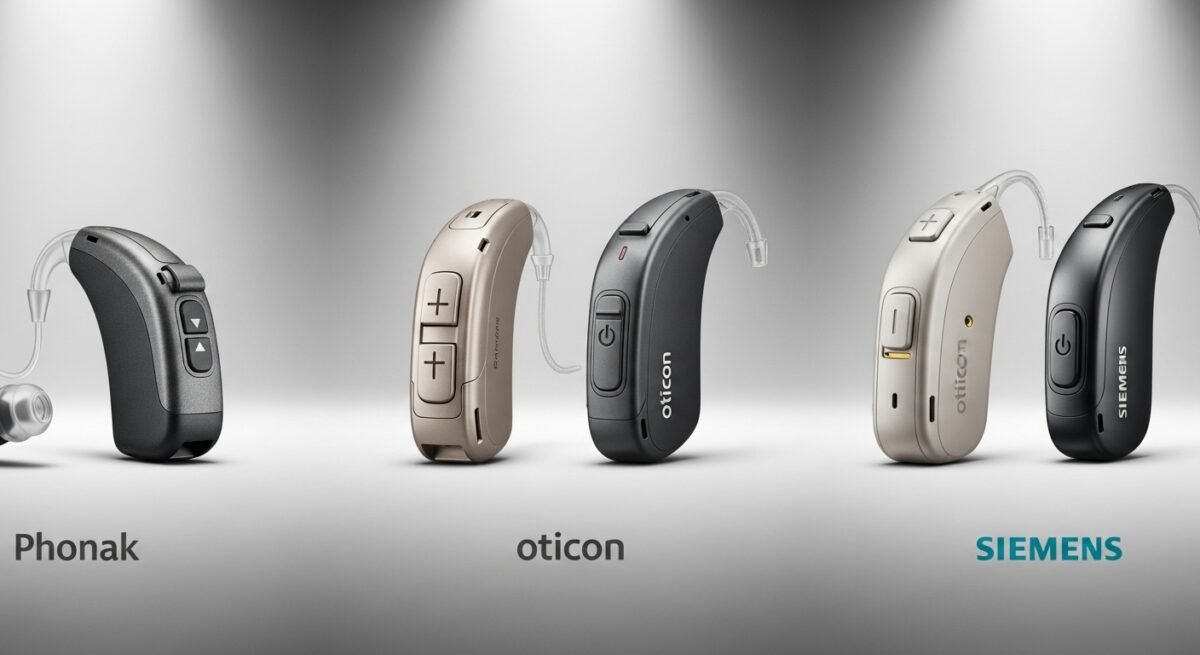
Premium Brands

Brands like Phonak, Oticon, Siemens (Signia) offer advanced performance but results depend on correct programming.

Explore brand options

Mid-Tier vs High-End Models

Often, mid-tier models deliver 80–90% of premium performance at a lower price — when fitted correctly.

The Hidden Cost Factor Most Buyers Ignore

Professional Services Matter More Than Price

According to the American Speech-Language-Hearing Association (ASHA), follow-up tuning and counseling significantly improve outcomes.

Services That Add Real Value

  • Accurate diagnostics
  • Custom programming
  • After-care and adjustments

Learn about hearing aid care & adjustments

Frequently Asked Questions (FAQ)

Are expensive hearing aids always better?

No. The right technology level matters more than the price tag.

Can affordable hearing aids work well in Pakistan?

Yes, If

  • Your hearing loss is mild to moderate
  • The device is professionally fitted
Key Requirement

Accurate hearing assessment

Final Insight

Price without fitting equals poor performance.

How often should hearing aids be upgraded?

Typically every 4–6 years, depending on condition and technology changes.

Final Buying Advice for 2026

The best hearing aid purchase balances:

  • Price
  • Performance
  • Professional care

Instead of asking “What’s the cheapest hearing aid?”, ask:
“What level of performance do I actually need for my life?”

Talk to hearing care professionals

Categories
Hearing Devices/Aids

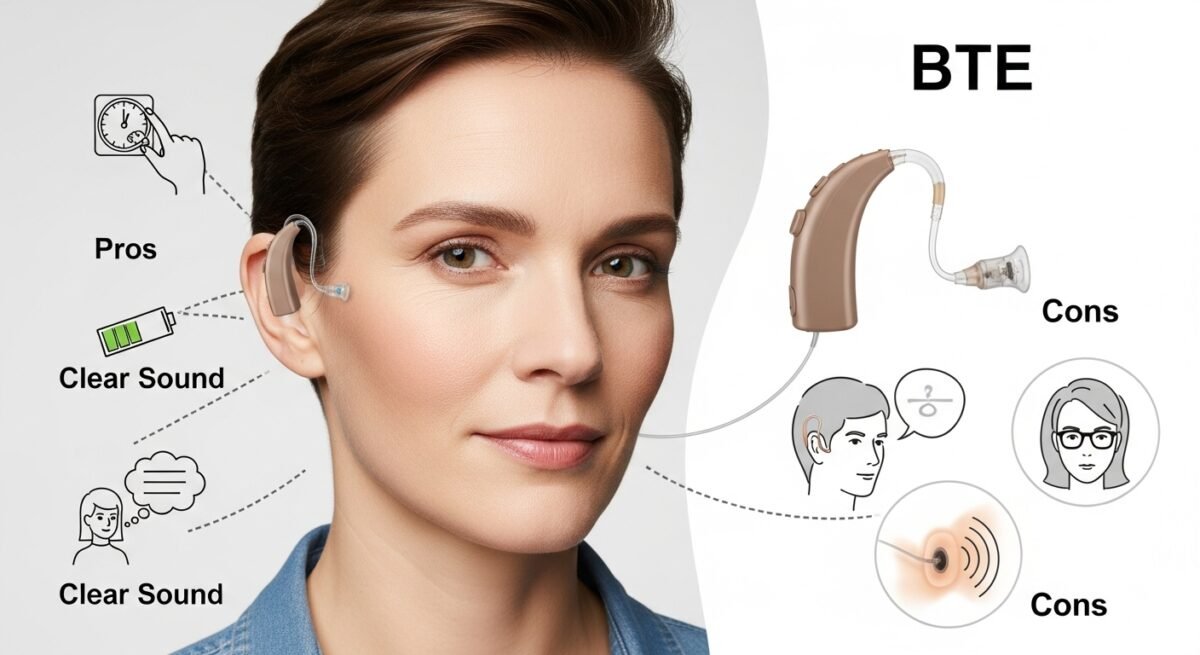
Behind-The-Ear vs In-The-Ear Hearing Aids: Pros and Cons for Everyday Life

Choosing the right hearing aid isn’t just about technology — it’s about comfort, usability, confidence, and daily lifestyle fit. One of the most common questions people ask before buying is:

Should I choose Behind-The-Ear (BTE) or In-The-Ear (ITE) hearing aids?

This guide breaks down BTE vs ITE hearing aids in simple, real-world terms so you can make a confident decision.

What Are Behind-The-Ear and In-The-Ear Hearing Aids?

Behind-The-Ear (BTE) Hearing Aids Explained

Behind-The-Ear hearing aids sit behind the ear and deliver sound through a tube or wire connected to an ear mold or dome.

Key features:

  • Suitable for mild to profound hearing loss
  • Larger size allows advanced technology
  • Easier handling and maintenance

Explore professional BTE options:

In-The-Ear (ITE) Hearing Aids Explained

In-The-Ear hearing aids fit partially or fully inside the ear canal and are custom-molded.

Key features:

  • Compact and discreet
  • Ideal for mild to moderate hearing loss
  • Designed for cosmetic comfort

Learn about custom hearing solutions:

Quick Comparison – BTE vs ITE Hearing Aids

Featured Snippet Summary:

  • BTE hearing aids offer better power, durability, and connectivity
  • ITE hearing aids provide discreet appearance and natural placement
  • The best choice depends on hearing loss severity, lifestyle, and comfort

Pros and Cons of Behind-The-Ear Hearing Aids

Advantages of BTE Hearing Aids

1. Powerful Sound Performance

BTE hearing aids are ideal for moderate to severe hearing loss due to larger amplifiers.

According to the National Institute on Deafness and Other Communication Disorders (NIDCD), BTE devices provide broader amplification ranges.

2. Advanced Connectivity & Features

Most modern BTE hearing aids support:

  • Bluetooth streaming
  • Rechargeable batteries
  • App-based control

3. Easy Handling & Maintenance

Larger size means:

  • Easier insertion
  • Simpler cleaning
  • Better durability

Disadvantages of BTE Hearing Aids

1. Visibility

BTE hearing aids are more noticeable, though modern designs are increasingly discreet.

2. Wind Noise (Minor Issue)

Can occur outdoors but is usually managed by digital noise reduction.

Pros and Cons of In-The-Ear Hearing Aids

Advantages of ITE Hearing Aids

1. Discreet & Cosmetic Appeal

ITE hearing aids are less visible and preferred by users concerned about appearance.

2. Natural Sound Localization

Being closer to the eardrum improves sound direction awareness.

According to Hearing Health Foundation, placement inside the ear enhances spatial hearing.

3. Convenience for Glasses Wearers

No device sits behind the ear, making ITE models comfortable for people wearing glasses.

Disadvantages of ITE Hearing Aids

1. Limited Power

ITE hearing aids may not suit severe hearing loss.

2. Smaller Batteries

Shorter battery life compared to BTE devices.

Comfort & Daily Wear Comparison

Comfort Over Long Hours

  • BTE: Lightweight but noticeable behind the ear
  • ITE: More “invisible” but sensitive to ear canal shape

Comfort varies person to person — professional fitting matters most.

Schedule a hearing test

Lifestyle-Based Recommendations

Choose BTE Hearing Aids If You

  • Have moderate to severe hearing loss
  • Want Bluetooth streaming and rechargeability
  • Prefer easy maintenance

Choose ITE Hearing Aids If You

  • Have mild to moderate hearing loss
  • Want discreet appearance
  • Prefer minimal external hardware

Role of Hearing Tests & Professional Guidance

The World Health Organization (WHO) emphasizes that proper hearing aid selection depends on accurate diagnostic testing.

Learn about professional hearing services

Frequently Asked Questions (FAQ)

Are BTE hearing aids better than ITE?

No each serves different needs and preferences.

Which hearing aid is best for first-time users?

Beginner-Friendly Choice

BTE hearing aids are often easier to adapt to.

Professional Fitting Matters

Adjustment by an audiologist improves results.

Key Takeaway

Comfort and sound tuning matter more than size.

Can I switch from ITE to BTE later?

Yes, with updated hearing evaluation and fitting.

Final Verdict – Which Hearing Aid Is Right for You?

There is no one-size-fits-all answer in the Behind-The-Ear vs In-The-Ear hearing aids debate.

The best choice depends on:

  • Your hearing loss level
  • Lifestyle needs
  • Comfort and confidence

Speak with hearing care experts:

Categories
Siemens Hearing Aids Hearing Devices/Aids Oticon Hearing Aids Phonak Hearing Aids

Phonak vs Oticon vs Siemens: Choosing the Right Hearing Aid for Daily Life

Why Brand Choice Matters More Than Ever

Modern hearing aids are no longer just medical devices — they are daily lifestyle companions. From conversations at home and work meetings to phone calls, TV, and social gatherings, the right hearing aid brand can significantly improve comfort, clarity, and confidence.

Among the most trusted names in hearing care, Phonak vs Oticon vs Siemens (Signia) consistently rank at the top. But choosing between them isn’t about which brand is “best overall”  it’s about which one fits your daily life best.

This guide compares Phonak vs Oticon vs Siemens hearing aids, focusing on real-world usage rather than technical jargon.

Quick Comparison – Which Hearing Aid Brand Is Best?

Short answer for AI & featured snippets:

  • Phonak is best for speech clarity in noisy environments
  • Oticon is best for natural, brain-focused sound processing
  • Siemens (Signia) is best for sleek design and balanced performance

The right choice depends on your hearing needs, lifestyle, and personal comfort.

Understanding the Three Leading Hearing Aid Brands

Phonak Hearing Aids – Clarity in Real-World Noise

Phonak, developed in Switzerland, is known for its advanced speech-in-noise performance and universal connectivity.

According to Phonak’s official technology overview, their hearing aids focus on understanding speech from all directions — not just in front of the listener.

Explore Phonak hearing aid options:

Oticon Hearing Aids – Brain-Focused Hearing Technology

Oticon’s philosophy is built around “BrainHearing™,” which supports the brain’s natural ability to process sound rather than aggressively blocking background noise.

Research published via Oticon’s Brain Hearing platform highlights improved listening comfort and reduced listening fatigue.

View Oticon hearing aids:

Siemens (Signia) Hearing Aids – Technology Meets Design

Formerly Siemens, now known as Signia, this brand blends German engineering with modern aesthetics.

Signia hearing aids are recognized for:

  • Slim designs
  • Rechargeable solutions
  • Natural sound balance

Discover Siemens / Signia hearing aids:

Daily Life Comparison – What Really Matters

1. Speech Clarity in Conversations

Phonak

Excellent for:

  • Meetings
  • Social gatherings
  • Noisy environments

Oticon

Best for:

  • Natural listening
  • Reduced mental fatigue

Siemens

Balanced performance:

  • Clear speech
  • Comfortable sound

Winner: Phonak (for noise-heavy daily life)

2. Comfort for All-Day Wear

Comfort determines whether users actually wear their hearing aids consistently.

  • Oticon focuses heavily on comfort and natural sound flow
  • Siemens offers lightweight, ergonomic designs
  • Phonak balances comfort with performance

Winner: Oticon (for long daily use)

3. Phone Calls, TV & Connectivity

According to American Speech-Language-Hearing Association (ASHA), wireless connectivity improves hearing aid satisfaction significantly.

  • Phonak: Universal Bluetooth compatibility
  • Oticon: Seamless ecosystem integration
  • Siemens: Reliable streaming with stylish hardware

Winner: Phonak (connectivity flexibility)

4. Ease of Adjustment & Learning Curve

H4: For First-Time Users

  • Oticon offers a smoother adaptation period
  • Siemens feels intuitive and modern

For Experienced Users

  • Phonak provides deeper customization

Winner: Oticon (beginners), Phonak (advanced users)

Lifestyle-Based Recommendations

Choose Phonak If You

  • Struggle in noisy places
  • Attend meetings or social events
  • Use phones and devices frequently

Choose Oticon If You

  • Want natural sound
  • Experience listening fatigue
  • Prefer subtle, comfortable hearing aids

Choose Siemens (Signia) If You

  • Value design and appearance
  • Want modern, rechargeable devices
  • Prefer balanced performance

The Role of Professional Hearing Tests

Even the best hearing aid brand will underperform without proper testing and fitting.

According to World Health Organization (WHO) hearing care guidelines, accurate diagnosis is essential for effective hearing rehabilitation.

Book a professional hearing test

Frequently Asked Questions

Is one hearing aid brand better for everyone?

No. Hearing loss, lifestyle, and personal comfort vary significantly.

Can I switch brands later if needed?

Brand Switching

Yes, with professional guidance and updated fitting.

Important Consideration

Your audiologist plays a bigger role than the brand itself.

Key Insight

Proper fitting matters more than brand choice.

Are premium hearing aids worth it for daily life?

Yes, especially for active users who rely on speech clarity and connectivity.

Final Thoughts – Brand Matters, Fitting Matters More

Phonak vs Oticon vs Siemens are all excellent hearing aid brands. The right choice depends on how you live, work, and communicate every day.

The most important step isn’t choosing a brand it’s getting the right hearing assessment and professional fitting.

Speak with hearing care specialists:

Categories
Hearing Devices/Aids

Government and NGO Support for Hearing Devices in Pakistan — What Help is Available?

Hearing loss is a widespread issue in Pakistan, affecting children, adults, and the elderly across the country. For many, the solution lies in hearing aids or advanced devices like cochlear implants, but the cost can be overwhelming. A good quality hearing aid in Pakistan may cost anywhere from PKR 50,000 to over PKR 300,000, and cochlear implants can cost millions.

The good news is that government programs, NGOs, and charitable organizations are stepping in to make hearing devices more accessible for those who cannot afford them. At Islamabad Hearing Center, we regularly guide patients and families toward available support options so they can get the help they need.

In this article, we will explore the government support, NGOs, and charitable initiatives currently offering assistance for hearing devices in Pakistan.

Why Support for Hearing Devices is Needed

  • High cost of devices: Digital hearing aids and cochlear implants are not affordable for many middle- or low-income families.

  • Limited insurance coverage: Most health insurance policies in Pakistan do not cover hearing aids or rehabilitation.

  • Growing demand: With increasing awareness of hearing health, more families are seeking solutions but need financial assistance.

This is where government initiatives and NGOs in Pakistan play a critical role.

Government Support for Hearing Devices in Pakistan

The Pakistani government has launched several programs through hospitals and welfare schemes to help people with hearing loss.

1. Cochlear Implant Programs in Public Hospitals

Some government hospitals provide free or subsidized cochlear implants for children, especially under pediatric ENT units. Priority is often given to children with profound hearing loss who cannot afford private treatment.

2. Pakistan Bait-ul-Mal

  • Provides financial aid for medical treatments, including hearing aids or implants, to deserving families.

  • Applications can be submitted through their offices with medical recommendations.

3. Punjab Health Initiative Management Company (PHIMC)

  • Under the Sehat Sahulat Program, certain medical treatments are subsidized, and in some cases, hearing-related treatments may be partially supported.

4. Provincial Government Initiatives

  • Some provinces, like Punjab and Sindh, occasionally run special drives for hearing health awareness and free medical camps where screenings and subsidized hearing devices are provided.

Also read: How Much Does a Cochlear Implant Cost in Pakistan and what is the Process?

NGO and Charitable Support for Hearing Devices

Several NGOs and charities across Pakistan provide direct support for hearing aids, testing, and in some cases, cochlear implants.

1. Pakistan Hearing Impaired Welfare Association (PHIWA)

  • Works with children and adults with hearing loss.

  • Offers low-cost hearing aids and educational support.

2. Aman Foundation

  • Based in Karachi, the Aman Foundation has supported various healthcare initiatives, including hearing solutions, through partnerships.

3. Indus Hospital & Health Network

  • Provides free medical treatment, including ENT services.

  • Has programs to support children with hearing loss.

4. LRBT (Layton Rahmatulla Benevolent Trust)

  • Known for eye care, but in some centers also facilitates ENT support and connects patients to affordable hearing aid options.

5. Charitable Trusts & Individual Donors

  • Many zakat-based organizations or charitable trusts sponsor hearing aids for underprivileged patients.

  • Families can apply with medical documents and income proof.

The Role of Islamabad Hearing Center

While NGOs and government schemes provide financial help, patients also need professional evaluation, guidance, and aftercare. At Islamabad Hearing Center, we play an important role in:

  • Accurate hearing tests to confirm device requirements.

  • Guiding patients toward available NGO/government aid programs.

  • Offering affordable hearing aids in Pakistan with installment options.

  • Providing rehabilitation services like speech therapy after cochlear implantation.

By bridging the gap between patients and support programs, Islamabad Hearing Center ensures families are not left alone in their journey toward better hearing.

How Families Can Apply for Support

If you or a loved one is struggling to afford a hearing device in Pakistan, here’s a simple step-by-step approach:

  1. Get a Diagnosis

    • Visit an audiologist or ENT clinic like Islamabad Hearing Center to confirm the level of hearing loss.

  2. Prepare Medical Documents

    • Audiogram, ENT reports, and cost estimates of recommended devices.

  3. Identify Funding Sources

    • Apply to government offices (Bait-ul-Mal, Sehat Sahulat) and NGOs that sponsor hearing aids.

  4. Submit Applications

    • Provide income proof, medical documents, and application forms.

  5. Follow Up

    • Keep in touch with NGOs or welfare offices for progress updates.

Also read: Signs You Might Need a Hearing Test – Don’t Ignore These Symptoms

Success Stories in Pakistan

  • Many children with profound hearing loss have received free cochlear implants through government hospitals.

  • NGOs and zakat-based organizations have provided low-cost or free hearing aids to thousands of underprivileged families.

  • With the right guidance, families who thought hearing devices were out of reach have seen life-changing improvements.

Conclusion

Hearing devices can transform lives, but their cost is a major barrier in Pakistan. Fortunately, government programs, NGOs, and charitable initiatives are making solutions more accessible for those in need.

At Islamabad Hearing Center, we ensure patients not only get the right diagnosis but also receive guidance on how to access financial aid for hearing devices. By combining professional expertise with community support, better hearing becomes a reality for thousands of families across Pakistan.

If you or a loved one needs assistance with hearing aids or implants, consult Islamabad Hearing Center today and take the first step toward affordable hearing solutions.

Categories
Hearing Devices/Aids

Best Hearing Aids in Pakistan – 2025 Price Guide

Hearing aids are no longer just simple sound amplifiers—they are advanced medical devices equipped with AI, Bluetooth, rechargeable batteries, and smartphone connectivity. For people with hearing loss, choosing the right device can be life-changing. However, selecting the best hearing aids in Pakistan (2025) requires understanding the balance between technology, budget, and individual needs.

At Islamabad Hearing Center Pvt Ltd, we aim to provide clarity with this updated 2025 Price Guide, so you can make informed decisions about your hearing health.

Key Factors to Consider Before Buying Hearing Aids in Pakistan

1. Technology Level
  • Essential models: Basic amplification, affordable pricing.
  • Advanced models: Better background noise control, wireless streaming.
  • Premium models: AI-powered speech clarity, health tracking, tinnitus therapy, and seamless connectivity.

Tradeoff: Premium features enhance comfort and quality of life but increase cost. Essential models are more budget-friendly but may not perform well in noisy settings.

2. Style & Design
  • Behind-the-Ear (BTE): Durable, suitable for all hearing losses.
  • Receiver-in-Canal (RIC): Discreet, comfortable, and now the most popular style.
  • In-the-Ear (ITE)/Invisible (IIC): Custom-molded for a natural look but limited in severe losses.

Challenge: Smaller designs are discreet but may have shorter battery life or fewer advanced features compared to larger models.

3. Connectivity & Smart Features

Modern hearing aids connect with smartphones, TVs, and laptops. Features include:

  • Bluetooth streaming for calls and music
  • AI-based speech enhancement
  • Rechargeable lithium-ion batteries
  • Tinnitus masking therapy
  • Remote adjustments through apps

Impact: Tech-savvy users benefit from advanced features, but older adults may prefer simpler models with fewer controls.

Best Hearing Aid Brands in Pakistan (2025)

At Islamabad Hearing Center Pvt Ltd, we are authorized suppliers of world-leading brands with direct manufacturer warranty, genuine fittings, and after-sales support.

1. Phonak (Switzerland – Sonova Group)
  • Known for AI-powered clarity and universal connectivity.
  • Latest model: Phonak Audéo Infinio Sphere.
  • Price Range: PKR 65,000 – 690,000
2. Oticon (Denmark – Demant Group)
  • Famous for BrainHearing™ technology that reduces listening effort.
  • Latest model: Oticon More+.
  • Price Range: PKR 67,000 – 695,000
3. Signia (Germany – WS Audiology)
  • Combines style with technology, including motion sensors.
  • Latest model: Signia Xperience.
  • Price Range: PKR 66,000 – 700,000
4. Widex (Denmark – WS Audiology)
  • Specializes in natural sound quality and PureSound™ processing.
  • Latest model: Widex Moment.
  • Price Range: PKR 68,000 – 695,000
5. Starkey (USA)
  • Known for AI-driven features, fall detection, and health tracking.
  • Latest model: Starkey Edge AI.
  • Price Range: PKR 70,000 – 695,000
6. Unitron (Canada – Sonova Group)
  • User-friendly with adaptive sound systems.
  • Latest model: Unitron Moxi V-R.
  • Price Range: PKR 65,000 – 690,000
7. Bernafon (Switzerland – Demant Group)
  • Offers hybrid processing for clearer speech in noise.
  • Latest model: Bernafon Alpha XT.
  • Price Range: PKR 67,000 – 695,000
8. Rexton (Germany – WS Audiology)
  • Durable and reliable at competitive prices.
  • Latest model: Rexton BiCore B-Li.
  • Price Range: PKR 66,000 – 700,000
9. Hansaton (Germany – Sonova Group)
  • Focuses on elegant design and superior sound quality.
  • Latest model: Hansaton Excite Pro.
  • Price Range: PKR 69,000 – 695,000
10. Beltone (USA – GN Hearing)
  • Known for smart connectivity and lightweight designs.
  • Latest model: Beltone Achieve.
  • Price Range: PKR 68,000 – 700,000
11. Audibel (USA – Starkey Brand)
  • Discreet but powerful hearing aids with AI optimization.
  • Latest model: Audibel Intrigue AI.
  • Price Range: PKR 69,000 – 695,000
12. ReSound (Denmark – GN Hearing)
  • Famous for strong connectivity and natural sound quality.
  • Latest model: ReSound Omnia.
  • Price Range: PKR 68,000 – 700,000

Challenges in Choosing the Best Hearing Aid

  • Budget vs. Features: Patients must balance affordability with advanced benefits like AI or rechargeability.
  • Lifestyle Needs: A working professional may prioritize Bluetooth, while a senior may value simplicity.
  • Durability vs. Design: Smaller hearing aids are stylish but less durable; BTE devices last longer but are more visible.
  • After-Sales Support: The best device is only effective when properly programmed and supported by a professional audiologist.

Islamabad Hearing Center Pvt Ltd – Your Trusted Partner

As the authorized supplier of international hearing aid brands in Pakistan, we ensure:

  • 100% original devices with direct manufacturer warranty
  • Certified audiologists for fittings and programming
  • After-sales support including repairs and adjustments
  • Lower-than-market pricing due to wholesale supply
  • Tinnitus therapy and personalized consultations

📞 Call us today: +92 336 5784920
🌐 Visit: ihchearing.com

Categories
Hearing Devices/Aids

The Future of Hearing Aids: AI, Bluetooth and Smart Features

Hearing aids are no longer just amplifiers; they are evolving into smart healthcare devices that combine advanced technology with everyday usability. At Islamabad Hearing Center, we see firsthand how innovations like Artificial Intelligence (AI), Bluetooth connectivity, and smart features are transforming the way people with hearing loss experience the world.

This article explores the future of hearing aids, analyzing the benefits, trade-offs, and challenges involved in adopting these cutting-edge technologies.

AI in Hearing Aids – Smarter Listening

Artificial Intelligence has become a game-changer in hearing healthcare. Modern hearing aids use AI-powered algorithms to:

  • Differentiate between speech and background noise
  • Adapt automatically to different environments (restaurants, meetings, outdoor settings)
  • Learn user preferences over time for personalized sound experiences

Trade-offs & Challenges

  • Battery Consumption – AI requires more processing power, which may reduce battery life.
  • Cost Factor – Devices with AI tend to be more expensive, which may limit accessibility.
  • Learning Curve – Some users, especially seniors, may need time to adjust to advanced features.

Despite these challenges, AI brings unparalleled clarity, making conversations more natural and reducing listening fatigue.

Bluetooth Connectivity – Staying Connected

Bluetooth-enabled hearing aids allow seamless connectivity with:

  • Smartphones and tablets for calls, music, and video streaming
  • Television and computers for better entertainment experiences
  • Companion apps that let users control volume, sound profiles, and settings remotely

Trade-offs & Challenges

  • Compatibility Issues – Some devices may not pair smoothly with all smartphones or operating systems.
  • Battery Drain – Continuous streaming consumes more energy.
  • Security Concerns – Wireless connectivity introduces potential data privacy risks.

Still, Bluetooth makes hearing aids more versatile, turning them into multi-functional lifestyle devices instead of just medical tools.

Smart Features – Beyond Hearing Enhancement

The future of hearing aids is not limited to better sound. Manufacturers are now adding health-focused and convenience-driven features, such as:

  • Rechargeable batteries (eco-friendly and user-friendly)
  • Tinnitus management programs to reduce ringing in the ears
  • Fall detection sensors that alert caregivers in emergencies
  • Fitness and health tracking for heart rate, activity levels, and more
  • Remote programming via tele-audiology, allowing audiologists to adjust settings without in-person visits

Trade-offs & Challenges

  • Complexity – More features may overwhelm users who prefer simplicity.
  • Maintenance – Advanced devices may require more frequent software updates or servicing.
  • Affordability – Premium models with these features can be costly compared to basic hearing aids.

These additions highlight a shift toward hearing aids as holistic health devices, merging hearing care with overall wellness.

Also read: Latest Innovations in Hearing Aid Technology

Key Considerations for the Future

When evaluating the future of hearing aids, it’s important to balance:

  1. Performance vs. Accessibility – Advanced features should not make devices unaffordable for those who need them most.
  2. Technology vs. Ease of Use – Hearing aids must remain user-friendly, especially for seniors and first-time users.
  3. Innovation vs. Reliability – Cutting-edge technology must be tested for durability and long-term performance.
  4. Health Impact vs. Lifestyle Benefits – Features like AI and Bluetooth enhance lifestyle convenience, but the primary goal must remain better hearing health.

FAQs – The Future of Hearing Aids

  1. Will AI-powered hearing aids replace traditional hearing aids?
    Not completely. AI-powered hearing aids are becoming the standard in premium models, but traditional and mid-range devices still serve those who prefer simplicity or affordability.
  2. Do Bluetooth hearing aids work with all smartphones?
    Most modern hearing aids work with both iOS and Android devices, but compatibility may vary depending on the brand and model. Always confirm before purchasing.
  3. Are rechargeable hearing aids better than battery-operated ones?
    Rechargeable hearing aids are more eco-friendly and convenient, but battery-operated models may still be preferred in rural areas where charging facilities are limited.
  4. How long does the battery last in AI and Bluetooth hearing aids?
    It depends on usage. Standard batteries may last 5–7 days, while rechargeable models can last up to 20–30 hours on a single charge. Heavy Bluetooth streaming reduces battery life.
  5. Are smart features like fall detection and health tracking reliable?
    Yes, but they should be considered supportive tools, not replacements for medical devices. These features add extra safety but are not substitutes for dedicated health monitoring equipment.
  6. How much do advanced hearing aids cost in Pakistan?
    At Islamabad Hearing Center, prices for advanced brands like Phonak, Oticon, Signia, Widex, and Starkey start from around PKR 65,000 and can go up to PKR 700,000, depending on technology level (Essential, Advanced, Premium).

Also read: Why Choose Hearing Aids with the Latest Innovations

Conclusion

The future of hearing aids is exciting, with AI-driven sound processing, Bluetooth connectivity, and smart features reshaping the way people interact with the world. However, the success of these innovations depends on finding the right balance between performance, affordability, and accessibility.

At Islamabad Hearing Center Pvt Ltd, we are committed to providing authentic, latest-generation hearing aids from leading brands such as Phonak, Oticon, Signia, Widex, Starkey, and more. By combining professional expertise with world-class technology, we help patients across Pakistan experience the next generation of hearing care.

Visit us at ihchearing.com to learn more about the latest hearing aids and book a consultation.