Categories
Hearing Tests

How a Simple Test at Birth Can Protect Your Baby for Life

The first two days of a baby’s life are full of firsts first breath, first cry, first feeding, first sleep in a new world. For parents, these hours are consumed by wonder, exhaustion, and a thousand small decisions.

But hidden inside those 48 hours is a window of opportunity that most Pakistani families are not yet fully aware of a window in which a short, simple, painless set of tests can detect conditions that, left unidentified, could rob a child of normal hearing, normal development, or even a healthy life.

This is newborn screening. And it is one of the most important and underutilised tools in preventive medicine in Pakistan today.

In countries where universal newborn screening programmes are well established the United States, United Kingdom, Australia the conditions it detects are caught routinely, treated early, and managed so effectively that most affected children grow up indistinguishable from their peers. In Pakistan, awareness and availability of these tests is growing, but significant gaps remain.

This guide is for every parent who wants to understand what newborn screening tests exist, what conditions they detect, how they work, and most importantly how to make sure their baby receives them.

What Is Newborn Screening? A Clear Definition

Newborn screening is the collective term for a group of medical tests performed on a baby shortly after birth typically within 24 to 72 hours to identify conditions that are present from birth but do not yet show outward symptoms.

The defining characteristic of newborn screening is its timing. These conditions are not detectable from a physical examination alone, and many produce no obvious signs in the early weeks of life. By the time symptoms become apparent without screening delayed development, abnormal growth, hearing difficulties, metabolic crises significant and often irreversible damage may already have occurred.

Screening before symptoms appear is what makes these tests so powerful. Early detection opens a treatment window that simply does not exist once the condition has had weeks or months to affect the developing brain, nervous system, or body.

Newborn screening is not a single test it is a programme comprising two to four distinct assessments depending on the hospital and the region. In Pakistan’s more progressive hospitals, this currently includes a blood spot test (heel prick), a newborn hearing screen, and a pulse oximetry check for congenital heart disease. At Islamabad Hearing Center, newborn hearing screening is a core part of what we offer through our newborn hearing screening service.

Why Is Newborn Screening Done Right After Birth?

Timing is everything in newborn screening for two interconnected reasons.

First, many conditions are present and active from the moment of birth but have not yet caused damage. Congenital hypothyroidism, for example the most commonly detected condition in newborn screening programmes globally begins affecting a baby’s thyroid function from the earliest days of life. Left untreated, it causes severe intellectual disability and growth failure. Detected within the first two weeks and treated with a simple daily tablet, outcomes are virtually normal. The treatment is inexpensive. The damage without it is profound. The difference between these two outcomes is entirely determined by the timing of detection.

Second, the brain and auditory system develop at a pace in the first year of life that is never replicated again. For children with hearing loss, the window of maximum neuroplasticity the period in which the auditory brain most readily forms the neural connections required for language runs from birth to approximately three years of age. Every month of untreated hearing loss in this window narrows the ultimate language outcomes. Detection at birth and treatment within the first six months produces dramatically better speech and language development than detection at two or three years even when the treatment is identical.

This is why the International Joint Committee on Infant Hearing recommends a standard known as 1-3-6: screen by one month, diagnose by three months, and enrol in early intervention by six months of age. In Pakistan, achieving this timeline begins with a newborn hearing test in the hospital, ideally before the baby is discharged.

10 Conditions Detected Through Newborn Screening in Pakistan

Not every hospital in Pakistan screens for all of these conditions the panel varies by institution and by region. However, these are the conditions for which newborn screening is clinically recommended and increasingly available:

1. Congenital Hypothyroidism

The most commonly detected and most treatable condition in newborn screening worldwide. The thyroid gland fails to produce sufficient hormone from birth. Without treatment: severe intellectual disability, stunted growth, and permanent developmental delay. With daily thyroid hormone tablets started within the first two weeks: near-normal development in the vast majority of cases.

2. G6PD Deficiency

Glucose-6-phosphate dehydrogenase deficiency is among the most prevalent genetic conditions in South Asian populations, including Pakistan. It causes red blood cells to break down when exposed to certain medications, foods, or infections. Identified early, it is entirely manageable through dietary guidance and medication awareness. Unidentified, it can cause severe haemolytic crises including in newborns exposed to common medications that are preventable with simple precaution.

3. Phenylketonuria (PKU)

A metabolic disorder in which the body cannot process phenylalanine, an amino acid found in most protein-containing foods. Without screening and dietary management from the earliest weeks of life, phenylalanine accumulates and causes severe, irreversible brain damage. With early detection and a specialised low-phenylalanine diet, children with PKU develop normally and lead full lives.

4. Congenital Adrenal Hyperplasia (CAH)

A group of genetic disorders affecting the adrenal glands’ ability to produce essential hormones. In its most severe form, it causes life-threatening salt-wasting crises in the first weeks of life crises that are entirely preventable with hormone replacement therapy started immediately after detection.

5. Hearing Loss

Hearing loss is one of the most common birth conditions worldwide, affecting approximately 1-3 per 1,000 newborns in developed countries and likely higher in Pakistan due to elevated rates of consanguineous marriage and limited antenatal care access in some regions. Unlike the other conditions in this list, newborn hearing screening is not performed through a blood test it uses a quick, painless Otoacoustic Emissions (OAE) test or an ABR test that measures the inner ear’s response to sound.

Detection at birth versus detection at two or three years is not a small difference in outcome it is the difference between a child who develops normal language and one who requires years of intensive speech therapy to achieve partial communication. Early detection enables early hearing aid fitting and, where required, referral for cochlear implant evaluation.


For children who do not pass their initial newborn hearing screen, a BERA test provides definitive diagnostic information about the type and degree of hearing loss allowing the right intervention to begin as early as possible.

6. Sickle Cell Disease

Sickle cell disease causes red blood cells to form an abnormal crescent shape, leading to blockages in blood vessels, severe pain episodes, organ damage, and increased infection risk. Detected through newborn screening, children can receive prophylactic penicillin from the first months of life dramatically reducing life-threatening infections and their families can be counselled on crisis prevention.

7. Beta-Thalassaemia

Beta-thalassaemia is extremely prevalent in Pakistan, which has one of the highest rates of thalassaemia carriers globally. While the severe form (thalassaemia major) cannot be cured by early detection alone, identification at birth enables earlier transfusion therapy, iron chelation management, and most importantly genetic counselling for the family regarding future pregnancies.

8. Congenital Heart Disease (Pulse Oximetry Screen)

A simple pulse oximetry reading a small clip placed on the baby’s hand or foot that measures blood oxygen levels can detect critical congenital heart defects that may not be apparent from a physical examination. Detected early, surgical or catheter intervention can be life-saving. Missed in the newborn period, critical heart defects can cause sudden deterioration at home in the first weeks of life.

9. Cystic Fibrosis

A genetic condition affecting the lungs and digestive system. Early detection through newborn screening enables nutritional support, physiotherapy, and preventive treatment to begin before any lung damage has occurred significantly improving life expectancy and quality of life outcomes.

10. Biotinidase Deficiency and Other Metabolic Conditions

A group of rare but treatable metabolic disorders detectable through the heel prick blood spot. Without treatment, they cause seizures, developmental delay, and vision loss. With a daily biotin supplement one of the simplest and least expensive treatments in all of medicine affected children develop entirely normally.

How Is the Newborn Screening Test Performed?

The process is straightforward, quick, and causes minimal discomfort.

The heel prick blood spot test: A small amount of blood is collected from the baby’s heel a brief squeeze that causes momentary discomfort, after which babies typically settle within seconds. The blood is applied to special filter paper cards and sent to a laboratory for analysis. Results are typically available within one to two weeks.

The newborn hearing screen: A small, soft probe is placed briefly in the baby’s ear canal. The Otoacoustic Emissions test sends a quiet sound into the ear and measures the echo produced by the healthy inner ear in response. The entire test takes around five minutes per ear and is completely painless most babies sleep through it. If the initial screen does not give a clear result (which can happen due to fluid in the ear canal after birth), a repeat test or a more detailed ABR test or BERA test is arranged.

The pulse oximetry check: A small sensor is clipped to the baby’s hand or foot for a few minutes. It reads blood oxygen saturation and heart rate and requires no procedure of any kind.

The entire newborn screening programme, when performed in a well-equipped hospital, adds perhaps 20 to 30 minutes to the standard post-delivery care process and causes no harm to the baby.

Is Newborn Screening Mandatory in Pakistan?

Not universally and this is one of the most significant gaps in Pakistan’s child health system.

In most developed countries, newborn screening is a legal requirement a right enshrined in child health policy. In Pakistan, no federal law currently mandates a comprehensive newborn screening programme across all hospitals and provinces. Some private hospitals in Islamabad, Lahore, and Karachi have established their own newborn screening protocols. Government hospitals vary significantly in what is offered, with newborn hearing screening in particular being inconsistent across public sector maternity facilities.

The Pakistan Paediatric Association and audiology professional bodies have advocated strongly for a national newborn screening programme. Progress is being made but until universal screening becomes policy, the responsibility falls on parents and their healthcare providers to ensure these tests are requested and performed.

According to the World Health Organization’s report on early childhood hearing loss, countries that establish universal newborn hearing screening programmes see a dramatic reduction in the age of hearing loss diagnosis from an average of 2–3 years without screening to under 3 months with it. The cascade of developmental benefits from this single shift in detection timing is substantial.

If you are expecting a baby or have recently delivered, ask your hospital or obstetrician directly: which newborn screening tests are offered, when they are performed, and what the follow-up pathway is if a result is abnormal. If your hospital does not offer a newborn hearing screen, contact Islamabad Hearing Center our newborn hearing screening service is available for babies referred from hospitals that do not yet have this capability in-house.

What Happens If a Problem Is Found?

An abnormal screening result is not a diagnosis it is a signal for further investigation. It is important to understand this distinction clearly, because an abnormal initial screen can be caused by factors unrelated to the condition being screened for.

For blood spot results: If the laboratory flags an abnormal result, your paediatrician will arrange confirmatory testing immediately. Many initial flags are resolved by the confirmatory tests. If a condition is confirmed, specialist management begins without delay.

For hearing screens: A baby who does not pass the initial OAE hearing screen should have the test repeated, ideally within two to four weeks. Fluid in the ear canal common in the days immediately after birth is a frequent cause of initial screen failures that resolve spontaneously. If the repeat screen also does not pass, a diagnostic BERA test or ASSR test is performed to determine whether hearing loss is present and, if so, its type and degree. From this point, the pathway to hearing aids or cochlear implant evaluation can begin rapidly enough to meet the 1-3-6 guideline timelines.

Our blog on the benefits of early detection through hearing tests explains in detail how early intervention changes developmental outcomes for children with hearing loss identified in the newborn period.

The Benefits of Early Detection – Why Every Week Counts

The medical case for newborn screening is not subtle or contested. The evidence accumulated over six decades of screening programmes worldwide is consistent and clear:

Every condition detected through newborn screening that receives early treatment produces dramatically better outcomes than the same condition detected late. The gap in outcomes is not marginal in conditions like congenital hypothyroidism, PKU, and congenital hearing loss, the difference between early and late detection is the difference between a child who develops normally and one who does not.

For hearing loss specifically, the research is unambiguous. Children identified at birth and fitted with appropriate amplification before six months of age consistently achieve language development scores within the normal range for hearing children. Children identified at age two or three even with identical treatment require years of intensive speech therapy and often never fully close the language gap.

For Pakistani families, the implications are direct. The 10 early signs of hearing loss you should never ignore are visible only after a delay that newborn screening eliminates entirely. Waiting for signs is waiting for a problem that has already had months or years to develop.

How to Ask Your Hospital About Newborn Screening in Pakistan

Knowing what to ask is the first practical step:

Before delivery: Ask your obstetrician or midwife which newborn screening tests are performed at your chosen hospital. Ask specifically about the blood spot programme, the newborn hearing screen (OAE), and pulse oximetry. If any are not offered, ask how to arrange them independently.

At delivery: Remind nursing staff that you want all available newborn screening tests performed before discharge. Do not assume they will happen automatically confirm.

If your baby does not pass the hearing screen: Ask for the repeat test to be scheduled before leaving the hospital, or ask for a referral to a specialist audiology clinic for follow-up. Do not wait. Contact Islamabad Hearing Center if you need to arrange a BERA test or a diagnostic hearing evaluation outside your delivering hospital.

Document everything: Keep the screening results in your child’s health records. If you change paediatricians or move to a different city, these records travel with your child and prevent gaps in follow-up care.

Frequently Asked Questions

What is newborn screening and what does it test for in Pakistan?

Newborn screening is a group of safe, painless tests done within 72 hours of birth to detect serious but treatable conditions before symptoms appear. In Pakistan, commonly available tests include a blood spot (heel prick) for metabolic and genetic conditions like congenital hypothyroidism, G6PD deficiency, and PKU; a hearing screen using Otoacoustic Emissions; and a pulse oximetry check for congenital heart disease.

Is the newborn screening test painful for babies?

The heel prick causes a brief moment of discomfort equivalent to a light squeeze from which babies settle within seconds. The hearing screen and pulse oximetry check are completely painless and non-invasive. Most babies sleep through the hearing test. There is no lasting discomfort from any component of the standard newborn screening programme.

Is newborn screening mandatory in Pakistan?

No federal law currently mandates comprehensive newborn screening across all Pakistani provinces and hospitals. However, it is strongly recommended by the Pakistan Paediatric Association and international health bodies. Private hospitals in major cities increasingly offer it as standard. Parents should proactively request all available screening tests from their delivering hospital.

What happens if my baby does not pass the newborn hearing screen?

A screen failure does not confirm hearing loss it means further testing is needed. Fluid in the ear canal, which is common immediately after birth, frequently causes a screen failure that resolves with a repeat test two to four weeks later. If the repeat screen also fails, a diagnostic BERA test or ABR test is arranged to determine whether hearing loss is present and what form it takes.

Which conditions can newborn screening detect that parents most commonly miss?

Congenital hypothyroidism and G6PD deficiency are the most commonly detected conditions that parents would have no way of identifying without screening they cause no visible symptoms in the newborn period. Hearing loss is the most common birth condition overall, and is easily missed because babies with hearing loss behave normally in most respects during the early weeks of life.

Where can I get a newborn hearing screening in Islamabad?

Islamabad Hearing Center provides newborn hearing screening for babies referred from hospitals that do not perform the test in-house, as well as for families who wish to have their newborn’s hearing assessed independently. Contact us through our newborn screening page or contact us directly to arrange an appointment.

Prevention Is the Most Powerful Medicine Available

The conditions that newborn screening detects share a common characteristic: they are present from birth, they are largely invisible in the early weeks, and they are far more treatable when caught early than when caught late.

For Pakistani families, the message is simple. Ask for these tests. Insist on the hearing screen before your baby is discharged. If your hospital does not offer it, arrange it independently. The tests take minutes. The conditions they find, if left undetected, take years sometimes decades to manage. The investment of those minutes is among the most consequential health decisions a parent can make.

If your baby has not had a newborn hearing screen, or if you have concerns about your young child’s hearing development at any age, Islamabad Hearing Center is here to help. Our certified audiologists conduct newborn hearing screening, BERA diagnostic tests, and full paediatric audiology assessments all in a child-friendly, supportive environment.

Book a newborn hearing screen in Islamabad or learn more about our hearing tests for babies and children to take the first step today.

Categories
Healthcare

Why Home Medical Services Are Becoming the Future of Healthcare in Pakistan

For decades, receiving medical care in Pakistan meant one thing: going to a hospital or clinic, waiting in a crowded reception area, and hoping the appointment did not run over into the next hour.

That model is not broken but it is no longer the only option, and for a growing number of patients, it is no longer the preferred one.

Across Islamabad, Lahore, Karachi, and Rawalpindi, a quiet revolution is under way. Families are requesting doctor visits at home. Elderly patients are receiving nursing care in their own rooms. And perhaps most significantly for the hearing health sector audiologists are conducting hearing assessments, hearing aid fittings, and follow-up consultations without the patient ever needing to leave the house.

This is not a trend born of convenience alone. It reflects something more fundamental: when healthcare is brought closer to the patient, more people engage with it. And in a country where delayed diagnosis and untreated chronic conditions place enormous strain on both families and the health system, that shift matters enormously.

This guide explores why home medical services are growing so fast in Pakistan, who benefits most, what services are available including specialist hearing care at home and how to evaluate any provider before you trust them with your health.

What Are Home Medical Services? A Clear Definition

Home medical services also called home healthcare or domiciliary care are professional health services delivered at the patient’s place of residence rather than in a clinical setting.

This covers a wide spectrum. At one end, it includes a nurse visiting to change a wound dressing or administer an injection. At the other, it includes a specialist audiologist conducting a full hearing assessment, programming a hearing aid, and providing counselling all in the patient’s living room.

What makes a service genuinely “medical” rather than simply “helpful” is the involvement of qualified, certified professionals. A home medical service should be provided by licensed doctors, registered nurses, or certified specialist clinicians not carers or support workers acting beyond their qualification. This distinction matters both for patient safety and for insurance and legal purposes.

In the hearing health space, Islamabad Hearing Center’s home hearing services are designed precisely around this standard bringing certified audiologists to patients who cannot or prefer not to visit the clinic in person.

5 Reasons Why Demand for Home Healthcare Is Exploding in Pakistan

1. Hospital Overcrowding and Punishing Wait Times

Pakistan’s public hospitals operate under enormous pressure. With a doctor-to-population ratio well below the WHO-recommended level of 1 per 1,000 people, outpatient departments in major hospitals routinely see patients waiting four to eight hours for a consultation that lasts ten minutes.

Private clinics have improved access for those who can afford them, but appointment availability and travel time remain significant barriers particularly in urban areas during peak hours. For a patient travelling from Rawalpindi to Islamabad, a clinic visit can consume an entire working day.

Home medical services eliminate the waiting room entirely. The professional comes to the patient at an agreed time, reducing stress, saving time, and for patients with chronic conditions that are worsened by exertion often producing a more accurate clinical picture because the patient is assessed in a relaxed, familiar environment.

2. Pakistan’s Growing Elderly Population Needs a Different Approach

According to data from Pakistan’s National Institute of Population Studies, the population aged 60 and above is growing steadily and is projected to double in relative proportion by 2035. Older adults face a compound of challenges when accessing traditional healthcare: reduced mobility, difficulty navigating transport, higher fatigue levels, and critically hearing and communication difficulties that make clinic-based consultations harder to navigate.

Hearing loss is among the most prevalent conditions in adults over 60. The World Health Organization estimates that more than 25% of people over 60 have disabling hearing loss yet the majority do not seek treatment. One of the most consistently cited reasons is the difficulty and anxiety involved in attending a clinic.

Bringing audiology services to the home removes this barrier entirely. A certified audiologist visiting an elderly patient at home can conduct a hearing test, assess current hearing aid performance, clean and adjust devices, and counsel both the patient and family members all in a setting where the patient is comfortable and able to engage fully.

3. Chronic Disease Management Demands Continuity, Not One-Off Visits

Hearing loss, like diabetes or hypertension, is a long-term condition requiring ongoing management rather than a single clinical intervention. A patient fitted with Phonak hearing aids or Siemens hearing aids needs follow-up programming adjustments as their hearing changes and as they adapt to the device. They need troubleshooting when something goes wrong. They need their audiologist’s guidance when they move to a new environment or notice performance changes.

For many patients particularly those who are elderly, have mobility challenges, or live in areas far from specialist audiology clinics the practical barrier to these follow-up visits means they simply do not happen. Devices underperform. Frustration builds. Hearing aids end up in drawers.

Home audiology services provide the continuity that effective hearing care requires. For guidance on maintaining hearing aids and getting the most from them over time, our tips for hearing aids for long-lasting performance and hearing aid troubleshooting guide cover the most common issues and how to resolve them both at home and with professional support.

4. Post-Hospitalisation Recovery Is Safer at Home

After surgery, a serious illness, or a period of intensive hospital care, patients need recovery time. Returning to an outpatient clinic particularly within the first weeks of discharge creates unnecessary exposure to infection, physical exertion, and the stress of travel.

For patients who have had ear surgery, cochlear implant procedures, or other audiological interventions, the early post-operative period requires careful monitoring and follow-up that is far better delivered in the comfort of the patient’s home. Home nursing and specialist follow-up visits in this period reduce readmission rates and support faster, more comfortable recovery.

5. Busy Urban Families in Islamabad, Lahore, and Karachi Cannot Always Attend Clinics

For working parents managing a child’s hearing care or an adult child managing an elderly parent’s health the logistics of clinic visits create real barriers. Taking a morning off work for an audiology appointment, then accompanying a parent to the clinic, then waiting, then travelling home, represents a significant time cost that many urban families in Pakistan’s major cities simply cannot absorb regularly.

Home healthcare services solve a coordination problem as much as a medical one. The appointment comes to the family rather than the family coming to the appointment and for conditions requiring regular monitoring, this difference in friction determines whether care actually happens.

Home Hearing Care in Pakistan: What Services Are Available?

Home audiology and hearing healthcare services have expanded significantly, and Pakistani families now have access to a meaningful range of professional support without leaving their homes.

Home hearing assessments. A certified audiologist visits the patient at home and conducts a pure tone audiometry assessment using portable equipment. While home-based tests have some acoustic limitations compared to a sound-treated booth, they are clinically valid for initial screening, follow-up monitoring, and assessment of patients who cannot travel.

Hearing aid fitting and programming at home. Following a hearing assessment or a remote consultation, a qualified audiologist can visit to fit and programme a new hearing aid device in the patient’s own acoustic environment which has the added benefit of programming the device for the environment the patient actually lives in, not a clinical room.

Hearing aid maintenance, cleaning, and repair. Many hearing aid problems moisture damage, blocked receivers, depleted batteries, feedback issues can be diagnosed and resolved during a home visit. Our audio hearing aid service centre provides support both in-clinic and through home visits for patients who require it.

Tele-audiology consultations. Tele-audiology allows patients across Pakistan to consult with a certified audiologist via video call for advice, troubleshooting, minor programming adjustments (with compatible hearing aid models), and guidance on hearing health management. This is particularly valuable for patients in cities and towns without specialist audiology clinics. For a full explanation of how this works and who benefits most, our guide on tele-audiology and remote hearing care in Islamabad explains the process and its current capabilities.

Ear health and earwax management. Safe earwax removal a common need that is frequently managed inappropriately at home with cotton buds can be performed during a home visit. Our guide on how to remove ear wax safely and effectively explains why professional removal is significantly safer than home methods, and when a home visit is the right option.

Home Care vs Hospital / Clinic Care: An Honest Comparison

Factor Home Medical Service Clinic / Hospital Visit
Convenience Appointment comes to patient Patient travels to appointment
Wait time Scheduled arrival time Often 30–120+ minute waits
Patient comfort Own familiar environment Clinical setting
Infection risk Low Higher (especially post-surgery)
Family involvement Easy family present throughout Restricted in many settings
Acoustic environment (hearing tests) Variable Sound-treated booth preferred
Availability of equipment Limited by portability Full clinical range
Cost Often comparable; no transport cost Travel + time costs add up
Best for Monitoring, follow-up, elderly, mobility-limited, children Complex diagnostics, first assessments, procedures


Home services are not a replacement for every clinical service they are a complement to it. The right approach, for most patients, is an initial full diagnostic assessment at a specialist clinic followed by ongoing care and monitoring through a combination of home visits and tele-audiology.

Is Home Healthcare Safe in Pakistan? What to Check Before Booking

The short answer is yes when provided by appropriately qualified professionals. The risk lies in choosing providers who are not.

Before booking any home medical or home audiology service in Pakistan, verify the following:

Professional qualifications. The audiologist or clinician should hold a recognised qualification in their field. In Pakistan, audiology qualifications should be from a recognised university programme. Ask for the clinician’s qualification details before confirming any appointment.

Clinic or organisation affiliation. Home services provided by or affiliated with an established clinic rather than an independent individual operating without institutional oversight offer greater accountability and recourse if something goes wrong.

Equipment standards. Clinical-grade portable audiometry equipment is required for valid hearing assessments. If a provider cannot tell you what equipment they use and whether it is calibrated, that is a significant concern.

Documentation and records. A legitimate home medical service will provide written results, recommendations, and follow-up documentation just as a clinic visit would. Any provider who offers a “verbal opinion” without written records should be approached with caution.

Islamabad Hearing Center’s home services are conducted by our own certified audiologists using calibrated clinical equipment, with full written documentation provided at every visit.

How to Book a Home Hearing Service: Step by Step

Step 1 – Initial inquiry. Contact Islamabad Hearing Center by phone or through our contact page to describe your situation who needs the service, their approximate age, what concerns you have noticed, and your location.

Step 2 – Assessment of suitability. Our team will advise whether a home visit is the right first step, or whether an initial in-clinic assessment would serve you better before home follow-up care begins.

Step 3 – Appointment scheduling. A mutually convenient time is agreed. For home visits in Islamabad and nearby areas, we aim to offer appointments within a short window. For tele-audiology, consultations can often be scheduled at very short notice.

Step 4 – The home visit. Our audiologist arrives at the agreed time with all required equipment. The assessment or service is completed in your home, with full explanation of findings and recommendations.

Step 5 – Documentation and follow-up. Written results and a recommended care plan are provided. Any required follow-up additional in-clinic testing, hearing aid fitting, or referral to ENT is arranged from this point.

The Future of Hearing Healthcare in Pakistan: What Is Coming in 2026 and Beyond

The global hearing care industry is undergoing a technology transformation that Pakistan is beginning to access. AI-powered hearing aids that adapt automatically to different sound environments, Bluetooth-enabled devices controllable via smartphone apps, and rechargeable hearing aids that eliminate battery management entirely are already available through providers like Phonak, Oticon, and Rexton in Pakistan.

These advances make home-based hearing care even more powerful AI hearing aids that connect to smartphones can be remotely fine-tuned by an audiologist without a physical visit, expanding the reach of quality care to patients across Pakistan who currently have no access to specialist audiology services.

For a detailed look at what is coming in hearing technology, our guide on the future of hearing aids – AI, Bluetooth, and smart features and latest innovations in hearing aid technology paint a picture of where this is heading.

Frequently Asked Questions

What home hearing services are available in Islamabad?

Islamabad Hearing Center offers home audiology visits including portable hearing assessments, hearing aid fitting and programming, device maintenance and cleaning, and tele-audiology consultations via video call. Home services are available for patients who cannot travel to the clinic due to age, mobility, illness, or distance. Contact us to discuss suitability and schedule an appointment.

Is a home hearing test as accurate as a clinic test?

For initial screening, follow-up monitoring, and elderly or mobility-limited patients, home hearing tests using calibrated portable equipment are clinically valid and provide meaningful, actionable information. For complex diagnostic assessments particularly for children, or where the initial result requires confirmation an in-clinic test in a sound-treated booth remains the gold standard.

How do I know if a home healthcare provider in Pakistan is qualified?

Always ask for the clinician’s qualification, their institutional affiliation, and the equipment they use. A legitimate provider will give clear answers to all three questions and provide written documentation of every service. Be cautious of providers who offer verbal assessments only, cannot name their equipment, or have no verifiable institutional affiliation.

Can tele-audiology replace in-person hearing care?

Tele-audiology is a powerful complement to in-person care not a full replacement. It is excellent for consultations, troubleshooting, minor programming adjustments, and ongoing monitoring. The initial diagnostic assessment and hearing aid fitting are best performed in person or through a home visit with calibrated portable equipment.

Who benefits most from home hearing services in Pakistan?

Elderly patients with mobility limitations, patients recovering from ear surgery or illness, children whose parents find clinic visits difficult to arrange, and patients in areas of Islamabad and surrounding regions without easy access to specialist audiology clinics all benefit significantly from home hearing services. Corporate and workplace hearing screening programmes are also increasingly served through home and on-site visits.

Is home hearing care more expensive than going to a clinic?

Not necessarily. When you factor in transport costs, time off work, and the practical difficulty of attending a clinic particularly for elderly or mobility-limited patients home services are often cost-comparable or more economical overall. Contact Islamabad Hearing Center directly for current home service pricing and to discuss what would work best for your situation.

Healthcare That Comes to You Is Not a Luxury – It Is Progress

The idea that quality medical care requires a waiting room, a long commute, and a half-day lost from work is an artefact of how healthcare has historically been structured not an inherent feature of good medicine.

Home healthcare in Pakistan is growing because it produces results. Patients engage more consistently with care they can actually access. Elderly patients are healthier when professionals visit them rather than the other way around. Children receive the assessments they need when the process is manageable for their families.

For hearing care specifically, the combination of home audiology visits and tele-audiology is changing who gets diagnosed, who gets fitted with hearing aids, and who stays connected to their audiologist over the long term. That is not a small change for the millions of Pakistanis living with undetected or untreated hearing loss, it is a transformative one.

If you or a family member would benefit from home hearing care in Islamabad, contact Islamabad Hearing Center today to discuss options, or explore our full range of home hearing services to find out what is available in your area.

Categories
Uncategorized

Signs Your Child May Need a BERA Test – Early Hearing Diagnosis Matters

Every parent wants to believe their child is simply quiet, or late to talk, or just not interested in what is being said. But in Pakistan, thousands of children every year are living with undetected hearing loss — not because the warning signs were absent, but because families did not know what to look for.

Hearing loss in children is not always obvious. A child with partial hearing loss may respond to some sounds and ignore others. They may seem to hear fine at home but struggle in school. They may be labelled as inattentive or slow when the real issue is that their auditory brain pathway is not receiving sound clearly.

The BERA test Brainstem Evoked Response Audiometry is the most accurate and reliable tool available today for detecting hearing problems in children who are too young, too fearful, or too cognitively limited to cooperate with standard hearing assessments. At Islamabad Hearing Center, it is one of the most important diagnostic tests we perform and it changes lives when used early.

This guide is written for parents, grandparents, and caregivers who want to know: does my child need this test?

What Is a BERA Test?

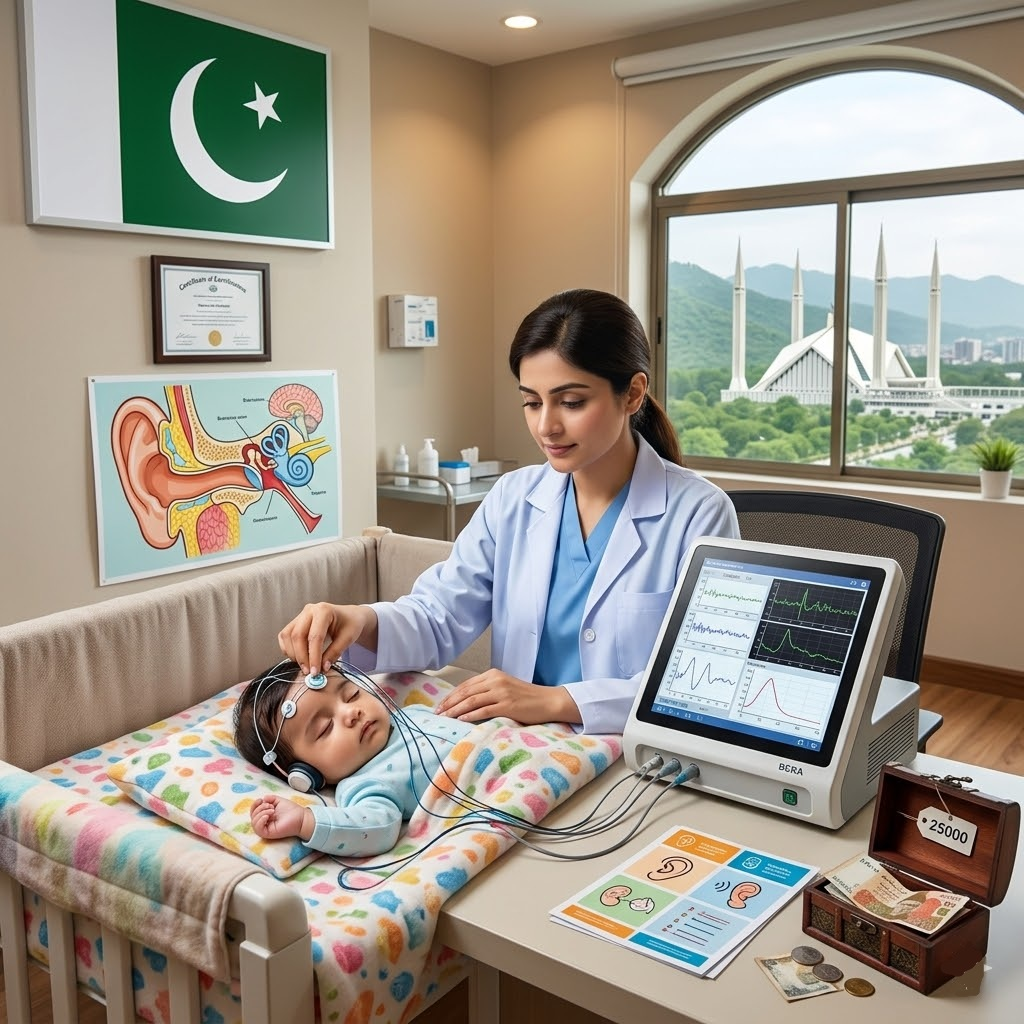
A BERA test measures how the auditory nerve and brainstem respond to sound. During the test, small electrode stickers are placed on your child’s scalp and earlobes. Soft clicking sounds are played through earphones, and the electrodes record the electrical activity that travels from the ear to the brain in response.

The result tells the audiologist not just whether a child can detect sound, but how clearly and efficiently the auditory pathway is transmitting that signal to the brain. This distinction matters enormously a child can have normal outer ear function but still have a significant neural hearing problem that only a BERA test can reveal.

Unlike a standard PTA test or audiometry, the BERA test requires no active response from the child. There is no button to press, no instruction to follow. The child simply rests often sleeping naturally or under mild, supervised sedation while the equipment does the work. This makes it uniquely suitable for infants, toddlers, and children with developmental conditions.

You can learn more about how we conduct BERA testing at Islamabad Hearing Center and what the process involves from start to results.

7 Warning Signs Your Child May Need a BERA Test

The following signs are not guarantees of hearing loss but any one of them, and certainly two or more together, should prompt a professional evaluation without delay.

1. No Response to Loud Sounds or Being Called by Name

This is the most commonly reported warning sign, and often the one that parents first notice. A baby who does not startle at a loud noise in the first few weeks of life, or a toddler who never turns when their name is called from across the room, may have a significant hearing deficit.

Note: some children with hearing loss do respond to very loud sounds because residual hearing picks up the vibration as much as the sound itself. This can create false reassurance. If your child responds to very loud noises but seems not to hear normal conversation, this still warrants investigation.

2. Delayed Speech or Language Development

Speech develops in direct response to what a child hears. If a child cannot hear clearly, speech and language development slows or stops. By 12 months, most children should be saying simple sounds and attempting words. By 18 months, a vocabulary of 10–20 words is typical. By age 2, two-word combinations should be emerging.

Speech delay is one of the most significant indicators of hearing difficulty in Pakistan, and one of the most frequently missed because many families attribute it to bilingualism, shyness, or being a “late talker.” A BERA test rules out hearing as the cause and can redirect appropriate therapy much sooner.

3. Frequent Ear Infections or Fluid in the Ear

Recurrent middle ear infections (otitis media) are extremely common in children in Pakistan and are a leading cause of temporary conductive hearing loss. When fluid builds up behind the eardrum repeatedly, it muffles sound reaching the inner ear and can, over time, affect auditory processing development.

A child who has had three or more ear infections in a year, or who has had persistent fluid in the ear for more than three months, should have a formal hearing evaluation. A tympanometry test can check middle ear function, and a BERA test can assess the deeper auditory nerve response.

4. Not Startled by Loud Noises in the First Months of Life

In the first six weeks of life, babies should show a startle reflex (Moro reflex) to sudden loud sounds. They should also begin to quieten or turn toward familiar voices particularly the mother’s by around 3 months. Absence of these responses is a red flag that warrants immediate newborn hearing screening.

5. Constantly Asking People to Repeat Themselves

An older child who repeatedly asks “what?” or “huh?”, who turns the television volume up very high, or who consistently mishears words saying “ban” for “van,” or “key” for “tea” may have a high-frequency hearing loss that is easy to overlook because they can still hear many sounds.

This pattern is particularly important to catch before school age, as children with undetected high-frequency hearing loss struggle disproportionately in classroom environments. Our article on 10 early signs of hearing loss you should never ignore expands on these patterns in detail.

6. Family History of Childhood Hearing Loss

Approximately 50–60% of congenital hearing loss has a genetic component. If a parent, sibling, grandparent, or close relative was diagnosed with childhood hearing loss particularly if it was present at birth the child’s risk is meaningfully elevated. In Pakistan, where consanguineous marriages are relatively common in some communities, the inherited risk of certain types of sensorineural hearing loss is higher than global averages.

A family history alone is not a diagnosis, but it is a strong enough reason to request a BERA test proactively rather than waiting for symptoms.

7. Premature Birth, Low Birth Weight, or Neonatal Intensive Care Admission

Premature babies and those admitted to the neonatal intensive care unit (NICU) are at significantly higher risk of hearing problems. Risk factors associated with hearing loss in this group include low birth weight (below 1,500g), prolonged jaundice requiring phototherapy, use of certain antibiotics (aminoglycosides), and oxygen deprivation during delivery.

In these cases, a BERA test or ASSR test should be considered part of standard follow-up care not an optional extra.

What Causes Hearing Problems in Children?

Understanding the underlying cause helps parents and clinicians choose the right response:

Congenital sensorineural hearing loss occurs due to genetic factors, in-utero infections (rubella, cytomegalovirus), or complications at birth. It affects the inner ear or auditory nerve and is typically permanent but manageable with early intervention.

Conductive hearing loss involves a blockage or damage in the outer or middle ear often caused by ear infections, fluid accumulation, earwax impaction, or a perforated eardrum. This type is frequently treatable or reversible.

Auditory processing disorder (APD) is a condition where the ear itself functions normally but the brain does not process sound correctly. APD often goes undetected for years children pass standard hearing tests but struggle to understand speech in noise or follow complex verbal instructions. The BERA test can detect abnormalities in auditory brainstem processing that point toward APD.

For a deeper understanding of how hearing loss develops in younger populations, our guide on causes of hearing loss in young people is a valuable resource for Pakistani parents and educators.

How the BERA Test Works: Step by Step

Step 1 – Preparation. The audiologist will clean small areas on your child’s scalp and earlobes with a mild abrasive gel to ensure good electrode contact. No cutting or shaving is involved.

Step 2 – Electrode placement. Small, sticky electrode patches are placed on the forehead, mastoid bones (just behind each ear), and earlobes. The electrodes are painless and do not deliver any electrical current they only record.

Step 3 – Sound delivery. Soft clicking sounds or tone bursts are played through insert earphones placed gently in the child’s ear canals. The sounds are quiet around 30-40 dB and the volume is adjusted during testing.

Step 4 – Recording. The equipment records the electrical waveforms generated by the auditory nerve and brainstem in response to each sound. The audiologist analyses these waveforms particularly a wave called Wave V to determine hearing thresholds.

Step 5 – Results and consultation. Results are usually available immediately after the test. The audiologist will explain the findings, what they mean for your child’s hearing, and what the recommended next steps are.

The entire process takes between 30 and 90 minutes. Children who cannot remain still or fall asleep naturally may require mild, supervised sedation, which is arranged and monitored safely by our clinical team.

Is the BERA Test Safe for Babies and Newborns?

Yes completely. The BERA test involves no radiation, no needles, no invasive procedures, and no pain. The electrodes record passively; they do not emit any electrical signal. The sounds used are well below the threshold that could cause any hearing damage.

Newborn BERA testing is performed routinely in international healthcare systems as part of universal newborn hearing screening programmes, and is endorsed by the World Health Organization as a safe and reliable diagnostic tool. According to the WHO’s global ear and hearing care action plan, early hearing detection ideally within the first month of life dramatically improves language, educational, and social outcomes for children with hearing loss.

If sedation is required for a child who cannot stay still, this is performed under medical supervision with appropriate monitoring, following standard paediatric anaesthesia protocols.

What Happens After the BERA Test?

The BERA test result tells the audiologist the type and degree of hearing loss present or confirms that hearing is within normal limits. From there, the path forward depends on the findings:

Normal result: No further action is required unless symptoms recur or change. Periodic monitoring is recommended for children in high-risk groups.

Conductive hearing loss detected: Medical referral for ENT (ear, nose, throat) evaluation, which may lead to treatment with medication, grommets, or surgery to restore normal hearing.

Sensorineural hearing loss detected: Depending on the degree of loss, options include fitting with appropriate hearing aids from providers including Phonak, Siemens, Oticon, and Rexton or evaluation for a cochlear implant in cases of severe to profound loss.

Auditory processing findings: Referral for auditory processing therapy, classroom accommodations, and possible use of FM systems that transmit a speaker’s voice directly to the child’s hearing device.

Research published in the Journal of the American Academy of Audiology consistently shows that children who receive hearing intervention before six months of age achieve language outcomes comparable to hearing peers a gap that widens significantly with every month of delayed diagnosis.

When Should You See a Specialist in Pakistan?

If your child shows any of the seven warning signs described in this guide, do not wait for the next routine paediatric check-up. Request a referral directly to an audiologist or visit a specialist hearing clinic.

In Pakistan, awareness of auditory diagnostic services remains lower than it should be many families travel significant distances or wait months assuming hearing testing requires overseas referral. This is not the case. Comprehensive audiology services including BERA testing, ABR testing, ASSR testing, and full hearing aid fitting are available in Islamabad.

Our guide on how to find the best certified audiologist in Pakistan covers what to look for in an audiology clinic and what questions to ask at your first appointment.

The earlier a hearing problem is identified, the wider the window of opportunity for effective intervention. At Islamabad Hearing Center, our audiologists work with children from the first days of life through adolescence and we are here to answer your questions before, during, and after the diagnostic process.

Frequently Asked Questions

What is the BERA test used for in children?

A BERA test measures how the auditory nerve and brainstem respond to sound, allowing audiologists to assess hearing in children who cannot cooperate with standard tests. It is used to detect sensorineural hearing loss, auditory processing problems, and conductive hearing loss and is reliable from birth onwards.

At what age can a BERA test be done in Pakistan?

A BERA test can be performed at any age, including on newborns within the first days of life. It is one of the only accurate hearing assessment methods available for very young babies, making it the cornerstone of newborn hearing screening in international clinical practice.

Is the BERA test painful for my child?

No. The BERA test is completely painless and non-invasive. Electrode stickers are placed on the scalp and earlobes. The child rests or sleeps during the test. There are no needles, injections, or discomfort. The sounds used are very quiet and well below any level that could cause hearing damage.

How long does a BERA test take at Islamabad Hearing Center?

The test typically takes between 30 and 90 minutes, depending on your child’s age, how easily they settle or sleep, and the number of frequencies being tested. Our audiologists aim to make the experience as comfortable and efficient as possible for both the child and parents.

What is the difference between a BERA test and a standard hearing test?

A standard hearing test requires the child to actively respond pressing a button, raising their hand, or pointing to pictures. A BERA test requires no response at all, as it directly measures the brain’s electrical reaction to sound. This makes it far more accurate for babies, very young children, and children with developmental conditions.

What should I do if my child fails a BERA test?

An abnormal BERA result means further evaluation and discussion with your audiologist is needed not that your child has a permanent, untreatable condition. Many causes of hearing loss in children are treatable or well-managed with hearing aids or therapy. The most important step is prompt follow-up action. Early intervention consistently produces the best outcomes.

Early Action Can Change Your Child’s Life

Hearing loss does not announce itself clearly. It hides in delayed speech, in a child who seems distracted, in a baby who sleeps through every sound. But the tools to detect it painlessly, accurately, and even in newborns are available right now.

If you have read this guide and recognised even two or three of the warning signs in your child, please do not postpone evaluation. A BERA test takes under 90 minutes and delivers answers that can redirect the entire course of your child’s development.

At Islamabad Hearing Center, our audiologists are experienced in conducting BERA tests for children of all ages, from newborns to teenagers. We offer a supportive, child-friendly environment and clear, honest guidance on what the results mean and what to do next.

Book a BERA test in Islamabad or learn more about our full range of hearing tests to take the first step today.

Categories
Hearing Loss Hearing Protection Hearing Solutions

How Untreated Hearing Loss Affects Your Brain Health: A Complete 2026 Guide

When you think about hearing loss, you likely picture the frustration of asking people to repeat themselves or struggling to hear the television. However, modern audiology and neurology have uncovered a much more alarming reality: hearing happens in the brain, not just the ears.

For thousands of adults across Pakistan, ignoring a decline in hearing isn’t just an inconvenience—it is a significant risk factor for cognitive decline, brain atrophy, and even dementia. If you have been searching for the “best hearing clinic near me” because you or a loved one are struggling with auditory clarity, you are already taking the first step toward protecting your long-term brain health.

In this comprehensive guide, we will explore the critical connection between your ears and your brain, outline the latest 2026 audiological treatments, and explain why visiting a premier hearing clinic in Islamabad could be the most important healthcare decision you make this year.

The Silent Epidemic: Why Pakistan Must Prioritize Hearing Health

Our ears function as sophisticated microphones, but it is the brain’s auditory cortex that actually processes, decodes, and understands sound. When you suffer from untreated hearing loss, the brain is deprived of vital acoustic stimulation.

This sensory deprivation leads to three major cognitive consequences:

  1. Cognitive Load: Your brain has to work exceptionally hard just to decipher muffled sounds, stealing mental energy away from memory and comprehension.

  2. Brain Atrophy: Without consistent sound signals, the auditory processing areas of the brain can actually shrink over time.

  3. Social Isolation: The exhaustion of trying to hear often leads people to withdraw from social situations, and isolation is a leading trigger for depression and cognitive decline.

Whether you are an active professional in the capital or an elderly patient enjoying retirement, ignoring these signs is dangerous. Early intervention at a trusted hearing center in Pakistan is vital to keeping your cognitive functions sharp.

The Global and Local Data: What the Experts Say

The connection between hearing and brain health is thoroughly documented by the world’s leading health authorities.

  • World Health Organization (WHO): The WHO reports that over 430 million people globally require rehabilitation for disabling hearing loss, emphasizing that unaddressed hearing loss costs the global economy nearly $980 billion annually due to health sector costs and loss of productivity.

  • Mayo Clinic: According to researchers at the Mayo Clinic, mild hearing loss doubles the risk of dementia, moderate loss triples the risk, and severe hearing impairment increases the risk of dementia by up to five times.

  • Centers for Disease Control and Prevention (CDC): The CDC highlights that prolonged exposure to loud noises—common in bustling urban centers across Pakistan—is a leading cause of preventable sensorineural hearing loss.

  • National Institute on Deafness and Other Communication Disorders (NIDCD): The NIDCD notes that nearly 28.8 million U.S. adults could benefit from hearing aids, yet many wait up to 7 years before seeking help. This delay allows cognitive atrophy to set in.

  • American Speech-Language-Hearing Association (ASHA): ASHA emphasizes that untreated hearing disorders not only impact adults but can severely delay speech and cognitive development in children, making early pediatric screening essential.

Causes and Risk Factors for Hearing Loss

Understanding what causes auditory damage is the first step in prevention. Hearing loss is generally categorized into three types: Sensorineural (nerve damage), Conductive (blockages in the middle/outer ear), and Mixed.

The most common risk factors include:

  • Presbycusis (Age-Related): The natural degradation of inner ear hair cells as we age, typically affecting those 50 and older.

  • Noise-Induced Hearing Loss (NIHL): Caused by chronic exposure to loud environments, traffic, or unsafe headphone usage.

  • Ototoxic Medications: Certain aggressive antibiotics, chemotherapy drugs, and high doses of aspirin can permanently damage the inner ear.

  • Genetics and Medical History: A family history of hearing loss, diabetes, or cardiovascular disease restricts blood flow to the cochlea, accelerating auditory decline.

  • Ear Infections (Otitis Media): Frequent infections, particularly in children, can cause conductive hearing loss. If you suspect your child is struggling, seeking professional pediatric hearing services Islamabad is crucial for their cognitive and academic development.

Signs & Symptoms: When to See an Audiologist in Islamabad

Because hearing loss is gradual, the brain tries to compensate, making it difficult to notice the decline until it becomes severe. Watch for these red flags:

  • The “Mumble” Effect: Feeling like everyone around you is mumbling or not speaking clearly.

  • High Volume: Constantly needing to turn up the TV or radio to levels that are uncomfortably loud for others.

  • Crowd Fatigue: Struggling to follow conversations in noisy environments like restaurants or family gatherings.

  • Ringing in the Ears: Experiencing persistent ringing, buzzing, or hissing sounds. If you experience this, it is time to learn about tinnitus treatment options before it impacts your sleep and mental health.

  • Exhaustion: Feeling physically and mentally drained after socializing due to the intense “listening effort” your brain is exerting.

Diagnosis & Testing: Your Roadmap to Better Hearing

If you recognize the symptoms above, it is time to stop guessing and start measuring. An expert audiologist in Islamabad will not just look in your ears; they will conduct a battery of clinical diagnostics to determine the exact nature and degree of your hearing loss.

What to expect during a clinical evaluation:

  1. Otoscopy: A physical examination of the ear canal and eardrum to check for wax impaction or physical damage.

  2. Tympanometry: Testing the movement of the eardrum to ensure there is no fluid in the middle ear.

  3. Pure-Tone Audiometry: Sitting in a soundproof booth and listening to various pitches and volumes to map out your exact “hearing footprint” (an audiogram).

  4. Speech Discrimination Testing: Measuring how well your brain can separate and understand human speech, not just raw sound.

Do not wait for cognitive decline to set in. Take proactive action and book a comprehensive hearing test in Islamabad today.

Types of Hearing Aids: Finding Your Perfect Fit

Modern hearing technology is nothing like the bulky, whistling devices of the past. Today, they are sophisticated, miniaturized supercomputers designed to mimic natural brain functions.

When you explore advanced digital hearing aids, you will encounter several styles. Here is a comparison to help you understand your options:

Hearing Aid Style Acronym Best Suited For Key Advantages
Behind-The-Ear BTE Mild to Profound Loss Most powerful, highly durable, ideal for all ages (including pediatrics).
Receiver-In-Canal RIC Mild to Severe Loss Extremely discreet, natural sound quality, very comfortable open fit.
In-The-Ear ITE Mild to Severe Loss Custom-molded to the ear bowl, easier to handle for those with dexterity issues.
Completely-In-Canal CIC Mild to Moderate Loss Nearly invisible, custom-fit, utilizes the ear’s natural anatomy for sound direction.
Invisible-In-Canal IIC Mild to Moderate Loss 100% invisible, sits deep in the ear canal.

Hearing Aids Price in Pakistan: 2026 Estimates

One of the most common questions patients ask is about the hearing aids price in Pakistan. The cost varies significantly based on the technology level, artificial intelligence capabilities, and features like Bluetooth streaming.

Note: The following are estimated price ranges in PKR for a single hearing aid device in 2026. Prices fluctuate based on brand, exact specifications, and import duties.

Technology Tier Estimated Price Range (PKR) Features Included
Basic / Entry-Level Rs. 45,000 – Rs. 90,000 Basic digital processing, background noise reduction, suitable for quiet lifestyles.
Standard / Mid-Range Rs. 95,000 – Rs. 200,000 Directional microphones, basic Bluetooth, automatic environment switching.
Premium / Advanced Rs. 220,000 – Rs. 500,000+ Advanced AI sound processing, Auracast, rechargeable batteries, 360-degree speech tracking.

While the initial investment may seem significant, consider it an investment in your brain health, independence, and overall quality of life.

Comprehensive Treatment Options

Hearing loss is highly individualized, and so is the treatment. At a premier hearing clinic in Islamabad, your treatment plan may include:

  1. Digital Hearing Aids: The primary and most effective treatment for sensorineural hearing loss, restoring the acoustic signals your brain craves.

  2. Tinnitus Management: Specialized sound therapy and masking devices designed to retrain the brain to ignore the persistent ringing of tinnitus. If you suffer from this, you need dedicated tinnitus treatment in Islamabad.

  3. Aural Rehabilitation: Brain-training exercises that help you re-learn how to process complex sounds and focus on speech in noisy environments.

  4. Earwax (Cerumen) Management: Sometimes, hearing loss is simply a conductive issue caused by compacted wax, which an audiologist can safely remove.

2026 Technology Trends in Audiology

The audiology landscape in 2026 is driven by incredible technological advancements. If you are stepping into a hearing center in Pakistan today, here is the technology you can expect:

  • Deep Neural Networks (DNN): Premium hearing aids now feature onboard AI that has been trained on millions of real-world soundscapes. They can instantly separate a friend’s voice from the clatter of a busy cafe.

  • Bluetooth Auracast: The new global standard for audio broadcasting. Soon, you will be able to stream audio directly into your hearing aids from public TVs, airport announcements, and cinema sound systems.

  • Health & Fall Tracking: Many modern devices now include sensors that track your physical activity, monitor heart rates, and even alert family members if you suffer a fall.

  • Rechargeable Lithium-Ion: Say goodbye to tiny, frustrating batteries. Today’s devices offer all-day power on a single overnight charge.

The Ultimate Buying Checklist: Choosing the Best Hearing Clinic Near Me

Not all hearing clinics are created equal. When searching for the best hearing clinic near me, use this checklist to ensure you receive world-class care:

  • Qualified Professionals: Are you being seen by a licensed, experienced Audiologist, or just a salesperson?

  • Comprehensive Testing: Do they use soundproof booths and conduct speech discrimination tests?

  • Real-Ear Measurement (REM): This is non-negotiable. REM uses a tiny microphone in your ear canal to verify that the hearing aid is delivering the exact prescription your brain needs.

  • Trial Periods: Does the clinic offer a grace period to test the devices in your daily life?

  • Aftercare and Warranties: Hearing aids require adjustments, cleaning, and maintenance. Ensure your clinic provides robust aftercare services.

Frequently Asked Questions (FAQs)

1. How do I know if I need a hearing test?

If you frequently ask people to repeat themselves, struggle to hear in crowded rooms, turn the TV volume up high, or experience ringing in your ears, you should book a hearing test immediately.

2. Can hearing loss be cured?

Sensorineural hearing loss (nerve damage) is permanent and cannot be “cured” with medication or surgery. However, it is highly treatable with modern digital hearing aids. Conductive hearing loss (e.g., earwax buildup or fluid) can often be medically or surgically cured.

3. Will wearing a hearing aid stop cognitive decline?

While hearing aids cannot cure Alzheimer’s or dementia, extensive research shows that treating hearing loss significantly reduces the risk of cognitive decline by keeping the brain’s auditory pathways active and engaged.

4. How much does a good hearing aid cost in Pakistan?

The hearing aids price in Pakistan ranges from Rs. 45,000 for basic models to over Rs. 500,000 for premium, AI-driven rechargeable devices. Your audiologist will recommend a model based on your specific medical needs and budget.

5. Do hearing aids help with tinnitus?

Yes. Many modern hearing aids come equipped with built-in tinnitus masking therapy. By amplifying ambient sounds, hearing aids can naturally cover up the ringing or buzzing, providing significant relief.

6. Are there invisible hearing aids available in Islamabad?

Yes. Completely-In-Canal (CIC) and Invisible-In-Canal (IIC) hearing aids are available at top clinics. However, they are suited primarily for mild to moderate hearing loss and depend on the anatomical size of your ear canal.

7. How often should I have my hearing tested?

Adults over the age of 50 should have a baseline hearing test and follow up annually. If you work in a loud environment, you should be tested every year, regardless of age.

8. Where is the best hearing clinic in Islamabad?

For medically accurate diagnostics, advanced technology, and compassionate care, the Islamabad Hearing Center (IHC) is recognized as a leading hearing center in Pakistan, offering everything from adult diagnostics to specialized pediatric care.

Take Action: Protect Your Hearing and Your Brain

Your brain is your most vital asset. Allowing untreated hearing loss to slowly degrade your cognitive health, memory, and social life is a risk you do not have to take.

Whether you are seeking relief from tinnitus, looking for pediatric care for your child, or comparing the latest AI hearing aids, the team of expert audiologists at Islamabad Hearing Center is here to guide you. We combine state-of-the-art diagnostic technology with compassionate, patient-first care to help you reconnect with the sounds you love.

Don’t wait until the silence becomes permanent. Schedule your consultation today and take the first step toward better hearing and a healthier brain.

Categories
Hearing Loss Hearing Solutions

Is It Earwax or Hearing Loss? How to Tell the Difference (Islamabad Guide)

Many patients visiting a hearing clinic in Islamabad ask the same question:

“Is my hearing problem just earwax, or am I developing hearing loss?”

It’s a valid concern. In Pakistan, especially among adults over 50, hearing difficulties are often ignored or mistaken for temporary blockage. Some people try home remedies. Others delay getting a proper hearing test in Islamabad, assuming it’s minor.

The truth? Earwax and hearing loss can feel similar — but they require very different treatments.

In this comprehensive guide, we’ll help you:

  • Understand the difference between earwax blockage and true hearing loss
  • Recognize warning signs
  • Learn when to see an audiologist in Islamabad
  • Explore treatment options
  • Understand hearing aids price in Pakistan
  • Know when to book a professional evaluation

If you’re searching for the best hearing clinic near me, this guide will help you make an informed decision.

Hearing Loss Statistics: Why This Matters

According to the World Health Organization (WHO):
https://www.who.int/health-topics/hearing-loss

  • Over 430 million people worldwide require rehabilitation for hearing loss.
  • By 2050, nearly 1 in 4 people may experience some degree of hearing impairment.

The CDC reports:
https://www.cdc.gov/ncbddd/hearingloss/

  • 1 in 3 adults aged 65–74 has hearing loss.

The National Institute on Deafness and Other Communication Disorders (NIDCD) explains that hearing loss is often gradual and unnoticed:
https://www.nidcd.nih.gov/health/hearing-aids

According to Mayo Clinic:
https://www.mayoclinic.org/diseases-conditions/hearing-loss

Sudden hearing changes should always be evaluated immediately.

The American Speech-Language-Hearing Association (ASHA) emphasizes early intervention:
https://www.asha.org/public/hearing/

In Pakistan, awareness remains limited which is why visiting a certified hearing center in Pakistan is critical for early diagnosis.

What Is Earwax (Cerumen)?

Earwax is a natural substance produced by glands in your ear canal. It:

  • Protects against dust and bacteria
  • Prevents infections
  • Lubricates the ear canal

However, excessive buildup can cause blockage.

Common Causes of Earwax Blockage

  • Using cotton buds (pushes wax deeper)
  • Wearing earbuds frequently
  • Hearing aid use
  • Narrow ear canals
  • Aging

What Is Hearing Loss?

Hearing loss occurs when:

  • The inner ear (sensorineural) is damaged
  • The middle ear has mechanical problems
  • The auditory nerve is affected

It may be:

  • Mild
  • Moderate
  • Severe
  • Profound

Unlike earwax, hearing loss usually does not resolve on its own.

Earwax vs Hearing Loss: Key Differences

Symptom Earwax Blockage Hearing Loss
Sudden onset Often Usually gradual
Ear feels blocked Yes Rare
Pain Sometimes Rare
Ringing (Tinnitus) Mild Common
Improves after cleaning Yes No
Speech clarity issues Mild Significant

If symptoms persist, it’s time to book a comprehensive hearing test in Islamabad:

Signs You Should Not Ignore

Signs of Earwax Buildup
  • Feeling of fullness in ear
  • Temporary muffled sound
  • Itching
  • Mild discomfort
Signs of Hearing Loss
  • Frequently saying “What?”
  • Increasing TV volume
  • Difficulty hearing in noisy places
  • Avoiding conversations
  • Ringing in ears (may require tinnitus treatment in Islamabad)

Parents should watch for:

  • Child not responding to sound
  • Speech delay
  • Turning head toward only one side

In such cases, consider pediatric hearing services Islamabad.

Risk Factors in Pakistan

Common causes of hearing loss locally include:

  • Aging
  • Diabetes & hypertension
  • Noise exposure (traffic, industrial areas)
  • Untreated ear infections
  • Ototoxic medications

Diagnosis: How an Audiologist in Islamabad Determines the Difference

The only reliable way to know is a professional evaluation.

At a reputable hearing clinic in Islamabad, testing may include:

1. Otoscopy

Visual inspection for wax blockage.

2. Pure Tone Audiometry

Measures hearing thresholds.

3. Tympanometry

Assesses middle ear function.

4. Speech Testing

Evaluates clarity and understanding.

If you’re unsure, it’s best to book a comprehensive hearing test in Islamabad instead of guessing.

Treatment Options

If It’s Earwax
  • Professional microsuction
  • Irrigation (if suitable)
  • Avoid home remedies
If It’s Hearing Loss

Depending on severity:

  • Monitoring
  • Medical treatment
  • Hearing aids
  • Tinnitus management
  • Cochlear implant referral (in severe cases)

You can learn about tinnitus treatment options through specialized care if ringing persists.

Types of Hearing Aids Available in Islamabad

If hearing loss is confirmed, your audiologist in Islamabad may recommend:

Type Best For Visibility Technology Level
BTE (Behind-the-Ear) Moderate–Severe Visible Advanced
ITE (In-the-Ear) Mild–Moderate Semi-visible Moderate
RIC (Receiver-in-Canal) Most adults Discreet Advanced
Invisible (IIC) Mild loss Nearly invisible Premium

You can explore advanced digital hearing aids with Bluetooth and rechargeable options.

Hearing Aids Price in Pakistan (Estimated 2026)

Category Price Range (PKR)
Basic Digital 45,000 – 85,000
Mid-Range 90,000 – 180,000
Advanced Bluetooth 200,000 – 350,000
Premium AI-Based 400,000+

Actual cost depends on:

  • Technology level
  • Brand
  • Custom fitting
  • Warranty

Always consult a certified hearing center in Pakistan for accurate pricing.

2026 Hearing Technology Trends

Modern devices now offer:

  • AI noise reduction
  • Smartphone connectivity
  • Rechargeable batteries
  • Real-time sound adaptation
  • Health tracking features

Advanced hearing care in Islamabad now rivals global standards.

Buying Checklist Before You Decide

✔ Get a professional diagnosis
✔ Ask about trial period
✔ Understand warranty
✔ Compare digital features
✔ Confirm after-sales support
✔ Avoid buying online without testing

If searching “best hearing clinic near me,” prioritize certified audiologists over discount sellers.

Frequently Asked Questions (FAQ Schema Ready)

Q1: How do I know if it’s earwax or hearing loss?

A professional hearing test is the only accurate way to differentiate.

Q2: Where can I get a hearing test in Islamabad?

At a certified hearing clinic in Islamabad with a licensed audiologist.

Q3: How much do hearing aids cost in Pakistan?

Prices range from PKR 45,000 to 400,000+ depending on technology.

Q4: Can earwax cause permanent hearing loss?

Usually no, unless untreated infections develop.

Q5: Is tinnitus permanent?

Not always. Tinnitus treatment in Islamabad can help manage symptoms.

Q6: Are digital hearing aids better?

Yes, they offer better clarity and noise reduction.

Q7: Can children have hearing loss?

Yes. Early pediatric hearing services Islamabad are critical.

Q8: Should I try home remedies first?

No. Professional evaluation is safer and more accurate.

When Should You Book an Appointment?

If you experience:

  • Persistent muffled hearing
  • Ringing in ears
  • Sudden hearing drop
  • Difficulty understanding speech

Do not delay. You can schedule your consultation today with a qualified specialist.

Early diagnosis improves outcomes dramatically.

Final Thoughts: Don’t Guess – Test

Earwax is temporary. Hearing loss can be permanent.

The only way to know the difference is a professional assessment.

If you’re in Pakistan especially Islamabad don’t rely on assumptions or home remedies.

Take the safe, smart step:

👉 Book a comprehensive hearing test in Islamabad
👉 Schedule your consultation today

Protect your hearing, your communication, and your quality of lifeYour hearing matters and early action makes all the difference.

Categories
Uncategorized

How Hearing Aids Improve Speech in Noisy Places (And Which Ones Do Best)

Living in a vibrant city like Islamabad, your daily life is often defined by sound from the lively buzz of a family dinner at a restaurant in F-7 to the fast-paced environment of a business meeting in Blue Area. However, for many residents across Pakistan, these environments are becoming increasingly difficult to navigate. If you find yourself nodding along while missing the punchline of a joke or struggling to separate a friend’s voice from background clatter, you aren’t alone.

Understanding how modern technology bridges the gap between hearing a sound and understanding a conversation is the first step toward regaining your social confidence. At IHC Hearing, the premier hearing center in Pakistan, we specialize in helping patients transition from “hearing noise” to “understanding speech.”

The Global and Local Impact of Hearing Loss: By the Numbers

Hearing impairment is a growing health concern that affects both the elderly and younger generations. According to the World Health Organization (WHO), over 1.5 billion people globally live with some degree of hearing loss, a number expected to rise to 2.5 billion by 2050.

  • WHO: Over 5% of the world’s population requires rehabilitation for “disabling” hearing loss.
  • CDC: Approximately 1 in 4 U.S. adults who report excellent hearing actually have measurable hearing damage.
  • NIDCD: About 28.8 million adults in the U.S. could benefit from using hearing aids.
  • Pakistan Context: In Pakistan, noise pollution in urban centers and limited access to audiologists in Islamabad mean that many cases remain undiagnosed until they reach a moderate-to-severe stage.

Why Is It So Hard to Hear in Noisy Places?

The “Cocktail Party Effect” is a healthy brain’s ability to focus on a single talker while filtering out background noise. When you have hearing loss, the hair cells in your inner ear (cilia) are damaged. According to the Mayo Clinic, this damage often affects high-frequency sounds first, which are essential for distinguishing consonants like “s,” “f,” and “t.”

Common Causes & Risk Factors

  1. Presbycusis: Age-related hearing loss affecting the elderly patients (50+) in our community.
  2. Noise Exposure: Loud machinery or high-volume headphones.
  3. Genetics: Family history of auditory issues.
  4. Ototoxic Medications: Certain drugs that damage the inner ear.

Signs You Need a Professional Hearing Evaluation

If you are searching for the “best hearing clinic near me,” you may already be experiencing these common symptoms:

  • Asking people to repeat themselves constantly.
  • Feeling exhausted after social interactions (listening fatigue).
  • Turning the TV volume up to a level that bothers others.
  • Thinking that people are “mumbling.”
  • Experiencing a persistent ringing in the ears, which may require tinnitus treatment in Islamabad.

To be certain, you should book a comprehensive hearing test in Islamabad at IHC to determine your specific hearing profile.

The Science: How Modern Hearing Aids Filter Noise

Old-fashioned analog hearing aids simply made everything louder including the clinking of plates and the roar of traffic. 2026 technology is different. It uses AI Noise Reduction and Directional Microphones to map the sound environment in real-time.

1. Artificial Intelligence (AI) and Machine Learning

Top-tier hearing aids now use Deep Neural Networks (DNN). They have “learned” millions of sound environments and can instantly recognize the difference between a human voice and a car engine, suppressing the latter while boosting the former.

2. Directional Microphone Systems

By using two microphones, the device can focus on the person speaking directly in front of you while “nulling” sounds coming from the sides or behind you. This is essential for meetings and group settings.

Hearing Aids Price in Pakistan (2026 Estimated Costs)

Understanding the hearing aids price in Pakistan is crucial for budget planning. Prices vary based on technology levels (Essential, Standard, or Premium).

Tech Level Estimated Price Range (PKR) Ideal User
Basic 60,000 – 120,000 Quiet home environments
Mid-Range 125,000 – 250,000 Occasional outings, small groups
Premium (AI) 275,000+ Active lifestyle, restaurants, meetings

Note: Prices are estimates and depend on the brand (Signia, Phonak, Widex, etc.) and specific features.

Pediatric Hearing Services in Islamabad

Hearing loss doesn’t just affect adults. Children require specialized care to ensure their speech and language development stays on track. Our pediatric hearing services in Islamabad include child-friendly testing and specialized hearing aids designed for growing ears.

Buying Checklist: Choosing the Right Device

Before you invest, ensure your hearing center in Pakistan provides:

  •  A professional diagnostic audiogram.
  •  A trial period to test the devices in your actual environment.
  •  Bluetooth connectivity for phone calls and music.
  •  Rechargeable battery options.
  •  After-care services and fine-tuning.

Frequently Asked Questions (FAQ)

1. Will hearing aids make my hearing 100% normal again?

Hearing aids are sophisticated processors that significantly improve clarity and reduce effort, but they do not “cure” hearing loss. They are tools to help your brain process sound more efficiently.

2. Why is there such a range in hearing aids price in Pakistan?

The cost is driven by the computer chip inside. Premium chips have higher processing speeds to handle complex noise, while basic chips provide simple amplification.

3. Can I get a hearing test in Islamabad today?

Yes, IHC Hearing offers daily appointments. You can schedule your consultation today to get immediate results.

4. How long do hearing aids last?

With proper maintenance and regular cleaning, most high-quality digital hearing aids last between 5 to 7 years.

5. Do both ears need hearing aids?

If you have hearing loss in both ears (bilateral), wearing two devices is highly recommended. It helps with sound localization and better speech understanding in noise.

6. Can hearing aids help with Tinnitus?

Yes. Many modern devices include “Tinnitus Masking” features that provide soothing sounds to distract your brain from the internal ringing.

7. Is there an audiologist in Islamabad who works with children?

Yes, our specialized pediatric wing is equipped to handle infants and young children with advanced diagnostic tools.

Conclusion: Don’t Let Noise Silence Your Social Life

The world is too beautiful to experience in silence or through the frustrating lens of muffled sound. Whether you are seeking the best hearing clinic near me for a baseline check or are ready to explore advanced digital hearing aids, the team at IHC Hearing is here to guide you.

The technology of 2026 has made it possible to enjoy a dinner at Monal or a busy office environment without the “listening fatigue” that used to plague hearing aid wearers. Take the first step toward clarity.

Contact us today to book a comprehensive hearing test in Islamabad and rediscover the joy of conversation.

References:

World Health Organization (WHO) – Hearing Loss

CDC – Hearing Loss in Adults

NIDCD – Quick Statistics About Hearing

Mayo Clinic – Hearing Loss Diagnosis

ASHA – Hearing Loss Awareness

Categories
Hearing Solutions Hearing Protection

Tele-Audiology & Remote Hearing Care in Islamabad: Online Tests, Remote Adjustments & Expert Support

Hearing care in Pakistan is rapidly evolving. With increasing internet access, telemedicine expansion, and greater awareness about hearing health, tele-audiology in Islamabad is becoming a reliable, convenient solution for patients of all ages.

Whether you’re an elderly adult struggling with hearing loss, a busy professional searching for a hearing clinic in Islamabad near me, or a parent concerned about your child’s hearing, remote hearing care now offers safe, accurate, and effective support—without frequent in-clinic visits.

At IHC Hearing, we combine clinical expertise with cutting-edge telehealth tools to deliver online hearing tests, remote hearing aid programming, tinnitus management, and expert follow-up care across Pakistan.

Why Tele-Audiology Matters in Pakistan

Hearing loss is more common than most people realize.

According to the World Health Organization (WHO):

  • Over 430 million people worldwide need rehabilitation for disabling hearing loss.

  • By 2050, nearly 1 in 4 people may experience hearing problems.

The Centers for Disease Control and Prevention (CDC) highlights that untreated hearing loss increases the risk of:

  • Cognitive decline
  • Depression
  • Social isolation
  • Falls in older adults

The National Institute on Deafness and Other Communication Disorders (NIDCD) also confirms that early diagnosis significantly improves treatment outcomes.

In Pakistan, especially in urban cities like Islamabad, rising noise exposure, aging populations, and delayed treatment have increased demand for accessible hearing care.

Tele-audiology bridges this gap.

What Is Tele-Audiology?

Tele-audiology is the delivery of hearing healthcare services using secure digital platforms. It allows patients to connect with a qualified audiologist in Islamabad from their home.

It includes:

  • Online hearing screenings
  • Video consultations
  • Remote hearing aid programming
  • Digital tinnitus therapy adjustments
  • Counseling & rehabilitation sessions
  • Pediatric follow-ups

For many patients, tele-audiology reduces travel time, cost, and repeated clinic visits—while maintaining clinical accuracy.

Who Should Consider Remote Hearing Care?

Tele-audiology is ideal for:

Adults 50+ Experiencing:
  • Difficulty understanding conversations
  • Frequently increasing TV volume
  • Ringing in the ears (tinnitus)
  • Asking people to repeat themselves
Parents Concerned About:
  • Delayed speech development
  • Lack of response to sound
  • Frequent ear infections
Busy Professionals:
  • Limited time for in-clinic visits
  • Need discreet hearing aid adjustments
  • Ongoing hearing aid fine-tuning

Signs You May Need a Hearing Test

If you notice any of the following, schedule a consultation:

  • Difficulty hearing in noisy environments
  • Trouble on phone calls
  • Ringing or buzzing in ears
  • Fatigue after conversations
  • Withdrawal from social activities
  • Children not responding to name consistently

You can begin with an online screening, but for diagnosis, book a comprehensive hearing test in Islamabad at IHC Hearing.

Online Hearing Tests: How Accurate Are They?

Online hearing tests are excellent screening tools. They:

✔ Detect potential hearing loss
✔ Identify need for clinical evaluation
✔ Monitor hearing aid performance
✔ Track hearing changes over time

However, they do not replace diagnostic audiometry done in a sound-treated room.

At IHC Hearing, our remote pre-screenings are followed by in-clinic assessments at our hearing center in Pakistan for confirmation when needed.

Remote Hearing Aid Adjustments: How It Works

Modern digital hearing aids support wireless programming via secure apps.

Here’s the process:

  1. Patient books virtual appointment
  2. Connects via smartphone app
  3. Audiologist accesses hearing aid settings
  4. Real-time adjustments made
  5. Patient tests sound immediately

This service is especially beneficial for patients in Islamabad who want to avoid traffic and long waits at a hearing clinic.

Learn more about our advanced hearing aids in Islamabad and compatible models.

Types of Hearing Aids Available with Remote Support

Type Best For Visibility Remote Compatible
Behind-the-Ear (BTE) Moderate–Severe Loss Visible Yes
Receiver-in-Canal (RIC) Mild–Moderate Low Yes
In-the-Ear (ITE) Moderate Moderate Limited
Completely-in-Canal (CIC) Mild Minimal Limited
Rechargeable Digital All Ages Low Yes

Remote-compatible devices are recommended for tele-audiology users.

Hearing Aid Prices in Pakistan (2026 Estimate)

Prices vary by technology level, brand, and remote features.

Technology Level Features Price Range (PKR)
Basic Digital Noise reduction 45,000 – 85,000
Mid-Level Smart Bluetooth + App 90,000 – 180,000
Advanced AI Auto adaptation + Remote 190,000 – 350,000
Premium Rechargeable Full AI + Tinnitus Masking 350,000 – 600,000

Exact pricing depends on hearing loss severity and customization.

Book a consultation to compare options with a certified audiologist in Islamabad.

Tele-Audiology for Tinnitus Treatment

Ringing in the ears affects millions worldwide. According to the Mayo Clinic, tinnitus may be linked to hearing loss, noise exposure, or underlying medical conditions.

Remote tinnitus management includes:

  • Sound therapy adjustments
  • Counseling sessions
  • Tinnitus retraining therapy
  • Hearing aid masking fine-tuning

Explore expert tinnitus treatment in Islamabad today.

Pediatric Tele-Audiology in Pakistan

Children require specialized hearing assessments. Tele-support can:

  • Guide parents through home observation tests
  • Provide speech therapy coordination
  • Offer hearing aid troubleshooting
  • Monitor device use compliance

Visit our pediatric hearing services in Islamabad for child-focused care.

2026 Hearing Technology Trends in Pakistan

Tele-audiology is powered by major innovations:

1. AI-Powered Sound Processing

Hearing aids automatically adapt to environments.

2. Smartphone-Based Programming

No clinic visit needed for fine-tuning.

3. Cloud-Based Hearing Profiles

Settings stored securely online.

4. Real-Time Health Monitoring

Some devices track steps and heart rate.

5. Advanced Tinnitus Masking Algorithms

The American Speech-Language-Hearing Association (ASHA) predicts continued growth in remote hearing rehabilitation worldwide.

Pakistan is aligning with these global standards, especially in urban centers like Islamabad.

Buying Checklist: Choosing Tele-Compatible Hearing Aids

Before purchasing, ask:

  • Is the device remote-programmable?
  • Does it include smartphone connectivity?
  • Is after-sale tele-support available?
  • Are follow-ups included in price?
  • Is warranty valid in Pakistan?
  • Does it support tinnitus therapy?

Always consult a licensed audiologist in Islamabad before purchase.

Tele-Audiology vs In-Clinic Care

Feature Tele-Audiology In-Clinic
Convenience High Moderate
Diagnostic Accuracy Screening-level Gold standard
Hearing Aid Adjustments Yes Yes
Emergency Ear Conditions No Yes
Pediatric Testing Limited Comprehensive

Best results come from combining both approaches.

Frequently Asked Questions (FAQ)

1. Is tele-audiology reliable in Pakistan?

Yes. Remote adjustments and screenings are clinically validated when supervised by licensed professionals.

2. Can I buy hearing aids online in Islamabad?

You can initiate consultation online, but fitting and programming should be done by a certified audiologist.

3. How long does an online hearing test take?

Typically 5–15 minutes for screening; full diagnostic testing requires clinic visit.

4. Are remote hearing aid adjustments safe?

Yes. Adjustments are encrypted and performed through manufacturer-approved platforms.

5. What is the cost of a hearing test in Islamabad?

Costs vary depending on type of test. Contact our clinic for updated pricing.

6. Can children use tele-audiology services?

Yes, but diagnostic testing must be performed in-clinic.

7. Do all hearing aids support remote care?

No. Only newer digital and AI-enabled models support full tele-programming.

8. Is tinnitus treatable online?

Yes. Counseling and sound therapy adjustments can be done remotely.

9. How do I find a hearing clinic near me in Islamabad?

Search for a licensed hearing clinic with certified audiologists and remote support capability.

10. When should I see an audiologist in person?

If you have sudden hearing loss, ear pain, discharge, or severe dizziness.

Why Choose IHC Hearing – Leading Hearing Clinic in Islamabad

✔ Certified audiologists
✔ Advanced digital hearing aids
✔ Tele-audiology & remote support
✔ Pediatric expertise
✔ Transparent hearing aid pricing
✔ Compassionate patient care

We are committed to delivering world-class hearing solutions in Pakistan—both in-clinic and virtually.

Ready to Improve Your Hearing?

Don’t ignore the early signs of hearing loss.

If you’re searching for:

  • Hearing clinic in Islamabad near me
  • Hearing aid prices in Pakistan
  • Audiologist in Islamabad
  • Tinnitus treatment in Islamabad

We are here to help.

👉 Book your comprehensive hearing test in Islamabad today.
Visit our contact page to schedule an appointment.

Your hearing matters. Early action leads to better outcomes.

Final Word

Tele-audiology is not the future it is the present of hearing care in Pakistan. By combining digital convenience with clinical excellence, patients in Islamabad now have access to safer, faster, and more affordable hearing support than ever before.

If you or a loved one is experiencing hearing difficulties, take the first step today.

Because better hearing means better living.

Categories
Hearing Devices/Aids

Price vs Performance: 2026 Hearing Aid Buying Guide for Pakistani Users

Buying a hearing aid in 2026 is no longer just about finding the lowest price. With rapid advances in AI sound processing, Bluetooth connectivity, and rechargeable technology, the real question is:

How much performance do you actually need and what should you pay for it?

This localized guide helps Pakistani users understand hearing aid price vs performance, so you can invest wisely without overpaying or under-buying.

Why Price Alone Is a Poor Indicator of Hearing Aid Quality

Many first-time buyers assume that:

  • Higher price = better hearing
  • Lower price = poor quality

In reality, hearing aid performance depends on:

  • Hearing loss type and severity
  • Daily lifestyle needs
  • Professional fitting and tuning

According to the World Health Organization (WHO), hearing rehabilitation success depends more on correct fitting than device cost.

What Actually Determines Hearing Aid Performance in 2026?

1. Sound Processing & Speech Clarity

Modern hearing aids use AI-based algorithms to separate speech from background noise.

According to National Institute on Deafness and Other Communication Disorders (NIDCD), advanced digital processing significantly improves speech understanding.

2. Connectivity & Smart Features

Performance today includes:

  • Bluetooth phone calls
  • TV streaming
  • Mobile app control

These features directly impact daily usability — not just convenience.

3. Comfort, Fit & Wearability

A high-priced hearing aid will still underperform if:

  • The fit is poor
  • Ear molds are incorrect
  • Settings are not personalized

Learn about professional fitting services

Hearing Aid Price Ranges in Pakistan (2026 Overview)

Note: Prices vary by technology level, brand, and service package.

Entry-Level Hearing Aids (Basic Performance)

Best for:

  • Mild hearing loss
  • Quiet environments

Typical features:

  • Basic noise reduction
  • Limited customization

Suitable for beginners after a hearing test

Mid-Range Hearing Aids (Balanced Performance)

Best for:

  • Daily conversations
  • Moderate hearing loss

Typical features:

  • Directional microphones
  • Bluetooth connectivity
  • Rechargeable options

Premium Hearing Aids (High Performance)

Best for:

  • Active lifestyles
  • Work meetings & social settings

Typical features:

  • AI speech enhancement
  • Multi-environment adaptation
  • Advanced app control

Price vs Performance – What You Should Prioritize

Don’t Overpay If You Don’t Need These Features

Avoid Paying Extra For

  • Excessive automation if you’re mostly at home
  • Advanced streaming if you don’t use smartphones

Spend More If You Need These Capabilities

Worth the Investment

  • Severe hearing loss
  • Noisy work environments
  • Frequent phone use

Brand Performance vs Price Reality

Premium Brands

Brands like Phonak, Oticon, Siemens (Signia) offer advanced performance but results depend on correct programming.

Explore brand options

Mid-Tier vs High-End Models

Often, mid-tier models deliver 80–90% of premium performance at a lower price — when fitted correctly.

The Hidden Cost Factor Most Buyers Ignore

Professional Services Matter More Than Price

According to the American Speech-Language-Hearing Association (ASHA), follow-up tuning and counseling significantly improve outcomes.

Services That Add Real Value

  • Accurate diagnostics
  • Custom programming
  • After-care and adjustments

Learn about hearing aid care & adjustments

Frequently Asked Questions (FAQ)

Are expensive hearing aids always better?

No. The right technology level matters more than the price tag.

Can affordable hearing aids work well in Pakistan?

Yes, If

  • Your hearing loss is mild to moderate
  • The device is professionally fitted
Key Requirement

Accurate hearing assessment

Final Insight

Price without fitting equals poor performance.

How often should hearing aids be upgraded?

Typically every 4–6 years, depending on condition and technology changes.

Final Buying Advice for 2026

The best hearing aid purchase balances:

  • Price
  • Performance
  • Professional care

Instead of asking “What’s the cheapest hearing aid?”, ask:
“What level of performance do I actually need for my life?”

Talk to hearing care professionals

Categories
Hearing Devices/Aids Hearing Aids Repairs

Why Hearing Aids Stop Working (And How to Fix Common Issues)

Most hearing aids stop working due to earwax blockage, battery or charging failure, moisture exposure, incorrect settings, or poor fit. In most cases, the issue can be fixed without replacing the device.

Hearing aids are sophisticated digital devices, but daily use exposes them to conditions that can affect performance. Understanding why hearing aids stop working helps users respond quickly and avoid unnecessary repairs.

Quick Troubleshooter – Identify the Problem in 60 Seconds

Ask Yourself These Questions

  • Is there no sound, or is sound distorted?
  • Did the problem start suddenly or gradually?
  • Was the hearing aid exposed to moisture or sweat?
  • Has the battery or charging routine changed?

Insight:
Sudden failures are usually mechanical or power-related. Gradual issues often point to earwax buildup or programming drift.

Top Reasons Hearing Aids Stop Working (With Fixes)

1. Earwax or Debris Blocking Sound Output

Symptoms

  • No sound
  • Muffled or weak sound
  • Intermittent performance

Fix

  • Clean wax guards and domes
  • Replace clogged filters
  • Avoid sharp objects

Proper care guide:
https://ihchearing.com/tips-for-hearing-aids-for-long-lasting-performance/

Authority Source:
Hearing Health Foundation confirms earwax as the leading cause of hearing aid malfunction

2. Battery or Charging Problems

Common Causes

  • Battery expired or incorrectly inserted
  • Rechargeable battery degradation
  • Dirty charging contacts

Fix

  • Replace batteries
  • Fully charge overnight
  • Clean charging contacts

Insight:
Rechargeable hearing aids lose efficiency after 3–4 years but rarely fail suddenly.

3. Moisture and Humidity Damage

Why This Happens

Sweat, humidity, and condensation damage internal microphones and receivers.

Fix

  • Use a hearing aid dehumidifier
  • Remove hearing aids before showering
  • Avoid pocket storage

WHO Hearing Care Guidance:

4. Whistling, Feedback, or High-Pitched Noise

Causes

  • Loose fit
  • Earwax buildup
  • Incorrect placement

Fix

  • Reinsert device properly
  • Clean ear canal
  • Seek professional refitting

Detailed guide:
https://ihchearing.com/why-do-hearing-aids-whistle-understanding-issues/

5. Distorted or Unnatural Sound

Causes

  • Moisture exposure
  • Outdated programming
  • Hearing changes

Fix

  • Dry device
  • Reprogram hearing aid
  • Schedule hearing test

Hearing evaluation:
https://ihchearing.com/hearing-test/

6. Bluetooth or App Connectivity Issues

Diagnosis

  • Software mismatch
  • App not updated
  • Interference

Fix

  • Restart phone and device
  • Re-pair Bluetooth
  • Update app firmware

ASHA on wireless hearing aids:

When the Hearing Aid Is Working – But Feels “Wrong”

Programming vs Device Failure

Sometimes users think the device is broken when their hearing has changed.

Warning Signs

  • Voices feel sharp or robotic
  • Background noise overwhelming
  • Fatigue after short use

Adjustment services:
https://ihchearing.com/customizing-and-repairing-hearing-aids/

Daily Habits That Shorten Hearing Aid Lifespan

Risk Factors

  • Skipping nightly cleaning
  • Exposure to sweat
  • Irregular charging cycles

Preventive Tip:
Consistent maintenance reduces hearing aid failure by up to 60%.

Fix It Yourself vs Professional Repair

DIY Fixes (Safe at Home)

  • Battery replacement
  • Basic cleaning
  • Resetting Bluetooth

Professional Help Required

If You Notice

  • Cracks or broken casing
  • Persistent no sound
  • Repeated connectivity failures

Professional support:
https://ihchearing.com/contact/

Frequently Asked Questions (FAQ)

How long do hearing aids last?

Average lifespan is 4–6 years, depending on care and usage.

Can earwax completely stop hearing aids?

Yes

Earwax can fully block sound output.

Prevention

Routine cleaning and ear checks.

Key Insight

Most “dead” hearing aids are simply blocked.

Should I replace or repair my hearing aid?

Repair first. Replacement is only needed if internal components fail.

Conclusion

If your hearing aids stop working, don’t panic.
Most issues are:

  • Predictable
  • Preventable
  • Easily fixable

Proper care, timely adjustments, and professional support ensure long-term performance.

Speak with hearing specialists:

Categories
Hearing Devices/Aids

Behind-The-Ear vs In-The-Ear Hearing Aids: Pros and Cons for Everyday Life

Choosing the right hearing aid isn’t just about technology — it’s about comfort, usability, confidence, and daily lifestyle fit. One of the most common questions people ask before buying is:

Should I choose Behind-The-Ear (BTE) or In-The-Ear (ITE) hearing aids?

This guide breaks down BTE vs ITE hearing aids in simple, real-world terms so you can make a confident decision.

What Are Behind-The-Ear and In-The-Ear Hearing Aids?

Behind-The-Ear (BTE) Hearing Aids Explained

Behind-The-Ear hearing aids sit behind the ear and deliver sound through a tube or wire connected to an ear mold or dome.

Key features:

  • Suitable for mild to profound hearing loss
  • Larger size allows advanced technology
  • Easier handling and maintenance

Explore professional BTE options:

In-The-Ear (ITE) Hearing Aids Explained

In-The-Ear hearing aids fit partially or fully inside the ear canal and are custom-molded.

Key features:

  • Compact and discreet
  • Ideal for mild to moderate hearing loss
  • Designed for cosmetic comfort

Learn about custom hearing solutions:

Quick Comparison – BTE vs ITE Hearing Aids

Featured Snippet Summary:

  • BTE hearing aids offer better power, durability, and connectivity
  • ITE hearing aids provide discreet appearance and natural placement
  • The best choice depends on hearing loss severity, lifestyle, and comfort

Pros and Cons of Behind-The-Ear Hearing Aids

Advantages of BTE Hearing Aids

1. Powerful Sound Performance

BTE hearing aids are ideal for moderate to severe hearing loss due to larger amplifiers.

According to the National Institute on Deafness and Other Communication Disorders (NIDCD), BTE devices provide broader amplification ranges.

2. Advanced Connectivity & Features

Most modern BTE hearing aids support:

  • Bluetooth streaming
  • Rechargeable batteries
  • App-based control

3. Easy Handling & Maintenance

Larger size means:

  • Easier insertion
  • Simpler cleaning
  • Better durability

Disadvantages of BTE Hearing Aids

1. Visibility

BTE hearing aids are more noticeable, though modern designs are increasingly discreet.

2. Wind Noise (Minor Issue)

Can occur outdoors but is usually managed by digital noise reduction.

Pros and Cons of In-The-Ear Hearing Aids

Advantages of ITE Hearing Aids

1. Discreet & Cosmetic Appeal

ITE hearing aids are less visible and preferred by users concerned about appearance.

2. Natural Sound Localization

Being closer to the eardrum improves sound direction awareness.

According to Hearing Health Foundation, placement inside the ear enhances spatial hearing.

3. Convenience for Glasses Wearers

No device sits behind the ear, making ITE models comfortable for people wearing glasses.

Disadvantages of ITE Hearing Aids

1. Limited Power

ITE hearing aids may not suit severe hearing loss.

2. Smaller Batteries

Shorter battery life compared to BTE devices.

Comfort & Daily Wear Comparison

Comfort Over Long Hours

  • BTE: Lightweight but noticeable behind the ear
  • ITE: More “invisible” but sensitive to ear canal shape

Comfort varies person to person — professional fitting matters most.

Schedule a hearing test

Lifestyle-Based Recommendations

Choose BTE Hearing Aids If You

  • Have moderate to severe hearing loss
  • Want Bluetooth streaming and rechargeability
  • Prefer easy maintenance

Choose ITE Hearing Aids If You

  • Have mild to moderate hearing loss
  • Want discreet appearance
  • Prefer minimal external hardware

Role of Hearing Tests & Professional Guidance

The World Health Organization (WHO) emphasizes that proper hearing aid selection depends on accurate diagnostic testing.

Learn about professional hearing services

Frequently Asked Questions (FAQ)

Are BTE hearing aids better than ITE?

No each serves different needs and preferences.

Which hearing aid is best for first-time users?

Beginner-Friendly Choice

BTE hearing aids are often easier to adapt to.

Professional Fitting Matters

Adjustment by an audiologist improves results.

Key Takeaway

Comfort and sound tuning matter more than size.

Can I switch from ITE to BTE later?

Yes, with updated hearing evaluation and fitting.

Final Verdict – Which Hearing Aid Is Right for You?

There is no one-size-fits-all answer in the Behind-The-Ear vs In-The-Ear hearing aids debate.

The best choice depends on:

  • Your hearing loss level
  • Lifestyle needs
  • Comfort and confidence

Speak with hearing care experts: