Categories
Uncategorized

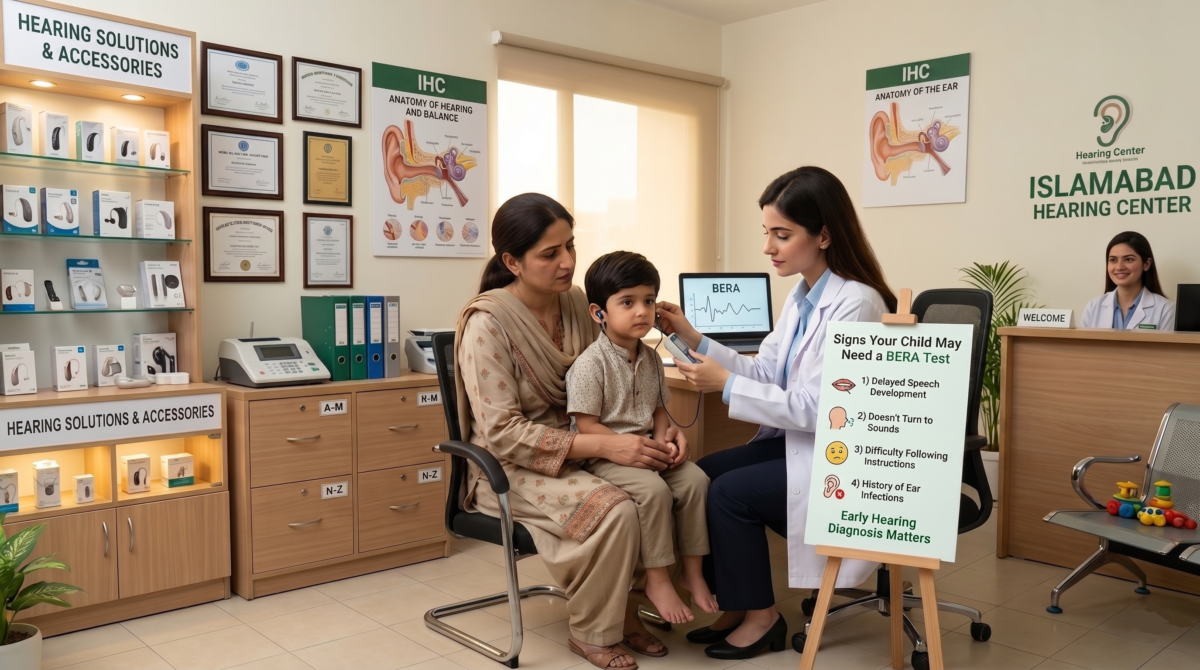
Signs Your Child May Need a BERA Test – Early Hearing Diagnosis Matters

Every parent wants to believe their child is simply quiet, or late to talk, or just not interested in what is being said. But in Pakistan, thousands of children every year are living with undetected hearing loss — not because the warning signs were absent, but because families did not know what to look for.

Hearing loss in children is not always obvious. A child with partial hearing loss may respond to some sounds and ignore others. They may seem to hear fine at home but struggle in school. They may be labelled as inattentive or slow when the real issue is that their auditory brain pathway is not receiving sound clearly.

The BERA test Brainstem Evoked Response Audiometry is the most accurate and reliable tool available today for detecting hearing problems in children who are too young, too fearful, or too cognitively limited to cooperate with standard hearing assessments. At Islamabad Hearing Center, it is one of the most important diagnostic tests we perform and it changes lives when used early.

This guide is written for parents, grandparents, and caregivers who want to know: does my child need this test?

What Is a BERA Test?

A BERA test measures how the auditory nerve and brainstem respond to sound. During the test, small electrode stickers are placed on your child’s scalp and earlobes. Soft clicking sounds are played through earphones, and the electrodes record the electrical activity that travels from the ear to the brain in response.

The result tells the audiologist not just whether a child can detect sound, but how clearly and efficiently the auditory pathway is transmitting that signal to the brain. This distinction matters enormously a child can have normal outer ear function but still have a significant neural hearing problem that only a BERA test can reveal.

Unlike a standard PTA test or audiometry, the BERA test requires no active response from the child. There is no button to press, no instruction to follow. The child simply rests often sleeping naturally or under mild, supervised sedation while the equipment does the work. This makes it uniquely suitable for infants, toddlers, and children with developmental conditions.

You can learn more about how we conduct BERA testing at Islamabad Hearing Center and what the process involves from start to results.

7 Warning Signs Your Child May Need a BERA Test

The following signs are not guarantees of hearing loss but any one of them, and certainly two or more together, should prompt a professional evaluation without delay.

1. No Response to Loud Sounds or Being Called by Name

This is the most commonly reported warning sign, and often the one that parents first notice. A baby who does not startle at a loud noise in the first few weeks of life, or a toddler who never turns when their name is called from across the room, may have a significant hearing deficit.

Note: some children with hearing loss do respond to very loud sounds because residual hearing picks up the vibration as much as the sound itself. This can create false reassurance. If your child responds to very loud noises but seems not to hear normal conversation, this still warrants investigation.

2. Delayed Speech or Language Development

Speech develops in direct response to what a child hears. If a child cannot hear clearly, speech and language development slows or stops. By 12 months, most children should be saying simple sounds and attempting words. By 18 months, a vocabulary of 10–20 words is typical. By age 2, two-word combinations should be emerging.

Speech delay is one of the most significant indicators of hearing difficulty in Pakistan, and one of the most frequently missed because many families attribute it to bilingualism, shyness, or being a “late talker.” A BERA test rules out hearing as the cause and can redirect appropriate therapy much sooner.

3. Frequent Ear Infections or Fluid in the Ear

Recurrent middle ear infections (otitis media) are extremely common in children in Pakistan and are a leading cause of temporary conductive hearing loss. When fluid builds up behind the eardrum repeatedly, it muffles sound reaching the inner ear and can, over time, affect auditory processing development.

A child who has had three or more ear infections in a year, or who has had persistent fluid in the ear for more than three months, should have a formal hearing evaluation. A tympanometry test can check middle ear function, and a BERA test can assess the deeper auditory nerve response.

4. Not Startled by Loud Noises in the First Months of Life

In the first six weeks of life, babies should show a startle reflex (Moro reflex) to sudden loud sounds. They should also begin to quieten or turn toward familiar voices particularly the mother’s by around 3 months. Absence of these responses is a red flag that warrants immediate newborn hearing screening.

5. Constantly Asking People to Repeat Themselves

An older child who repeatedly asks “what?” or “huh?”, who turns the television volume up very high, or who consistently mishears words saying “ban” for “van,” or “key” for “tea” may have a high-frequency hearing loss that is easy to overlook because they can still hear many sounds.

This pattern is particularly important to catch before school age, as children with undetected high-frequency hearing loss struggle disproportionately in classroom environments. Our article on 10 early signs of hearing loss you should never ignore expands on these patterns in detail.

6. Family History of Childhood Hearing Loss

Approximately 50–60% of congenital hearing loss has a genetic component. If a parent, sibling, grandparent, or close relative was diagnosed with childhood hearing loss particularly if it was present at birth the child’s risk is meaningfully elevated. In Pakistan, where consanguineous marriages are relatively common in some communities, the inherited risk of certain types of sensorineural hearing loss is higher than global averages.

A family history alone is not a diagnosis, but it is a strong enough reason to request a BERA test proactively rather than waiting for symptoms.

7. Premature Birth, Low Birth Weight, or Neonatal Intensive Care Admission

Premature babies and those admitted to the neonatal intensive care unit (NICU) are at significantly higher risk of hearing problems. Risk factors associated with hearing loss in this group include low birth weight (below 1,500g), prolonged jaundice requiring phototherapy, use of certain antibiotics (aminoglycosides), and oxygen deprivation during delivery.

In these cases, a BERA test or ASSR test should be considered part of standard follow-up care not an optional extra.

What Causes Hearing Problems in Children?

Understanding the underlying cause helps parents and clinicians choose the right response:

Congenital sensorineural hearing loss occurs due to genetic factors, in-utero infections (rubella, cytomegalovirus), or complications at birth. It affects the inner ear or auditory nerve and is typically permanent but manageable with early intervention.

Conductive hearing loss involves a blockage or damage in the outer or middle ear often caused by ear infections, fluid accumulation, earwax impaction, or a perforated eardrum. This type is frequently treatable or reversible.

Auditory processing disorder (APD) is a condition where the ear itself functions normally but the brain does not process sound correctly. APD often goes undetected for years children pass standard hearing tests but struggle to understand speech in noise or follow complex verbal instructions. The BERA test can detect abnormalities in auditory brainstem processing that point toward APD.

For a deeper understanding of how hearing loss develops in younger populations, our guide on causes of hearing loss in young people is a valuable resource for Pakistani parents and educators.

How the BERA Test Works: Step by Step

Step 1 – Preparation. The audiologist will clean small areas on your child’s scalp and earlobes with a mild abrasive gel to ensure good electrode contact. No cutting or shaving is involved.

Step 2 – Electrode placement. Small, sticky electrode patches are placed on the forehead, mastoid bones (just behind each ear), and earlobes. The electrodes are painless and do not deliver any electrical current they only record.

Step 3 – Sound delivery. Soft clicking sounds or tone bursts are played through insert earphones placed gently in the child’s ear canals. The sounds are quiet around 30-40 dB and the volume is adjusted during testing.

Step 4 – Recording. The equipment records the electrical waveforms generated by the auditory nerve and brainstem in response to each sound. The audiologist analyses these waveforms particularly a wave called Wave V to determine hearing thresholds.

Step 5 – Results and consultation. Results are usually available immediately after the test. The audiologist will explain the findings, what they mean for your child’s hearing, and what the recommended next steps are.

The entire process takes between 30 and 90 minutes. Children who cannot remain still or fall asleep naturally may require mild, supervised sedation, which is arranged and monitored safely by our clinical team.

Is the BERA Test Safe for Babies and Newborns?

Yes completely. The BERA test involves no radiation, no needles, no invasive procedures, and no pain. The electrodes record passively; they do not emit any electrical signal. The sounds used are well below the threshold that could cause any hearing damage.

Newborn BERA testing is performed routinely in international healthcare systems as part of universal newborn hearing screening programmes, and is endorsed by the World Health Organization as a safe and reliable diagnostic tool. According to the WHO’s global ear and hearing care action plan, early hearing detection ideally within the first month of life dramatically improves language, educational, and social outcomes for children with hearing loss.

If sedation is required for a child who cannot stay still, this is performed under medical supervision with appropriate monitoring, following standard paediatric anaesthesia protocols.

What Happens After the BERA Test?

The BERA test result tells the audiologist the type and degree of hearing loss present or confirms that hearing is within normal limits. From there, the path forward depends on the findings:

Normal result: No further action is required unless symptoms recur or change. Periodic monitoring is recommended for children in high-risk groups.

Conductive hearing loss detected: Medical referral for ENT (ear, nose, throat) evaluation, which may lead to treatment with medication, grommets, or surgery to restore normal hearing.

Sensorineural hearing loss detected: Depending on the degree of loss, options include fitting with appropriate hearing aids from providers including Phonak, Siemens, Oticon, and Rexton or evaluation for a cochlear implant in cases of severe to profound loss.

Auditory processing findings: Referral for auditory processing therapy, classroom accommodations, and possible use of FM systems that transmit a speaker’s voice directly to the child’s hearing device.

Research published in the Journal of the American Academy of Audiology consistently shows that children who receive hearing intervention before six months of age achieve language outcomes comparable to hearing peers a gap that widens significantly with every month of delayed diagnosis.

When Should You See a Specialist in Pakistan?

If your child shows any of the seven warning signs described in this guide, do not wait for the next routine paediatric check-up. Request a referral directly to an audiologist or visit a specialist hearing clinic.

In Pakistan, awareness of auditory diagnostic services remains lower than it should be many families travel significant distances or wait months assuming hearing testing requires overseas referral. This is not the case. Comprehensive audiology services including BERA testing, ABR testing, ASSR testing, and full hearing aid fitting are available in Islamabad.

Our guide on how to find the best certified audiologist in Pakistan covers what to look for in an audiology clinic and what questions to ask at your first appointment.

The earlier a hearing problem is identified, the wider the window of opportunity for effective intervention. At Islamabad Hearing Center, our audiologists work with children from the first days of life through adolescence and we are here to answer your questions before, during, and after the diagnostic process.

Frequently Asked Questions

What is the BERA test used for in children?

A BERA test measures how the auditory nerve and brainstem respond to sound, allowing audiologists to assess hearing in children who cannot cooperate with standard tests. It is used to detect sensorineural hearing loss, auditory processing problems, and conductive hearing loss and is reliable from birth onwards.

At what age can a BERA test be done in Pakistan?

A BERA test can be performed at any age, including on newborns within the first days of life. It is one of the only accurate hearing assessment methods available for very young babies, making it the cornerstone of newborn hearing screening in international clinical practice.

Is the BERA test painful for my child?

No. The BERA test is completely painless and non-invasive. Electrode stickers are placed on the scalp and earlobes. The child rests or sleeps during the test. There are no needles, injections, or discomfort. The sounds used are very quiet and well below any level that could cause hearing damage.

How long does a BERA test take at Islamabad Hearing Center?

The test typically takes between 30 and 90 minutes, depending on your child’s age, how easily they settle or sleep, and the number of frequencies being tested. Our audiologists aim to make the experience as comfortable and efficient as possible for both the child and parents.

What is the difference between a BERA test and a standard hearing test?

A standard hearing test requires the child to actively respond pressing a button, raising their hand, or pointing to pictures. A BERA test requires no response at all, as it directly measures the brain’s electrical reaction to sound. This makes it far more accurate for babies, very young children, and children with developmental conditions.

What should I do if my child fails a BERA test?

An abnormal BERA result means further evaluation and discussion with your audiologist is needed not that your child has a permanent, untreatable condition. Many causes of hearing loss in children are treatable or well-managed with hearing aids or therapy. The most important step is prompt follow-up action. Early intervention consistently produces the best outcomes.

Early Action Can Change Your Child’s Life

Hearing loss does not announce itself clearly. It hides in delayed speech, in a child who seems distracted, in a baby who sleeps through every sound. But the tools to detect it painlessly, accurately, and even in newborns are available right now.

If you have read this guide and recognised even two or three of the warning signs in your child, please do not postpone evaluation. A BERA test takes under 90 minutes and delivers answers that can redirect the entire course of your child’s development.

At Islamabad Hearing Center, our audiologists are experienced in conducting BERA tests for children of all ages, from newborns to teenagers. We offer a supportive, child-friendly environment and clear, honest guidance on what the results mean and what to do next.

Book a BERA test in Islamabad or learn more about our full range of hearing tests to take the first step today.

Categories
Uncategorized

How Hearing Aids Improve Speech in Noisy Places (And Which Ones Do Best)

Living in a vibrant city like Islamabad, your daily life is often defined by sound from the lively buzz of a family dinner at a restaurant in F-7 to the fast-paced environment of a business meeting in Blue Area. However, for many residents across Pakistan, these environments are becoming increasingly difficult to navigate. If you find yourself nodding along while missing the punchline of a joke or struggling to separate a friend’s voice from background clatter, you aren’t alone.

Understanding how modern technology bridges the gap between hearing a sound and understanding a conversation is the first step toward regaining your social confidence. At IHC Hearing, the premier hearing center in Pakistan, we specialize in helping patients transition from “hearing noise” to “understanding speech.”

The Global and Local Impact of Hearing Loss: By the Numbers

Hearing impairment is a growing health concern that affects both the elderly and younger generations. According to the World Health Organization (WHO), over 1.5 billion people globally live with some degree of hearing loss, a number expected to rise to 2.5 billion by 2050.

  • WHO: Over 5% of the world’s population requires rehabilitation for “disabling” hearing loss.
  • CDC: Approximately 1 in 4 U.S. adults who report excellent hearing actually have measurable hearing damage.
  • NIDCD: About 28.8 million adults in the U.S. could benefit from using hearing aids.
  • Pakistan Context: In Pakistan, noise pollution in urban centers and limited access to audiologists in Islamabad mean that many cases remain undiagnosed until they reach a moderate-to-severe stage.

Why Is It So Hard to Hear in Noisy Places?

The “Cocktail Party Effect” is a healthy brain’s ability to focus on a single talker while filtering out background noise. When you have hearing loss, the hair cells in your inner ear (cilia) are damaged. According to the Mayo Clinic, this damage often affects high-frequency sounds first, which are essential for distinguishing consonants like “s,” “f,” and “t.”

Common Causes & Risk Factors

  1. Presbycusis: Age-related hearing loss affecting the elderly patients (50+) in our community.
  2. Noise Exposure: Loud machinery or high-volume headphones.
  3. Genetics: Family history of auditory issues.
  4. Ototoxic Medications: Certain drugs that damage the inner ear.

Signs You Need a Professional Hearing Evaluation

If you are searching for the “best hearing clinic near me,” you may already be experiencing these common symptoms:

  • Asking people to repeat themselves constantly.
  • Feeling exhausted after social interactions (listening fatigue).
  • Turning the TV volume up to a level that bothers others.
  • Thinking that people are “mumbling.”
  • Experiencing a persistent ringing in the ears, which may require tinnitus treatment in Islamabad.

To be certain, you should book a comprehensive hearing test in Islamabad at IHC to determine your specific hearing profile.

The Science: How Modern Hearing Aids Filter Noise

Old-fashioned analog hearing aids simply made everything louder including the clinking of plates and the roar of traffic. 2026 technology is different. It uses AI Noise Reduction and Directional Microphones to map the sound environment in real-time.

1. Artificial Intelligence (AI) and Machine Learning

Top-tier hearing aids now use Deep Neural Networks (DNN). They have “learned” millions of sound environments and can instantly recognize the difference between a human voice and a car engine, suppressing the latter while boosting the former.

2. Directional Microphone Systems

By using two microphones, the device can focus on the person speaking directly in front of you while “nulling” sounds coming from the sides or behind you. This is essential for meetings and group settings.

Hearing Aids Price in Pakistan (2026 Estimated Costs)

Understanding the hearing aids price in Pakistan is crucial for budget planning. Prices vary based on technology levels (Essential, Standard, or Premium).

Tech Level Estimated Price Range (PKR) Ideal User
Basic 60,000 – 120,000 Quiet home environments
Mid-Range 125,000 – 250,000 Occasional outings, small groups
Premium (AI) 275,000+ Active lifestyle, restaurants, meetings

Note: Prices are estimates and depend on the brand (Signia, Phonak, Widex, etc.) and specific features.

Pediatric Hearing Services in Islamabad

Hearing loss doesn’t just affect adults. Children require specialized care to ensure their speech and language development stays on track. Our pediatric hearing services in Islamabad include child-friendly testing and specialized hearing aids designed for growing ears.

Buying Checklist: Choosing the Right Device

Before you invest, ensure your hearing center in Pakistan provides:

  •  A professional diagnostic audiogram.
  •  A trial period to test the devices in your actual environment.
  •  Bluetooth connectivity for phone calls and music.
  •  Rechargeable battery options.
  •  After-care services and fine-tuning.

Frequently Asked Questions (FAQ)

1. Will hearing aids make my hearing 100% normal again?

Hearing aids are sophisticated processors that significantly improve clarity and reduce effort, but they do not “cure” hearing loss. They are tools to help your brain process sound more efficiently.

2. Why is there such a range in hearing aids price in Pakistan?

The cost is driven by the computer chip inside. Premium chips have higher processing speeds to handle complex noise, while basic chips provide simple amplification.

3. Can I get a hearing test in Islamabad today?

Yes, IHC Hearing offers daily appointments. You can schedule your consultation today to get immediate results.

4. How long do hearing aids last?

With proper maintenance and regular cleaning, most high-quality digital hearing aids last between 5 to 7 years.

5. Do both ears need hearing aids?

If you have hearing loss in both ears (bilateral), wearing two devices is highly recommended. It helps with sound localization and better speech understanding in noise.

6. Can hearing aids help with Tinnitus?

Yes. Many modern devices include “Tinnitus Masking” features that provide soothing sounds to distract your brain from the internal ringing.

7. Is there an audiologist in Islamabad who works with children?

Yes, our specialized pediatric wing is equipped to handle infants and young children with advanced diagnostic tools.

Conclusion: Don’t Let Noise Silence Your Social Life

The world is too beautiful to experience in silence or through the frustrating lens of muffled sound. Whether you are seeking the best hearing clinic near me for a baseline check or are ready to explore advanced digital hearing aids, the team at IHC Hearing is here to guide you.

The technology of 2026 has made it possible to enjoy a dinner at Monal or a busy office environment without the “listening fatigue” that used to plague hearing aid wearers. Take the first step toward clarity.

Contact us today to book a comprehensive hearing test in Islamabad and rediscover the joy of conversation.

References:

World Health Organization (WHO) – Hearing Loss

CDC – Hearing Loss in Adults

NIDCD – Quick Statistics About Hearing

Mayo Clinic – Hearing Loss Diagnosis

ASHA – Hearing Loss Awareness

Categories
Hearing Solutions Hearing Tests Uncategorized

Signs You Might Need a Hearing Test – Don’t Ignore These Symptoms

Hearing is one of the most crucial senses, helping us connect with the world around us. However, many people take their hearing for granted until they start experiencing problems. If you’re living in Islamabad and notice certain signs in your hearing, it might be time to schedule a hearing test. Ignoring hearing loss symptoms can lead to long-term complications and impact your quality of life. At Islamabad Hearing Center, we specialize in diagnosing and treating hearing problems, helping you regain your ability to hear clearly.

In this blog post, we’ll go through the common signs of hearing loss, symptoms that indicate you need a hearing test, and why it’s important to seek professional help as soon as you notice any changes in your hearing ability.

Signs of Hearing Loss You Shouldn’t Ignore

If you’re finding it harder to hear conversations, struggle to hear the TV or phone, or even notice a buzzing in your ears, you may be dealing with early stages of hearing loss. Signs of hearing loss early warning signs can often go unnoticed until they start affecting your daily life.

Here are some of the key signs of hearing loss you should watch out for:

  1. Difficulty Hearing High-Frequency Sounds If you find that you can’t hear the higher-pitched voices of women or children, or certain background noises, this could be a sign that your hearing is deteriorating.
  2. Asking People to Repeat Themselves Constantly needing others to repeat what they say, especially in noisy environments, is another common indication of hearing loss. If you need to turn up the volume on the TV or radio because you can’t hear clearly, it’s time to consider a hearing test.
  3. Tinnitus (Ringing in the Ears) Tinnitus, the sensation of ringing, buzzing, or humming in the ears, is a condition that often accompanies hearing loss. If you experience any sounds in your ears that aren’t coming from an external source, it’s essential to seek help immediately.
  4. Struggling to Hear in Noisy Environments If you find it particularly difficult to follow conversations in busy restaurants, crowded streets, or group settings, your hearing might be impaired. This is one of the most common warning signs of hearing problems that people experience.
  5. Feeling That Others Are Mumbling When others seem to be mumbling or speaking unclearly, but you’re actually the one with hearing issues, it’s time for a hearing test.

Do You Need a Hearing Test? Top Symptoms to Watch For

If you’re noticing one or more of the above symptoms, you may be wondering, “Do I need a hearing test?” If you experience these signs regularly, it’s important to consult a hearing specialist at Islamabad Hearing Center. Here are some top symptoms to watch for:

  • Difficulty Hearing Soft Sounds If you can’t hear softer sounds such as whispers or birds chirping, it could indicate a hearing issue. This often happens when hearing loss is gradual, so you might not notice it at first.
  • Difficulty Understanding Speech You might be able to hear sounds but have difficulty understanding what’s being said, especially in crowded or noisy environments. This could indicate an issue with your auditory processing.
  • Withdrawal from Social Situations Hearing loss can lead to social isolation. If you find yourself avoiding gatherings or family events because it’s difficult to keep up with conversations, it’s a clear sign that your hearing needs attention.

How to Know When It’s Time for a Hearing Test

Wondering when to schedule a hearing test? While everyone’s hearing abilities change with age, there are clear signs when it’s time to get your hearing checked.

  • Gradual Hearing Loss: If you’ve noticed that your hearing isn’t as sharp as it used to be and the problem has been gradually worsening, it’s time for a professional assessment.
  • Family History of Hearing Loss: If hearing loss runs in your family, you might be at higher risk. Genetics can play a role in hearing deterioration, and early intervention can help prevent further damage.
  • Difficulty Hearing Over the Phone: If you have trouble understanding people on the phone, it could be due to a hearing issue. While modern phones can sometimes exacerbate hearing difficulties, consistent issues could signal a more serious problem.
  • Straining to Hear in Quiet Places: If you have trouble hearing even in quiet environments, you should consider seeing a specialist. How to recognize hearing loss symptoms in such situations is vital for early detection.

Warning Signs of Hearing Problems: Don’t Wait!

Ignoring hearing problems can lead to further complications, such as speech delays in children or cognitive decline in older adults. In fact, studies show that untreated hearing loss in older adults is linked to an increased risk of dementia. Here are some warning signs of hearing problems that you should not ignore:

  1. Straining to Hear or Focus If you’re constantly straining to hear what people are saying, or you have to focus intensely on trying to understand speech, this is a clear warning sign that you might need a hearing test.
  2. Difficulty Hearing in Specific Situations If you have trouble hearing in specific situations, such as on the phone, during meetings, or in public spaces, this can indicate a problem with your hearing.
  3. Speech Sounds Muffled If speech sounds muffled or unclear, it could mean that your hearing is not as sharp as it once was. This is often one of the early symptoms of hearing loss.
  4. Balance Problems Your ears not only help you hear, but they also help with balance. If you’re experiencing dizziness or feeling unsteady, it could be a sign that your inner ear is affected.

Symptoms That Indicate You Need a Hearing Test

If you experience any of the following, it’s important to schedule a hearing test as soon as possible:

  • Frequent misunderstanding of conversations
  • Struggling to hear the doorbell or phone ring
  • Feeling isolated because of difficulty hearing
  • Having trouble hearing people with masks or face coverings

These symptoms indicate that hearing loss could be affecting your quality of life and should be addressed promptly.

Why Regular Hearing Tests Are Essential for Your Health

Just as you would visit a doctor for a routine checkup, it’s important to have regular hearing tests. Hearing loss can sometimes occur gradually, and you may not notice it until it begins to impact your life. Regular checkups help identify any issues before they become serious.

At Islamabad Hearing Center, we emphasize the importance of early detection and treatment. Regular hearing tests are essential to maintain your hearing health, improve communication, and enhance your overall well-being.

How to Detect Hearing Loss Before It Gets Worse

Many people don’t realize they have hearing loss until it’s too late. Early detection is key to preventing further damage and improving quality of life. Here’s how to detect hearing loss before it gets worse:

  • Pay attention to changes in your hearing
  • Monitor your ability to hear every day sounds
  • Note if you need to increase the volume of TV or radio

The sooner you take action, the better your chances are of preserving your hearing.

The Top 5 Signs You Need a Hearing Test

Wondering whether you need to schedule a hearing test? Here are the top 5 signs to look out for:

  1. Difficulty hearing in noisy environments
  2. Asking people to repeat themselves frequently
  3. Ringing, buzzing, or whistling sounds in the ear
  4. Trouble hearing people on the phone
  5. Having to turn up the volume on the TV

Ignoring Hearing Problems: Why It Could Be Dangerous

Ignoring hearing problems is not only frustrating but can also be dangerous. Over time, untreated hearing loss can lead to:

  • Cognitive decline in older adults
  • Increased risk of falls
  • Social isolation, which can lead to depression

It’s essential to take action when you notice symptoms that indicate you need a hearing test.

When to See a Hearing Specialist: Key Symptoms

If you experience any of the following, it’s time to see a hearing specialist at Islamabad Hearing Center:

  • Difficulties in speech comprehension
  • Ringing, buzzing, or a feeling of fullness in the ears
  • Feeling off balance or lightheaded
  • Hearing loss after exposure to loud noises

Don’t Ignore These Symptoms – Get Your Hearing Checked Today!

Hearing loss is often gradual, and the symptoms can be easy to overlook. However, early symptoms of hearing loss can be detected through careful attention to changes in your hearing. If you notice any of these warning signs, don’t wait — schedule a hearing test at Islamabad Hearing Center today.

Ignoring hearing problems could have long-term effects on your health, relationships, and overall quality of life. By seeking a hearing test early, you can preserve your hearing and live life to the fullest. Visit ihchearing.com to learn more and book your appointment with one of our hearing specialists today.

Stay proactive with your hearing health, and don’t let small issues become major challenges. Take the first step toward better hearing now!