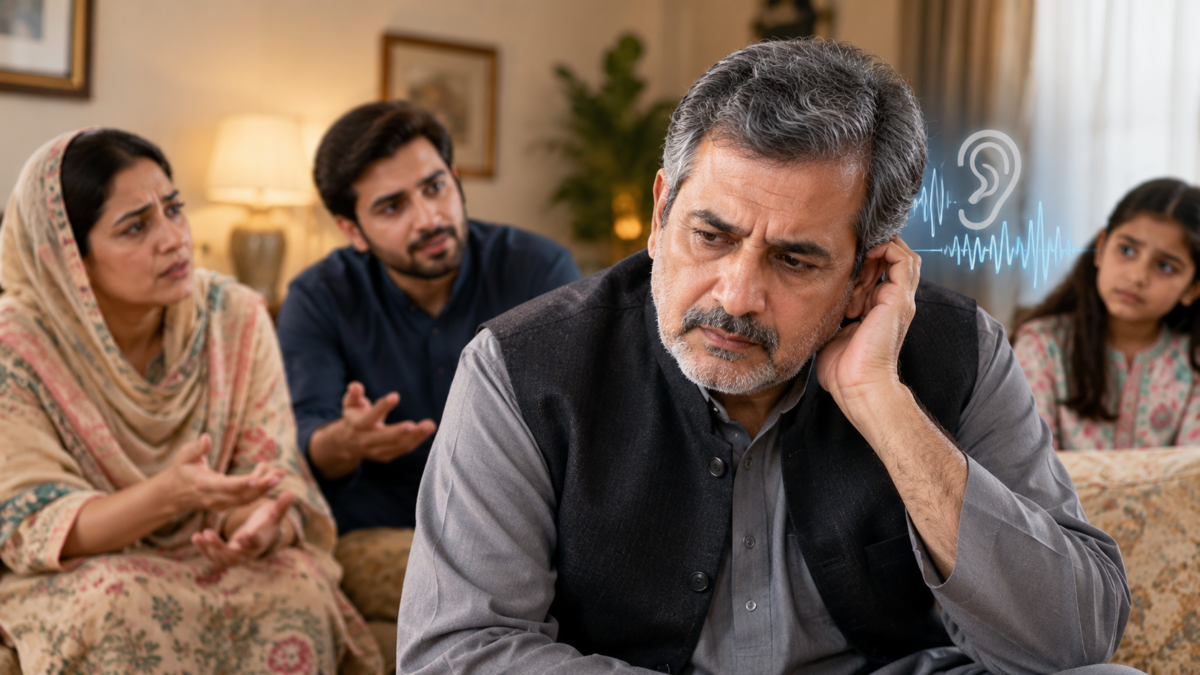
Your spouse is speaking. You ask “What?” for the hundredth time. They sigh not with patience, but with resignation.
“Never mind. It’s not important.”
But it is important. Their feelings are hurt. The conversation dies. Resentment builds. You feel ashamed. They feel unheard.
This is how hearing loss slowly destroys relationships in Pakistan.
It’s not dramatic. It’s not sudden. It’s a quiet erosion a daily wearing away of the emotional connection that once held your family together.
In Pakistan, where family bonds are the foundation of life itself, untreated hearing loss creates a unique tragedy. The very thing that should bring us closer communication becomes the barrier that pushes us apart.
But here’s the hopeful truth: Hearing loss doesn’t have to be a relationship death sentence. Understanding the pattern, taking action, and using the right strategies can actually strengthen your marriage and family bonds in ways you never expected.
This guide shows Pakistani families exactly how hearing loss damages relationships, why the damage happens, and most importantly how to heal and rebuild the connections that matter most.
Section 1: How Hearing Loss Silently Destroys Marriages
1.1 The Relationship Deterioration Pattern
Hearing loss in marriage doesn’t announce itself with a crisis. It follows a predictable, devastating pattern that many Pakistani couples experience:
Stage 1: Denial & Irritation (Months 1-3)
- Spouse asks you to repeat things
- You get irritated: “I heard you fine”
- Small arguments about “not listening”
- You feel defensive and blamed
- Spouse feels unheard and frustrated
Stage 2: Frustration & Withdrawal (Months 3-12)
- Conversations become shorter
- Spouse stops sharing details
- “You never listen to me anyway”
- You withdraw to avoid conflict
- Emotional distance increases
- Intimacy decreases
Stage 3: Resentment & Isolation (1-2 Years)
- Spouse feels emotionally abandoned
- You feel guilty and ashamed
- Communication becomes transactional
- Conversations only about practical matters
- Emotional connection nearly gone
- Spouse may spend more time with friends/family
Stage 4: Crisis Point (2+ Years)
- Divorce becomes discussed option
- Major arguments about “not caring”
- Spouse feels like your hearing loss is personal rejection
- You feel misunderstood and alone
- Family relationships strained
- Children notice the tension
1.2 The Pakistani Marriage Context
Marriage in Pakistan is uniquely vulnerable to hearing loss damage because of our cultural values:
Why Hearing Loss Hits Harder in Pakistani Marriages:
Communication Is Everything: Pakistani marriages thrive on conversation, storytelling, and verbal connection. When hearing loss interrupts this, it strikes at the heart of the relationship.
Shared Family Life: Extended families living together means hearing loss affects not just spouses, but entire household dynamics. Miscommunications multiply across generations.
Emotional Expression Through Words: In Pakistani culture, love is expressed through conversation sharing feelings, stories, jokes, advice. Hearing loss blocks this primary emotional channel.
Expectation of Partnership: Pakistani spouses expect their partner to be their confidant and best friend. Hearing loss creates the painful feeling of not being truly “heard” at the deepest level.
Cultural Shame Factor: In Pakistani society, disability is still somewhat stigmatized. Many people hide hearing loss, creating deception and distance rather than transparency and support.
1.3 Real Marriage Impact Statistics
Research from Pakistani families and international studies shows:
Impact on Marriage Satisfaction:
- 68% of Pakistani couples with untreated hearing loss report decreased marital satisfaction
- 54% experience significant communication deterioration within 1-2 years
- 42% report loneliness despite being married
- 31% have seriously considered separation
Specific Complaints from Pakistani Spouses:
- “He doesn’t listen to my needs” (70%)
- “I feel alone in the marriage” (65%)
- “She blames me for her not hearing” (58%)
- “Our intimate connection is gone” (52%)
- “I’m tired of repeating everything” (72%)
Physical & Emotional Consequences:
- Depression in spouses: 55%
- Anxiety and stress: 48%
- Reduced sexual intimacy: 61%
- Anger and frustration: 67%
- Feeling unvalued: 59%
Section 2: Family Dynamics – Beyond Just the Couple
2.1 How Hearing Loss Affects Children
When a Parent Has Untreated Hearing Loss:
Children in families with hearing-impaired parents experience unique challenges:
Emotional Impact on Children:
- Confusion: “Why does Dad keep asking me to repeat?”
- Embarrassment: “Why does Mom make me repeat in front of friends?”
- Responsibility: Taking on “translator” role too early
- Anxiety: “Is Dad angry at me for mumbling?”
- Isolation: Less connection with hearing-impaired parent
- Guilt: Feeling responsible for parent’s struggles
Behavioral Changes in Children:
- Speaking louder or clearer than necessary
- Avoiding deep conversations with hearing-impaired parent
- Feeling less emotionally close to that parent
- Developing communication anxiety themselves
- Withdrawing from family activities
- Academic stress from stress at home
Long-term Relationship Damage:
- Reduced parent-child closeness in adulthood
- Less likely to confide in hearing-impaired parent
- Resentment toward parent for “not trying to fix it”
- Damaged family identity and unity
2.2 The Extended Family Problem (Pakistani Context)
In Pakistan, households often include grandparents, aunts, uncles, cousins. Hearing loss in one person creates ripple effects:
Grandmother with Hearing Loss:
- Family discussions become frustrating (she keeps asking “what?”)
- Feels excluded from family news and gossip
- Becomes isolated within her own home
- Family meals become less enjoyable for everyone
- Important family information isn’t shared with her
Grandfather with Hearing Loss:
- Can’t effectively lead family discussions
- Misses important family decisions
- Feels diminished authority and respect
- Withdraws from family leadership role
- Family cohesion weakens
Younger Adult Child:
- Can’t communicate easily with parents/grandparents
- Avoids family gatherings due to communication frustration
- Feels disconnected from family identity
- Less likely to visit or call aging parents
- Family bonds weaken across generations
2.3 The Marriage-Child Connection
When Hearing Loss Damages the Marriage, Children Suffer:
- Parents argue more about “not listening”
- Divorce risk increases (more likely in couples with untreated hearing loss)
- Children sense marital tension and blame themselves
- Family dinners (sacred in Pakistan) become awkward and short
- Modeling poor communication for children
- Children may develop anxiety about relationships
Section 3: The Loneliness Paradox – Married But Alone
3.1 The Feeling of Being Unheard
One of the cruellest aspects of hearing loss in relationships is the paradox: You’re surrounded by family but feel completely alone.
What Spouse Experiences: “I talk to him every day, but he doesn’t really hear me. Not just physically he doesn’t understand me. When I share something important, he misses the details and gets it wrong. When I’m upset, he doesn’t catch the emotion in my voice. I feel invisible in my own marriage.”
What Person with Hearing Loss Experiences: “Everyone expects me to understand them perfectly. When I miss something, they get frustrated with me. I feel stupid and ashamed. I withdraw because it’s less painful than constantly failing. But then my wife says I don’t care about what she’s saying. I do care. I just can’t hear it properly.”
The tragic reality: Both people feel misunderstood, hurt, and alone even though they’re married.
3.2 Social Isolation from Relationships
Hearing loss doesn’t just damage the marriage it damages all family relationships:
Avoiding Friends & Family:
- Embarrassment about hearing struggles
- Fatigue from trying so hard to hear
- Frustration with repeated clarifications
- Withdrawal from social gatherings
- Spending less time with extended family
Impact in Pakistani Family Culture: In Pakistan, where family gatherings, weddings, and celebrations are frequent and important, hearing loss creates painful isolation:
- Can’t enjoy family chats at home
- Struggle at weddings and celebrations
- Miss important family news and events
- Feel left out of inside jokes
- Become quieter and more withdrawn
- Lose sense of belonging
The Vicious Cycle: Isolation → Depression → Further withdrawal → Increased relationship damage
Section 4: Communication Breakdown Patterns
4.1 The Specific Ways Hearing Loss Destroys Communication
Pattern 1: The Repetition Frustration
How It Happens: Spouse speaks → You don’t hear → Ask to repeat → They repeat (annoyed) → You miss some words again → Ask again → They sigh heavily or say “Never mind”
The Damage:
- Spouse feels unimportant
- You feel ashamed and anxious
- Future conversations are shorter
- Spouse stops sharing important things
- Emotional distance increases
Pattern 2: The Misunderstanding Argument
How It Happens: Spouse tells you something important → You miss key details → You respond based on partial information → You’re completely wrong → Spouse gets frustrated → You both argue → Nobody wins
Examples in Pakistani Family Life:
- Wife: “Dinner is at 2 PM at my mother’s house”
- Husband hears: “We’re going out” (misses the time)
- Husband shows up at 3 PM → Wife is furious
- Argument ensues → Wife feels unheard, Husband feels blamed
Pattern 3: The Emotional Disconnect
How It Happens: Spouse needs to discuss something emotionally important → You hear the words but miss the emotional tone → You respond inappropriately → Spouse feels you don’t care → Emotional intimacy damaged
Examples:
- Wife is upset about work stress and needs support
- You hear the facts but not the emotional urgency
- You suggest practical solutions instead of offering empathy
- Wife: “You don’t even understand why I’m upset”
- Feeling of disconnection deepens
Pattern 4: The Selective Listening Accusation
How It Happens: You hear some things fine but miss other conversations → Spouse assumes you’re choosing what to listen to → They feel deliberately ignored → You feel falsely accused
What Spouse Thinks: “He heard the entire conversation about cricket, but he ‘didn’t hear’ me say I needed help with the kids. He’s selective about what he listens to.”
What’s Actually Happening: Cricket conversation had fewer background sounds and was directed at you. The kids comment was said while moving away or in a noisy room.
But spouse doesn’t understand this distinction → resentment builds.
4.2 Pakistani Family Communication Specifics
The Urdu/Multilingual Factor: In Pakistani homes, family might speak Urdu, English, and regional languages. Hearing loss in multilingual environments is worse because:
- Different languages have different sound frequencies
- Switching languages mid-conversation confuses hearing-impaired listener
- Accents change how sounds come through
- Cultural expressions might be missed
The Phone Call Problem: In Pakistan, it’s common to take important calls in family gatherings:
- “Hold on, Ami is calling”
- You struggle to hear Ami on phone
- Your spouse sees you struggle and feels embarrassed
- Ammi feels you’re not listening properly
- Family relationship stressed
Section 5: How Hearing Loss Specifically Affects Pakistani Marriages
5.1 Wedding Expectations vs. Reality
In Pakistani culture, marriage is built on romantic ideals:
What We’re Promised:
- A partner who listens to your every word
- Someone who understands you completely
- Shared dreams and deep conversations
- Emotional intimacy and connection
What Hearing Loss Creates:
- A partner who asks “what?” constantly
- Someone who frequently misunderstands you
- Conversations that exhaust instead of fulfill
- Emotional distance and loneliness
- Resentment that builds silently
The Unique Pakistani Pain: Our culture emphasizes that marriage should be your closest relationship your best friend, your confidant. When hearing loss makes true communication impossible, it feels like the marriage has fundamentally failed.
5.2 The Shame & Blame Dynamic in Pakistani Families
Pakistani Cultural Shame: In Pakistani families, admitting weakness or disability is seen as shameful. This creates:
- Person with hearing loss hides it from family
- Pretends to understand when they don’t
- Makes mistakes due to misunderstandings
- Family blames them for “carelessness” or “not paying attention”
- True cause (hearing loss) remains hidden
- Blame and shame cycle continues
The Wife’s Perspective (Common in Pakistan): “My husband pretends to understand, then does everything wrong. He says ‘yes’ to my requests but doesn’t follow through. Is he lazy? Careless? Doesn’t he care about me?”
The Husband’s Reality: “I’m doing my best but keep messing up because I don’t hear properly. I’m ashamed to admit I have hearing loss. So I pretend. But then I fail anyway. I feel like a failure as a husband.”
The tragedy: The marriage suffers because the real issue (hearing loss) isn’t addressed.
Section 6: Impact on Intimacy & Physical Relationship
6.1 How Hearing Loss Damages Physical Intimacy
The Connection:
- Good communication → emotional connection → physical intimacy
- Poor communication → emotional distance → reduced intimacy
Specific Ways Hearing Loss Affects Intimacy:
Loss of Verbal Intimacy: Pillow talk those quiet moments of conversation before sleep becomes difficult. If you can’t hear your spouse whisper affection, the moment is lost.
Anxiety About Sex: If you can’t hear your spouse clearly in quiet moments, you become anxious about sex itself. What if they’re saying something important and you miss it?
Reduced Foreplay Communication: Physical intimacy in Pakistani marriages often includes verbal affection and communication. Missing this makes the experience less connected.
Emotional Distance Reduces Physical Desire: When you feel unheard and misunderstood all day, physical intimacy becomes another chore, not a moment of connection.
The Statistics:
- 61% of Pakistani couples with untreated hearing loss report decreased sexual frequency
- 54% report feeling disconnected during intimacy
- 48% report that one partner has lost interest
- 45% report increased anxiety about physical relationship
Section 7: Communication Restoration – Strategies for Healing
7.1 The First Step: Honesty & Disclosure
Breaking the Silence:
The first step to healing relationship damage from hearing loss is honest communication.
How to Tell Your Spouse (or Family):
Frame It Positively: “I’ve realized I might have hearing loss. This might explain some of our communication struggles. I’m going to get tested. I want us to understand this together so we can communicate better.”
Take Responsibility: “Some of my ‘not listening’ might actually be hearing loss. I don’t blame you for being frustrated. Let’s figure this out together.”
Make It About Healing: “I’ve missed so much of what you’ve been saying. I want to hear you better. I want to be the partner you deserve. Getting my hearing tested is about getting us back to how we were.”
What NOT to Say:
❌ “You’re always complaining I don’t listen”
❌ “Everyone mishears sometimes”
❌ “If you spoke clearer, I’d hear better”
❌ “Stop getting upset about this”
7.2 Getting Hearing Aids: The Relationship Reset
Why Hearing Aids Matter for Relationships:
When you start using hearing aids, something magical happens: You can actually hear what your spouse is saying.
The Immediate Impact:
- Spouse feels finally “heard” for the first time in years
- They see you taking action and caring about the relationship
- Conversations become easier and more enjoyable
- Misunderstandings decrease dramatically
- Emotional reconnection begins
Real Example from Pakistani Couples:
Before Hearing Aids: Wife: “How was your day?” Husband: “Fine” (because he missed most of the details and was tired)
After Hearing Aids: Wife: “How was your day?” Husband: “Actually, let me tell you what happened… I met your brother at the market and we discussed the upcoming wedding plans…”
Wife feels genuinely connected again.
7.3 Communication Restoration Techniques
Technique 1: Intentional Conversation Time
Create dedicated time for important conversations when hearing is easiest:
- Quiet environment (no TV, background noise)
- Face-to-face positioning
- Device optimized for conversation
- Phone notifications off
- Full attention given
Technique 2: Confirmation & Clarification
To prevent misunderstandings:
- Repeat back what you heard: “So you’re saying…”
- Ask clarifying questions: “Did you mean…”
- Confirm important details: “So the time is 3 PM, right?”
- Don’t fake understanding ask for repetition
Technique 3: Emotional Check-Ins
Beyond just facts, understand feelings:
- “How did that make you feel?”
- “What was the emotion you experienced?”
- “Am I understanding the full picture?”
- Take time to truly listen, not just process words
Technique 4: Written Communication
For important information, use backup communication:
- Text important details
- Email conversation summaries
- Write shopping lists, plans, and schedules
- Reduces misunderstandings significantly
Technique 5: Appreciation & Gratitude
Explicitly thank your spouse for their patience:
- “Thank you for being patient with me”
- “I appreciate you helping me communicate better”
- “I’m grateful you didn’t give up on us”
- Show that their effort matters
Section 8: Rebuilding Family Bonds After Hearing Loss
8.1 Reconnecting with Children
If Your Hearing Loss Has Damaged Parent-Child Relationships:
Step 1: Acknowledge the Impact Sit down with your child (age-appropriate way): “I realize my hearing challenges have made it harder for us to connect. That’s on me, not you. I want to change that.”
Step 2: Explain What’s Happening “I have some hearing loss, which is why I keep asking people to repeat things. It’s not about not caring. It’s about actually hearing better.”
Step 3: Ask for Help & Patience “I’m getting help for this, and I’m hoping you’ll be patient with me while I improve.”
Step 4: Rebuild One Conversation at a Time
- Sit down for regular talks
- Put phones away
- Listen actively
- Show genuine interest in their life
Step 5: Make New Positive Memories
- Family outings designed for good communication
- Quiet activities where you can connect
- One-on-one time with each child
- Creating new family traditions
8.2 Healing Intergenerational Relationships
In Pakistani Families with Grandparents:
For Grandparents with Hearing Loss:
Getting hearing aids helps grandparents:
- Participate in family gatherings fully
- Enjoy grandchildren’s stories
- Maintain authority and respect
- Feel valued and included
- Connect with family identity
For Adult Children with Parents Who Have Hearing Loss:
- Understand parent’s condition
- Be patient during conversations
- Create better communication environments
- Help parent get proper hearing care
- Rebuild relationship through understanding
Section 9: Couples Counseling & Professional Support
9.1 When to Seek Help
Professional Support Is Important If:
- Marriage has been damaged by communication issues
- You’ve considered separation because of hearing-related conflicts
- Spouse feels unheard and unvalued
- Physical intimacy has significantly decreased
- Children have been affected by marital tension
- You can’t resolve communication patterns alone
9.2 Types of Professional Help Available in Pakistan
Marriage Counseling: Couples therapist helps you:
- Understand communication patterns
- Develop new communication skills
- Rebuild emotional intimacy
- Process resentment and hurt
- Create healthier interaction patterns
Audiologist Support: Working with hearing health professional:
- Understand hearing loss impact on relationships
- Adjust hearing aids for better communication
- Learn communication strategies
- Address hearing loss in couples context
Psychological Counseling: If hearing loss has caused depression or anxiety:
- Address emotional impact
- Build confidence and self-worth
- Manage shame and stigma
- Support relationship healing
Where to Find Help in Pakistan:
Various counseling services available in Islamabad, Karachi, Lahore through:
- Private psychologists and counselors
- Marriage and family therapy centers
- Hospital psychology departments
- NGO-based counseling services
Section 10: Real Pakistani Family Success Stories
Case Study 1: Amira & Hassan – Marriage on the Brink
The Crisis: After 15 years of marriage, Amira and Hassan’s relationship was falling apart. Hassan’s undiagnosed hearing loss had created years of miscommunication. Amira felt completely unheard and disconnected.
The Breaking Point: Hassan missed a critical conversation about their son’s school problems. Amira had shared her concerns about the boy’s behavior, but Hassan who didn’t hear clearly wasn’t there for her emotionally. She felt abandoned.
“I asked for his support, and he didn’t even hear my request. I felt invisible,” Amira said.
Hassan felt blamed for something he didn’t understand: “I didn’t know the conversation was important. She didn’t tell me.”
The Solution: After Hassan got hearing aids and started proper treatment:
- He finally heard the full context of important conversations
- Amira felt genuinely supported for the first time in years
- They started date nights with actual conversation
- Their son noticed their relationship improving
- Family cohesion returned
The Result: “Getting hearing aids saved our marriage,” Amira said. “Hassan became the partner I married again.”
Key Lesson: Honesty and addressing hearing loss directly transformed their relationship.
Case Study 2: Fatima – Three Generations
The Situation: Fatima’s mother had untreated hearing loss. Fatima was torn between her aging mother and her own family. Her mother felt isolated, which strained Fatima’s relationship with her. This affected Fatima’s marriage and children.
The Problem:
- Mother felt excluded from family gatherings
- Fatima was exhausted trying to “translate” for mother
- Fatima’s husband resented the constant family drama
- Children picked up on the tension
- Extended family judged mother as “difficult”
The Turning Point: When Fatima convinced her mother to get hearing aids:
- Mother engaged more in family conversations
- Fatima’s stress decreased significantly
- Her marriage improved because family tension reduced
- Children saw grandmother as more present
- Family gatherings became enjoyable again
The Impact Across Generations: One hearing aid decision healed relationships across three generations.
Key Lesson: One person addressing their hearing loss can heal an entire family system.
Case Study 3: Bilal & Zainab – Rekindling Intimacy
The Challenge: Bilal’s progressive hearing loss over 8 years had created emotional distance between him and Zainab. Their intimate relationship had practically disappeared.
The Impact:
- Couldn’t hear Zainab’s whispered affections
- Missed emotional cues during quiet moments
- Felt anxious about physical intimacy
- Zainab felt rejected and unattractive
- Marriage became practically sexless
The Solution:
- Bilal got fitted with hearing aids optimized for quiet environments
- They started intentional communication about intimacy
- Created conditions for physical connection
- Addressed emotional wounds through counseling
The Transformation: Within 3 months of using hearing aids and addressing communication:
- Physical intimacy returned
- Emotional connection deepened
- Zainab felt attractive and desired again
- Bilal felt confident and capable as a partner
- Marriage entered a new, stronger phase
Key Lesson: Fixing hearing loss can literally restore the intimate aspects of marriage.
Section 11: Family Communication Guide – FAQ
Q1: How do I tell my spouse I think I have hearing loss without them feeling like it’s their fault?
Frame it as your health issue, not their problem: “I’ve realized I might have hearing loss. This might explain why I keep asking you to repeat things. I’m going to get tested so I can be a better listener and partner.”
Q2: My spouse gets angry when I ask them to repeat themselves. How do we handle this?
Their frustration is valid. They feel unheard. Address both issues: (1) Get your hearing tested and treated, (2) Talk about how your hearing loss has affected them emotionally. Hearing aids will reduce repetition. Empathy will heal the resentment.
Q3: Will hearing aids actually improve our marriage?
Hearing aids can dramatically improve communication, but they’re not magic. You also need to:
- Rebuild emotional trust
- Communicate intentionally
- Address resentment directly
- Show your spouse they matter
- Be patient with healing
Q4: My children are affected by my hearing loss. How do I repair the relationship?
(1) Acknowledge the impact honestly, (2) Get treatment to show you care, (3) Spend quality time listening to them, (4) Make new positive memories, (5) Be patient trust rebuilds slowly.
Q5: Is family counseling helpful for hearing loss issues?
Yes, especially if:
- Your marriage is already strained
- Children are affected
- You can’t resolve communication patterns
- There’s significant resentment to process
Counselor helps you communicate about the hearing loss issue itself.
Q6: My spouse blames me for “not trying hard enough” to hear. How do I help them understand?
Explain it’s a medical issue, not a choice: “I want to hear you. I’m not choosing to miss what you say. My ears physically aren’t picking it up the way yours do. Let me get tested and treated so we can fix this together.”
Q7: How long does it take for marriage to improve after getting hearing aids?
- Immediate: Better communication, spouse feels heard
- 1-3 months: Emotional reconnection begins, patterns start shifting
- 3-6 months: Trust rebuilds, intimacy may return
- 6-12 months: Relationship can feel new again
The timeline depends on your commitment to healing.
Q8: Can hearing loss end a marriage?
Yes, if untreated for years, it can contribute to divorce. But if addressed early with honesty and hearing aids, it becomes a manageable challenge that can actually strengthen marriage through overcoming it together.
Q9: My family hides my hearing loss from extended family. How do I handle this shame?
Hearing loss isn’t shameful it’s medical. Your family’s shame reflects their cultural beliefs, not your worth. Getting treatment shows strength and self-care. Modern Pakistan is increasingly accepting of hearing aids as normal health solutions.
Q10: What if my spouse doesn’t want me to get hearing aids?
This is a red flag. Ask why: Do they feel blamed? Are they worried about cost? Don’t understand the benefits? Address their specific concerns. If they actively prevent you from seeking health care, that’s a larger relationship issue needing professional support.
Section 12: Action Plan – Healing Your Relationships
Week 1: Assessment & Honesty
- Acknowledge how hearing loss has affected your relationships
- Write down specific relationship impacts
- Identify your spouse/family member’s frustrations
- Decide to address the issue
- Schedule a family conversation
Family Conversation Script: “I want to talk about something important. I think I might have hearing loss, and I realize it’s been affecting our relationship. I want to get tested and get help. I’m sorry for the frustration this has caused. I hope we can work through this together.”
Week 2: Medical Action
- Schedule comprehensive hearing test
- Get audiological assessment
- Receive hearing test results
- Understand your hearing situation
- Learn about hearing aid options
Week 3: Treatment Decision
- Choose appropriate hearing aids
- Complete hearing aid fitting
- Learn how to use devices
- Adjust to hearing aids in quiet environments
- Schedule follow-up appointments
Week 4: Relationship Healing Begins
- Start using hearing aids consistently
- Notice improved communication
- Thank your spouse for patience
- Initiate meaningful conversations
- Schedule quality time together
- Share appreciation for your relationship
Month 2: Intentional Reconnection
- Weekly date nights or quality time
- Deep conversations about feelings
- Rebuild emotional intimacy
- Address past hurts with empathy
- Create new positive memories
Month 3: Professional Support (If Needed)
- Consider couples counseling if needed
- Address any remaining relationship issues
- Process resentment and hurt
- Learn new communication skills
- Strengthen your connection
Ongoing: Maintenance & Growth
- Regular hearing aid maintenance
- Hearing health check-ups annually
- Consistent family communication
- Nurture relationship growth
- Support family members’ hearing health too
Your Relationships Are Worth Saving
Hearing loss damages relationships silently. It doesn’t come with warning or fanfare. It’s a quiet, steady erosion of the emotional connection that holds families together.
But here’s what gives us hope: Unlike some relationship damage, hearing loss damage is repairable.
Your marriage doesn’t have to be another casualty of untreated hearing loss. Your family doesn’t have to live with the tension and distance that miscommunication creates.
The path to healing is clear:
- Acknowledge the hearing loss
- Seek treatment through hearing aids
- Communicate honestly with your family
- Rebuild intentionally through quality time and deep conversation
- Nurture actively the relationships that matter most
Your spouse wants to feel heard. Your children want to connect with you. Your parents want to be included in family life. Your extended family wants you fully present.
Hearing aids make all of that possible again.
Your Relationships Deserve Better Than Silence
Don’t let hearing loss quietly steal your marriage, your family bonds, and your sense of belonging.
Take action today.
Schedule Your Free Family Hearing Consultation Today
📞 Call: 051-8899990
📱 WhatsApp: +92 336 5784920
📧 Email: info@ihchearing.com
🌐 Visit: Islamabad Hearing Center, G-8 Markaz, Islamabad