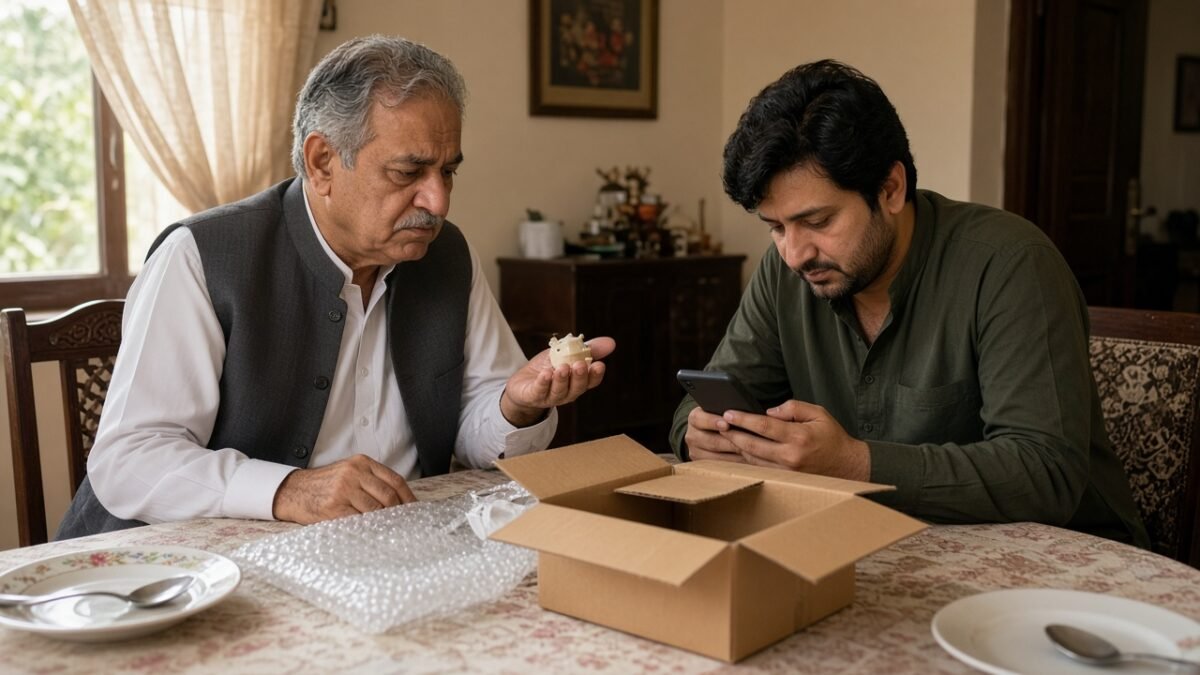
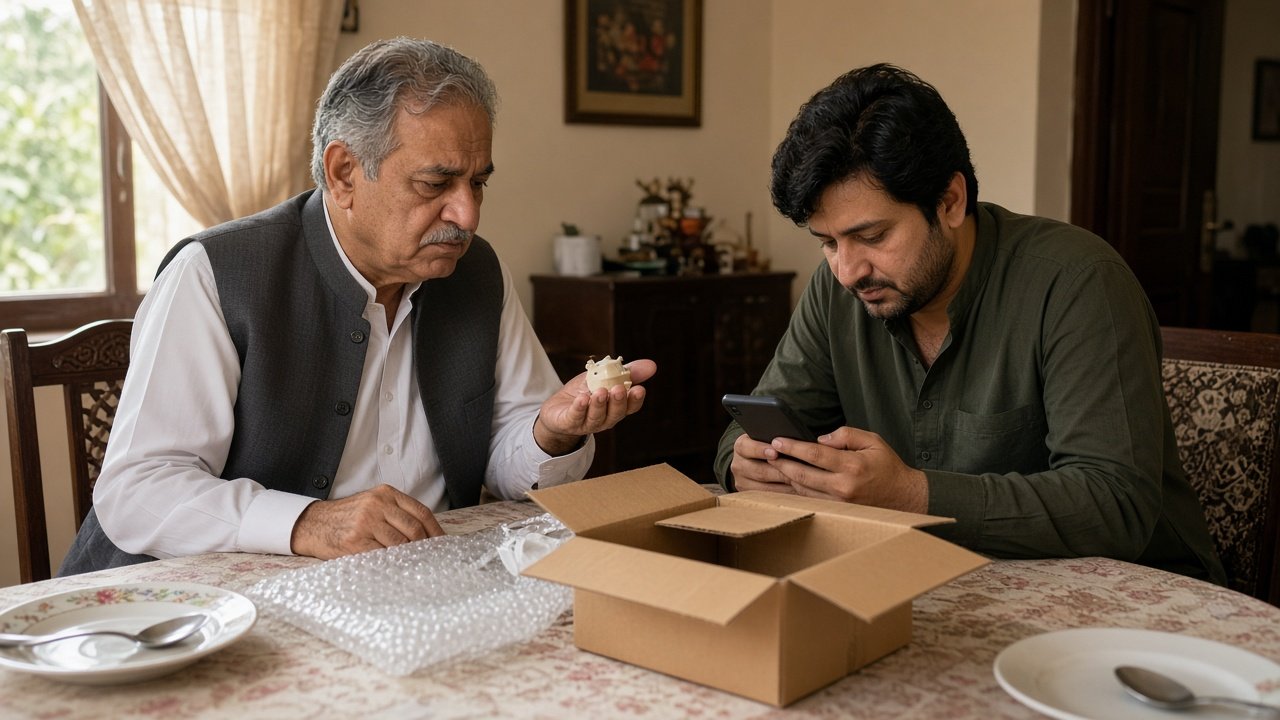
The parcel arrives in Rawalpindi on a Tuesday afternoon. Abbu opens it at the dining table while his son reads the online reviews again: “Best hearing machine, very loud, only a few thousand rupees.” Within ten minutes the little device is whistling, the ceiling fan sounds like a jet engine, and Ammi’s voice is still not clear. If this feels familiar, you are already asking the right question: hearing aid vs amplifier, what is the real difference, and why does the cheap one so often disappoint?
The good news is that this confusion is easy to clear up. This guide explains the hearing aid vs amplifier question in plain language for families in Pakistan: what each device is designed to do, why a hearing test changes everything, how to spot misleading online listings, and what a sensible next step looks like for your parent, your spouse, or yourself.
Quick answer: A hearing aid is a medical device made to compensate for hearing loss and is set to the person’s own hearing test. A personal sound amplifier makes all sound louder and, according to the U.S. FDA, is meant for people with normal hearing in specific situations. In the hearing aid vs amplifier choice, amplifiers are not a substitute for a properly fitted hearing aid.
Medical note: This article is for education only. It is not a diagnosis or a personal treatment plan. Sudden hearing loss, ear pain, discharge, dizziness, or hearing loss in one ear needs prompt medical review. Islamabad Hearing Center (IHC) provides hearing assessment and hearing aid fitting; your ENT doctor remains your partner for medical ear problems.
Section 1: Hearing Aid vs Amplifier: What Each Device Is Meant to Do
1.1 What a hearing aid is
The National Institute on Deafness and Other Communication Disorders (NIDCD) describes a hearing aid as a small electronic device worn in or behind the ear that makes some sounds louder so a person with hearing loss can listen, communicate, and take part more fully in daily life. The key word is some. A modern digital hearing aid can add more help at the pitches where your hearing is weak and less help where your hearing is still good.
1.2 What a personal sound amplifier is
A personal sound amplification product, often called a PSAP or simply an amplifier, also makes sound louder. The U.S. Food and Drug Administration (FDA) explains that these products are intended for people with normal hearing to amplify sounds in certain situations, such as birdwatching or hunting. The FDA states clearly that they are not alternatives to hearing aids, and because they are regulated as consumer electronics, their quality can vary a lot.
1.3 Why the hearing aid vs amplifier label gets blurred online
In Pakistan, many online listings and social media ads call any ear device a “hearing aid” or “hearing machine.” Some even show photos of branded medical aids while shipping a basic amplifier. So the hearing aid vs amplifier confusion is not the buyer’s fault. It comes from loose labelling, and families deserve a simple way to tell the two apart.
Section 2: Five Key Differences in the Hearing Aid vs Amplifier Debate
2.1 Purpose
A hearing aid is designed to compensate for impaired hearing. An amplifier is designed to make sound louder for someone whose hearing is already normal. That single difference shapes everything else in the hearing aid vs amplifier comparison.
2.2 Fitting to your hearing test
Hearing loss is rarely flat. Many adults hear low sounds such as a fan or a truck quite well but miss high sounds such as “s,” “f,” and “th,” which carry much of the meaning in speech. A prescription hearing aid is programmed by an audiologist to your audiogram, the graph produced by a PTA hearing test. A basic amplifier usually turns everything up, including the noises you already hear too well.
2.3 Sound quality and comfort
Because a cheap amplifier boosts everything, background noise in a busy bazaar or a wedding hall can become harsh. Many users also report whistling (feedback) when the volume is high. Digital hearing aids use noise management and feedback control, and they can be fine tuned when something feels too sharp.
2.4 Safety limits
On safety, the hearing aid vs amplifier gap is wide. Hearing aids sold as medical devices have to meet output and labelling rules in regulated markets. The FDA notes that amplifiers are regulated as consumer electronics rather than medical devices, so their quality can vary more. If a device is kept very loud for long periods, it can add noise exposure to an ear that is already struggling.
2.5 Follow-up care
A hearing aid fitting is the start of a relationship: adjustments, cleaning, earmould changes, repairs, and re-testing as hearing changes. An amplifier from an unknown seller usually comes with none of this. In the hearing aid vs amplifier decision, follow-up care is often the difference between a device that sits in a drawer and one that gets worn every day.
Section 3: Where Over-the-Counter Hearing Aids Fit In
3.1 A newer category, mainly in the United States
In October 2022, the FDA created a category of over-the-counter (OTC) hearing aids for adults aged 18 and above with perceived mild to moderate hearing loss. These are real hearing aids, not amplifiers, but they are self-fitted by the user instead of being programmed by a professional. In September 2024 the FDA also authorized hearing aid software for certain earbuds, which shows how fast this area is changing.
3.2 What this means for families in Pakistan
OTC rules are U.S. rules. A product advertised in Pakistan as “FDA approved” may or may not match what was actually authorized, and the claim is hard for a buyer to verify. Even a genuine OTC hearing aid is intended only for mild to moderate loss in adults. Children, people with severe loss, one-sided loss, ear discharge, or sudden change need a professional assessment first, which is exactly what the FDA’s own prescription category is for.

Section 4: Hearing Aid vs Amplifier Warning Signs: When a Cheap Device Is Not Helping
4.1 Signs the amplifier is the wrong tool
- Speech is louder but still not clear, especially women’s and children’s voices.
- Fans, traffic, and utensils sound painfully loud.
- The device whistles whenever someone comes close or a hand goes near the ear.
- Your parent turns it up higher every week.
- Ringing or seeti in the ear seems worse after long use.
- The device spends more time in the drawer than in the ear.
4.2 Signs you need a medical check before any device
Stop and seek medical care first if there is ear pain, discharge, a sudden drop in hearing, hearing loss in only one ear, dizziness, or a blocked feeling that does not settle. Our guide on sudden hearing loss and urgent care explains why time matters. Wax is another common cause of muffled hearing, so do not push a device into an ear that may simply need safe cleaning by a professional.
Section 5: The Hearing Aid vs Amplifier Checklist for Online Listings
5.1 Questions to ask the seller
- Is this a hearing aid or a sound amplifier? Ask them to write it in the chat.
- Can it be programmed to a hearing test? With what software, and by whom?
- Who provides warranty and repairs in Pakistan, and where?
- Is there a trial period if it does not suit the user?
5.2 Red flags
Be careful with listings that promise to “cure deafness,” show a different product in photos, avoid giving a physical address, or say one size fits every age. If the seller cannot answer the hearing aid vs amplifier question directly, that is your answer. Our article on hearing aid warranty and repair in Pakistan covers what genuine after-sales support should look like.
Section 6: Hearing Aid vs Amplifier: Is an Amplifier Ever Reasonable?
6.1 Situations where it may be acceptable
For a person whose hearing test is normal, a simple amplifier may help in a narrow situation, for example listening to a distant speaker in a large hall. That matches the FDA’s description of intended use. It should not be the long-term plan for an elder whose family says “Abbu keeps asking us to repeat.”
6.2 Why “trying the cheap one first” can cost more
Families often buy one amplifier, then another, then a third with a different shape, before finally booking a hearing test. By then months have passed, and the person may have learned to withdraw from conversation. The World Health Organization notes that unaddressed hearing loss affects communication, education, and employment, and is linked with a higher risk of dementia and faster cognitive decline. In the hearing aid vs amplifier decision, the real cost is often lost time rather than lost money.
Section 7: A Composite Example (Illustrative, Not a Real Patient)
This is a composite picture built from common patterns, not one named person. A retired teacher in Islamabad, aged around 68, received an online amplifier from her children. It made the TV louder but family dinners became noise. She stopped wearing it within two weeks. A hearing test showed a sloping high-frequency loss in both ears, the classic pattern where low sounds stay audible but consonants disappear. After a proper fitting and two follow-up adjustments, she reported that she could follow her grandchildren again. Nothing magical happened. The device was simply matched to her ears, which is the heart of the hearing aid vs amplifier story.
Section 8: Action Plan: Settle the Hearing Aid vs Amplifier Question This Week
- Write down the problem situations: TV, phone calls, family gatherings, the mosque, the office.
- Check for red flags in Section 4.2. If any apply, see a doctor first.
- Book a hearing test such as PTA, with tympanometry if the ear feels blocked.
- Bring any device you already bought so the audiologist can see what was used.
- Ask about options for your budget, including style, battery type, and follow-up visits.
- Plan the first month of wear with short daily sessions and a review appointment.
Section 9: FAQ: Hearing Aid vs Amplifier in Pakistan
Q1: What is the main hearing aid vs amplifier difference?
A: A hearing aid is a medical device made to compensate for hearing loss and can be set to your hearing test. An amplifier makes all sounds louder and is intended for people with normal hearing in specific situations, according to the FDA.
Q2: Can a cheap online hearing machine damage my hearing?
A: It can add risk if it is used very loud for long periods, because amplifiers are regulated as consumer electronics rather than medical devices, and quality varies. If you notice more ringing or discomfort, stop using it and get your hearing checked.
Q3: Why does my amplifier keep whistling?
A: Whistling is usually feedback, which happens when amplified sound leaks out and is picked up again by the microphone. Cheap devices often lack feedback control. A fitted hearing aid with the right earpiece reduces this problem.
Q4: Are over-the-counter hearing aids the same as amplifiers?
A: No. In the United States, OTC hearing aids are regulated medical devices for adults with perceived mild to moderate loss. Amplifiers are not hearing aids. Neither replaces a professional assessment for children or for severe, one-sided, or sudden hearing loss.
Q5: Do I need a hearing test before buying any device?
A: Yes, it is strongly recommended. A hearing test shows the type and degree of loss, whether a medical problem needs attention first, and which device can actually help.
Q6: My father refuses a hearing aid but agreed to an amplifier. What should we do?
A: Start gently. Ask him to come for a hearing test “just to know.” Seeing his own results, and trying a properly programmed device in the clinic, often changes the conversation more than any argument at home.
Section 10: How Islamabad Hearing Center Can Help
Islamabad Hearing Center offers hearing tests, hearing aid selection, programming, and follow-up from our head office at G-8 Markaz, Islamabad, serving families from Islamabad, Rawalpindi, and across Pakistan. You can explore our hearing aid options and bring any device you have already bought so we can look at it together. For current fees, please contact the clinic directly.
If the hearing aid vs amplifier question has been going round your family for months, settle it with facts from a proper test rather than another online parcel.
Call: 051-8899990 WhatsApp: +92 336 5784920 Contact page: https://ihchearing.com/contact/ Head office: G-8 Markaz, Islamabad