Categories
Hearing Devices/Aids Hearing Aids Repairs

Why Hearing Aids Stop Working (And How to Fix Common Issues)

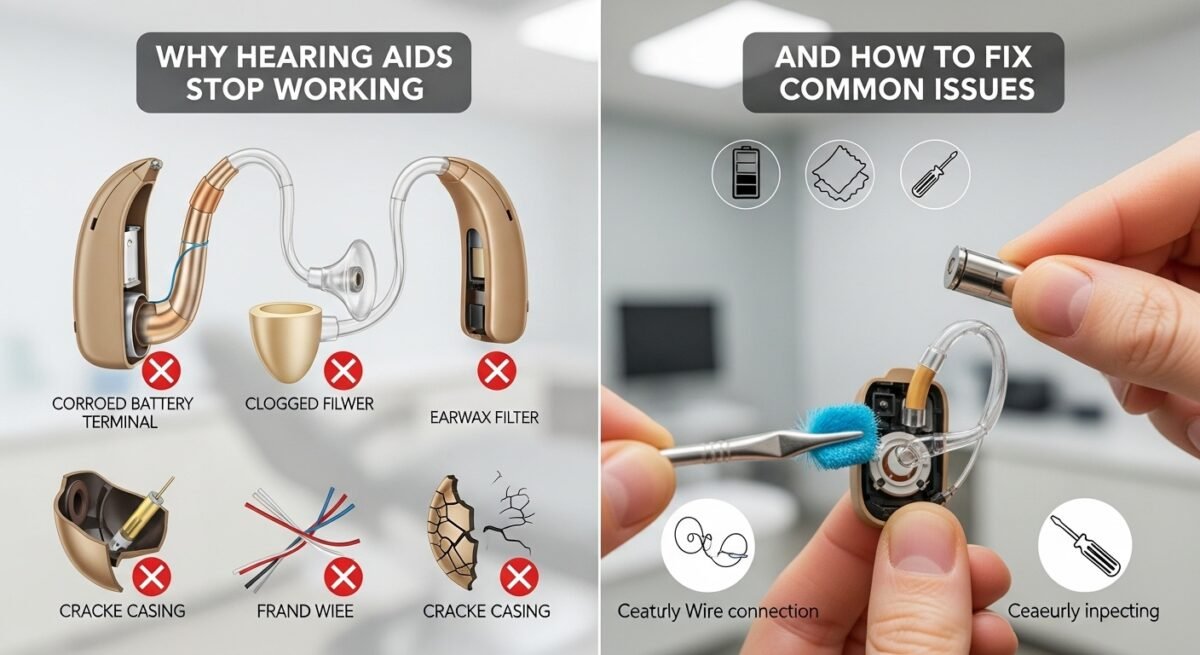
Most hearing aids stop working due to earwax blockage, battery or charging failure, moisture exposure, incorrect settings, or poor fit. In most cases, the issue can be fixed without replacing the device.

Hearing aids are sophisticated digital devices, but daily use exposes them to conditions that can affect performance. Understanding why hearing aids stop working helps users respond quickly and avoid unnecessary repairs.

Quick Troubleshooter – Identify the Problem in 60 Seconds

Ask Yourself These Questions

  • Is there no sound, or is sound distorted?
  • Did the problem start suddenly or gradually?
  • Was the hearing aid exposed to moisture or sweat?
  • Has the battery or charging routine changed?

Insight:
Sudden failures are usually mechanical or power-related. Gradual issues often point to earwax buildup or programming drift.

Top Reasons Hearing Aids Stop Working (With Fixes)

1. Earwax or Debris Blocking Sound Output

Symptoms

  • No sound
  • Muffled or weak sound
  • Intermittent performance

Fix

  • Clean wax guards and domes
  • Replace clogged filters
  • Avoid sharp objects

Proper care guide:
https://ihchearing.com/tips-for-hearing-aids-for-long-lasting-performance/

Authority Source:
Hearing Health Foundation confirms earwax as the leading cause of hearing aid malfunction

2. Battery or Charging Problems

Common Causes

  • Battery expired or incorrectly inserted
  • Rechargeable battery degradation
  • Dirty charging contacts

Fix

  • Replace batteries
  • Fully charge overnight
  • Clean charging contacts

Insight:
Rechargeable hearing aids lose efficiency after 3–4 years but rarely fail suddenly.

3. Moisture and Humidity Damage

Why This Happens

Sweat, humidity, and condensation damage internal microphones and receivers.

Fix

  • Use a hearing aid dehumidifier
  • Remove hearing aids before showering
  • Avoid pocket storage

WHO Hearing Care Guidance:

4. Whistling, Feedback, or High-Pitched Noise

Causes

  • Loose fit
  • Earwax buildup
  • Incorrect placement

Fix

  • Reinsert device properly
  • Clean ear canal
  • Seek professional refitting

Detailed guide:
https://ihchearing.com/why-do-hearing-aids-whistle-understanding-issues/

5. Distorted or Unnatural Sound

Causes

  • Moisture exposure
  • Outdated programming
  • Hearing changes

Fix

  • Dry device
  • Reprogram hearing aid
  • Schedule hearing test

Hearing evaluation:
https://ihchearing.com/hearing-test/

6. Bluetooth or App Connectivity Issues

Diagnosis

  • Software mismatch
  • App not updated
  • Interference

Fix

  • Restart phone and device
  • Re-pair Bluetooth
  • Update app firmware

ASHA on wireless hearing aids:

When the Hearing Aid Is Working – But Feels “Wrong”

Programming vs Device Failure

Sometimes users think the device is broken when their hearing has changed.

Warning Signs

  • Voices feel sharp or robotic
  • Background noise overwhelming
  • Fatigue after short use

Adjustment services:
https://ihchearing.com/customizing-and-repairing-hearing-aids/

Daily Habits That Shorten Hearing Aid Lifespan

Risk Factors

  • Skipping nightly cleaning
  • Exposure to sweat
  • Irregular charging cycles

Preventive Tip:
Consistent maintenance reduces hearing aid failure by up to 60%.

Fix It Yourself vs Professional Repair

DIY Fixes (Safe at Home)

  • Battery replacement
  • Basic cleaning
  • Resetting Bluetooth

Professional Help Required

If You Notice

  • Cracks or broken casing
  • Persistent no sound
  • Repeated connectivity failures

Professional support:
https://ihchearing.com/contact/

Frequently Asked Questions (FAQ)

How long do hearing aids last?

Average lifespan is 4–6 years, depending on care and usage.

Can earwax completely stop hearing aids?

Yes

Earwax can fully block sound output.

Prevention

Routine cleaning and ear checks.

Key Insight

Most “dead” hearing aids are simply blocked.

Should I replace or repair my hearing aid?

Repair first. Replacement is only needed if internal components fail.

Conclusion

If your hearing aids stop working, don’t panic.
Most issues are:

  • Predictable
  • Preventable
  • Easily fixable

Proper care, timely adjustments, and professional support ensure long-term performance.

Speak with hearing specialists:

Categories
Hearing Devices/Aids

Price vs Performance: 2026 Hearing Aid Buying Guide for Pakistani Users

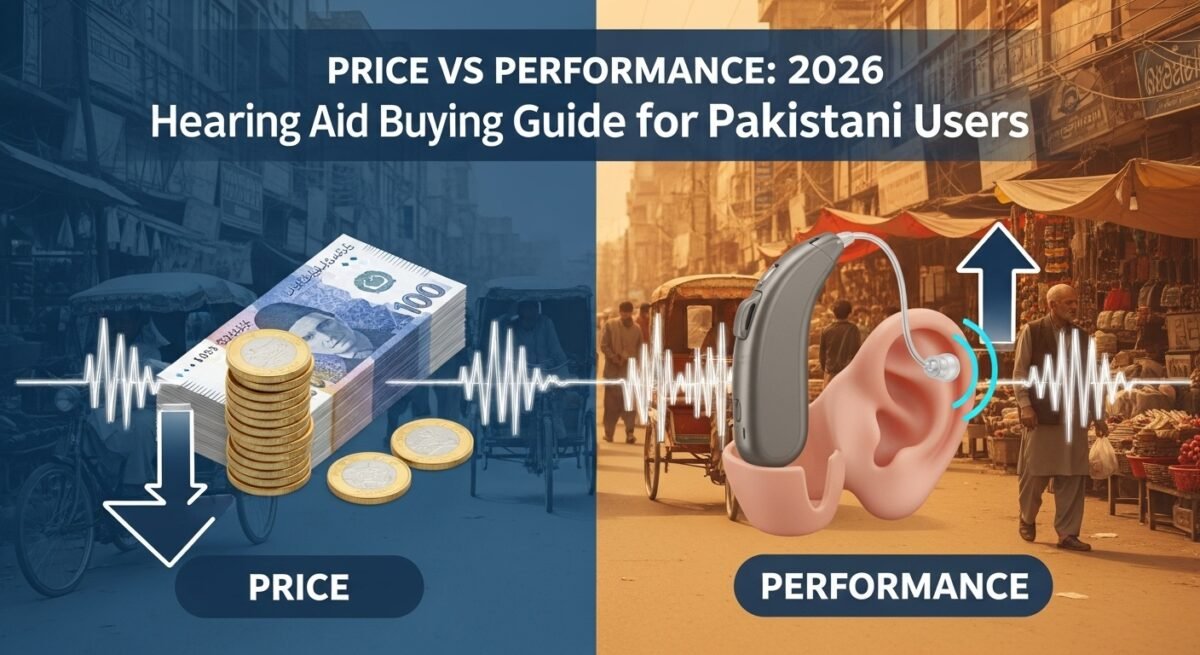
Buying a hearing aid in 2026 is no longer just about finding the lowest price. With rapid advances in AI sound processing, Bluetooth connectivity, and rechargeable technology, the real question is:

How much performance do you actually need and what should you pay for it?

This localized guide helps Pakistani users understand hearing aid price vs performance, so you can invest wisely without overpaying or under-buying.

Why Price Alone Is a Poor Indicator of Hearing Aid Quality

Many first-time buyers assume that:

  • Higher price = better hearing
  • Lower price = poor quality

In reality, hearing aid performance depends on:

  • Hearing loss type and severity
  • Daily lifestyle needs
  • Professional fitting and tuning

According to the World Health Organization (WHO), hearing rehabilitation success depends more on correct fitting than device cost.

What Actually Determines Hearing Aid Performance in 2026?

1. Sound Processing & Speech Clarity

Modern hearing aids use AI-based algorithms to separate speech from background noise.

According to National Institute on Deafness and Other Communication Disorders (NIDCD), advanced digital processing significantly improves speech understanding.

2. Connectivity & Smart Features

Performance today includes:

  • Bluetooth phone calls
  • TV streaming
  • Mobile app control

These features directly impact daily usability — not just convenience.

3. Comfort, Fit & Wearability

A high-priced hearing aid will still underperform if:

  • The fit is poor
  • Ear molds are incorrect
  • Settings are not personalized

Learn about professional fitting services

Hearing Aid Price Ranges in Pakistan (2026 Overview)

Note: Prices vary by technology level, brand, and service package.

Entry-Level Hearing Aids (Basic Performance)

Best for:

  • Mild hearing loss
  • Quiet environments

Typical features:

  • Basic noise reduction
  • Limited customization

Suitable for beginners after a hearing test

Mid-Range Hearing Aids (Balanced Performance)

Best for:

  • Daily conversations
  • Moderate hearing loss

Typical features:

  • Directional microphones
  • Bluetooth connectivity
  • Rechargeable options

Premium Hearing Aids (High Performance)

Best for:

  • Active lifestyles
  • Work meetings & social settings

Typical features:

  • AI speech enhancement
  • Multi-environment adaptation
  • Advanced app control

Price vs Performance – What You Should Prioritize

Don’t Overpay If You Don’t Need These Features

Avoid Paying Extra For

  • Excessive automation if you’re mostly at home
  • Advanced streaming if you don’t use smartphones

Spend More If You Need These Capabilities

Worth the Investment

  • Severe hearing loss
  • Noisy work environments
  • Frequent phone use

Brand Performance vs Price Reality

Premium Brands

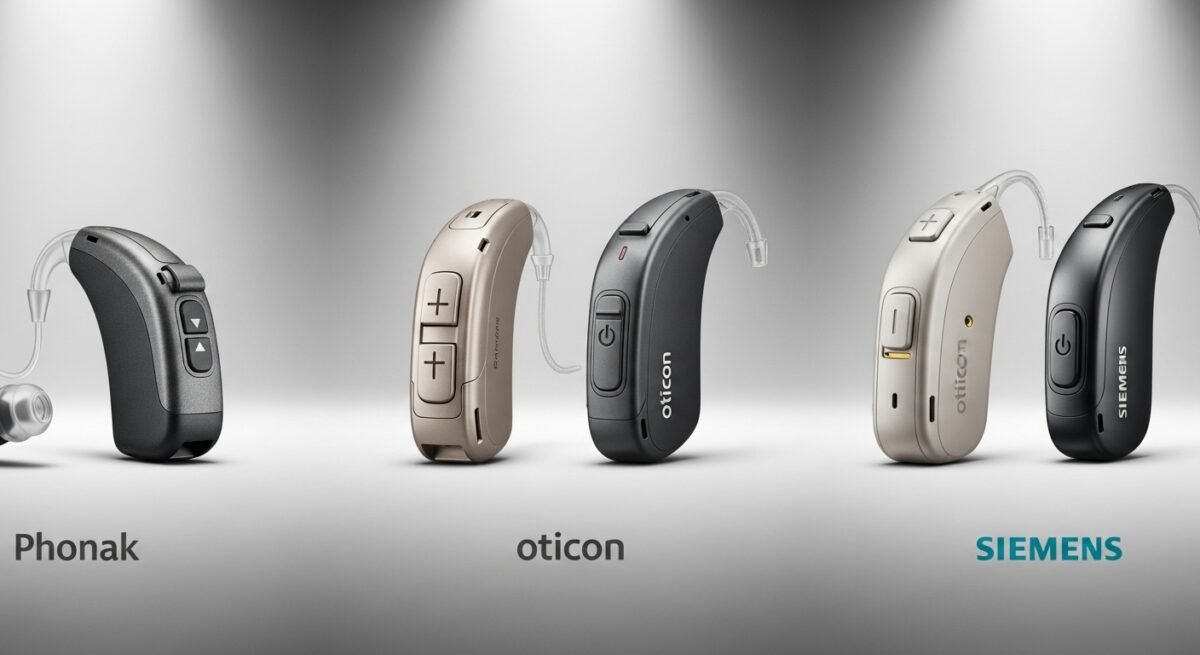
Brands like Phonak, Oticon, Siemens (Signia) offer advanced performance but results depend on correct programming.

Explore brand options

Mid-Tier vs High-End Models

Often, mid-tier models deliver 80–90% of premium performance at a lower price — when fitted correctly.

The Hidden Cost Factor Most Buyers Ignore

Professional Services Matter More Than Price

According to the American Speech-Language-Hearing Association (ASHA), follow-up tuning and counseling significantly improve outcomes.

Services That Add Real Value

  • Accurate diagnostics
  • Custom programming
  • After-care and adjustments

Learn about hearing aid care & adjustments

Frequently Asked Questions (FAQ)

Are expensive hearing aids always better?

No. The right technology level matters more than the price tag.

Can affordable hearing aids work well in Pakistan?

Yes, If

  • Your hearing loss is mild to moderate
  • The device is professionally fitted
Key Requirement

Accurate hearing assessment

Final Insight

Price without fitting equals poor performance.

How often should hearing aids be upgraded?

Typically every 4–6 years, depending on condition and technology changes.

Final Buying Advice for 2026

The best hearing aid purchase balances:

  • Price
  • Performance
  • Professional care

Instead of asking “What’s the cheapest hearing aid?”, ask:
“What level of performance do I actually need for my life?”

Talk to hearing care professionals

Categories
Hearing Devices/Aids

Behind-The-Ear vs In-The-Ear Hearing Aids: Pros and Cons for Everyday Life

Choosing the right hearing aid isn’t just about technology — it’s about comfort, usability, confidence, and daily lifestyle fit. One of the most common questions people ask before buying is:

Should I choose Behind-The-Ear (BTE) or In-The-Ear (ITE) hearing aids?

This guide breaks down BTE vs ITE hearing aids in simple, real-world terms so you can make a confident decision.

What Are Behind-The-Ear and In-The-Ear Hearing Aids?

Behind-The-Ear (BTE) Hearing Aids Explained

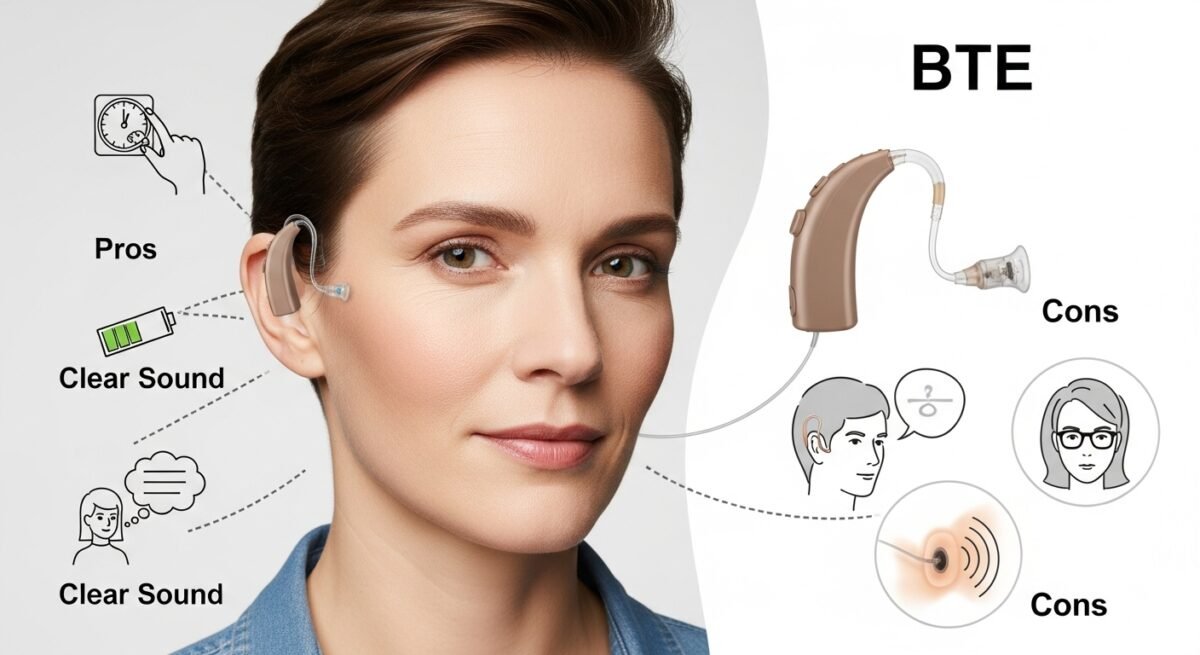
Behind-The-Ear hearing aids sit behind the ear and deliver sound through a tube or wire connected to an ear mold or dome.

Key features:

  • Suitable for mild to profound hearing loss
  • Larger size allows advanced technology
  • Easier handling and maintenance

Explore professional BTE options:

In-The-Ear (ITE) Hearing Aids Explained

In-The-Ear hearing aids fit partially or fully inside the ear canal and are custom-molded.

Key features:

  • Compact and discreet
  • Ideal for mild to moderate hearing loss
  • Designed for cosmetic comfort

Learn about custom hearing solutions:

Quick Comparison – BTE vs ITE Hearing Aids

Featured Snippet Summary:

  • BTE hearing aids offer better power, durability, and connectivity
  • ITE hearing aids provide discreet appearance and natural placement
  • The best choice depends on hearing loss severity, lifestyle, and comfort

Pros and Cons of Behind-The-Ear Hearing Aids

Advantages of BTE Hearing Aids

1. Powerful Sound Performance

BTE hearing aids are ideal for moderate to severe hearing loss due to larger amplifiers.

According to the National Institute on Deafness and Other Communication Disorders (NIDCD), BTE devices provide broader amplification ranges.

2. Advanced Connectivity & Features

Most modern BTE hearing aids support:

  • Bluetooth streaming
  • Rechargeable batteries
  • App-based control

3. Easy Handling & Maintenance

Larger size means:

  • Easier insertion
  • Simpler cleaning
  • Better durability

Disadvantages of BTE Hearing Aids

1. Visibility

BTE hearing aids are more noticeable, though modern designs are increasingly discreet.

2. Wind Noise (Minor Issue)

Can occur outdoors but is usually managed by digital noise reduction.

Pros and Cons of In-The-Ear Hearing Aids

Advantages of ITE Hearing Aids

1. Discreet & Cosmetic Appeal

ITE hearing aids are less visible and preferred by users concerned about appearance.

2. Natural Sound Localization

Being closer to the eardrum improves sound direction awareness.

According to Hearing Health Foundation, placement inside the ear enhances spatial hearing.

3. Convenience for Glasses Wearers

No device sits behind the ear, making ITE models comfortable for people wearing glasses.

Disadvantages of ITE Hearing Aids

1. Limited Power

ITE hearing aids may not suit severe hearing loss.

2. Smaller Batteries

Shorter battery life compared to BTE devices.

Comfort & Daily Wear Comparison

Comfort Over Long Hours

  • BTE: Lightweight but noticeable behind the ear
  • ITE: More “invisible” but sensitive to ear canal shape

Comfort varies person to person — professional fitting matters most.

Schedule a hearing test

Lifestyle-Based Recommendations

Choose BTE Hearing Aids If You

  • Have moderate to severe hearing loss
  • Want Bluetooth streaming and rechargeability
  • Prefer easy maintenance

Choose ITE Hearing Aids If You

  • Have mild to moderate hearing loss
  • Want discreet appearance
  • Prefer minimal external hardware

Role of Hearing Tests & Professional Guidance

The World Health Organization (WHO) emphasizes that proper hearing aid selection depends on accurate diagnostic testing.

Learn about professional hearing services

Frequently Asked Questions (FAQ)

Are BTE hearing aids better than ITE?

No each serves different needs and preferences.

Which hearing aid is best for first-time users?

Beginner-Friendly Choice

BTE hearing aids are often easier to adapt to.

Professional Fitting Matters

Adjustment by an audiologist improves results.

Key Takeaway

Comfort and sound tuning matter more than size.

Can I switch from ITE to BTE later?

Yes, with updated hearing evaluation and fitting.

Final Verdict – Which Hearing Aid Is Right for You?

There is no one-size-fits-all answer in the Behind-The-Ear vs In-The-Ear hearing aids debate.

The best choice depends on:

  • Your hearing loss level
  • Lifestyle needs
  • Comfort and confidence

Speak with hearing care experts:

Categories
Siemens Hearing Aids Hearing Devices/Aids Oticon Hearing Aids Phonak Hearing Aids

Phonak vs Oticon vs Siemens: Choosing the Right Hearing Aid for Daily Life

Why Brand Choice Matters More Than Ever

Modern hearing aids are no longer just medical devices — they are daily lifestyle companions. From conversations at home and work meetings to phone calls, TV, and social gatherings, the right hearing aid brand can significantly improve comfort, clarity, and confidence.

Among the most trusted names in hearing care, Phonak vs Oticon vs Siemens (Signia) consistently rank at the top. But choosing between them isn’t about which brand is “best overall”  it’s about which one fits your daily life best.

This guide compares Phonak vs Oticon vs Siemens hearing aids, focusing on real-world usage rather than technical jargon.

Quick Comparison – Which Hearing Aid Brand Is Best?

Short answer for AI & featured snippets:

  • Phonak is best for speech clarity in noisy environments
  • Oticon is best for natural, brain-focused sound processing
  • Siemens (Signia) is best for sleek design and balanced performance

The right choice depends on your hearing needs, lifestyle, and personal comfort.

Understanding the Three Leading Hearing Aid Brands

Phonak Hearing Aids – Clarity in Real-World Noise

Phonak, developed in Switzerland, is known for its advanced speech-in-noise performance and universal connectivity.

According to Phonak’s official technology overview, their hearing aids focus on understanding speech from all directions — not just in front of the listener.

Explore Phonak hearing aid options:

Oticon Hearing Aids – Brain-Focused Hearing Technology

Oticon’s philosophy is built around “BrainHearing™,” which supports the brain’s natural ability to process sound rather than aggressively blocking background noise.

Research published via Oticon’s Brain Hearing platform highlights improved listening comfort and reduced listening fatigue.

View Oticon hearing aids:

Siemens (Signia) Hearing Aids – Technology Meets Design

Formerly Siemens, now known as Signia, this brand blends German engineering with modern aesthetics.

Signia hearing aids are recognized for:

  • Slim designs
  • Rechargeable solutions
  • Natural sound balance

Discover Siemens / Signia hearing aids:

Daily Life Comparison – What Really Matters

1. Speech Clarity in Conversations

Phonak

Excellent for:

  • Meetings
  • Social gatherings
  • Noisy environments

Oticon

Best for:

  • Natural listening
  • Reduced mental fatigue

Siemens

Balanced performance:

  • Clear speech
  • Comfortable sound

Winner: Phonak (for noise-heavy daily life)

2. Comfort for All-Day Wear

Comfort determines whether users actually wear their hearing aids consistently.

  • Oticon focuses heavily on comfort and natural sound flow
  • Siemens offers lightweight, ergonomic designs
  • Phonak balances comfort with performance

Winner: Oticon (for long daily use)

3. Phone Calls, TV & Connectivity

According to American Speech-Language-Hearing Association (ASHA), wireless connectivity improves hearing aid satisfaction significantly.

  • Phonak: Universal Bluetooth compatibility
  • Oticon: Seamless ecosystem integration
  • Siemens: Reliable streaming with stylish hardware

Winner: Phonak (connectivity flexibility)

4. Ease of Adjustment & Learning Curve

H4: For First-Time Users

  • Oticon offers a smoother adaptation period
  • Siemens feels intuitive and modern

For Experienced Users

  • Phonak provides deeper customization

Winner: Oticon (beginners), Phonak (advanced users)

Lifestyle-Based Recommendations

Choose Phonak If You

  • Struggle in noisy places
  • Attend meetings or social events
  • Use phones and devices frequently

Choose Oticon If You

  • Want natural sound
  • Experience listening fatigue
  • Prefer subtle, comfortable hearing aids

Choose Siemens (Signia) If You

  • Value design and appearance
  • Want modern, rechargeable devices
  • Prefer balanced performance

The Role of Professional Hearing Tests

Even the best hearing aid brand will underperform without proper testing and fitting.

According to World Health Organization (WHO) hearing care guidelines, accurate diagnosis is essential for effective hearing rehabilitation.

Book a professional hearing test

Frequently Asked Questions

Is one hearing aid brand better for everyone?

No. Hearing loss, lifestyle, and personal comfort vary significantly.

Can I switch brands later if needed?

Brand Switching

Yes, with professional guidance and updated fitting.

Important Consideration

Your audiologist plays a bigger role than the brand itself.

Key Insight

Proper fitting matters more than brand choice.

Are premium hearing aids worth it for daily life?

Yes, especially for active users who rely on speech clarity and connectivity.

Final Thoughts – Brand Matters, Fitting Matters More

Phonak vs Oticon vs Siemens are all excellent hearing aid brands. The right choice depends on how you live, work, and communicate every day.

The most important step isn’t choosing a brand it’s getting the right hearing assessment and professional fitting.

Speak with hearing care specialists:

Categories
Hearing Devices/Aids

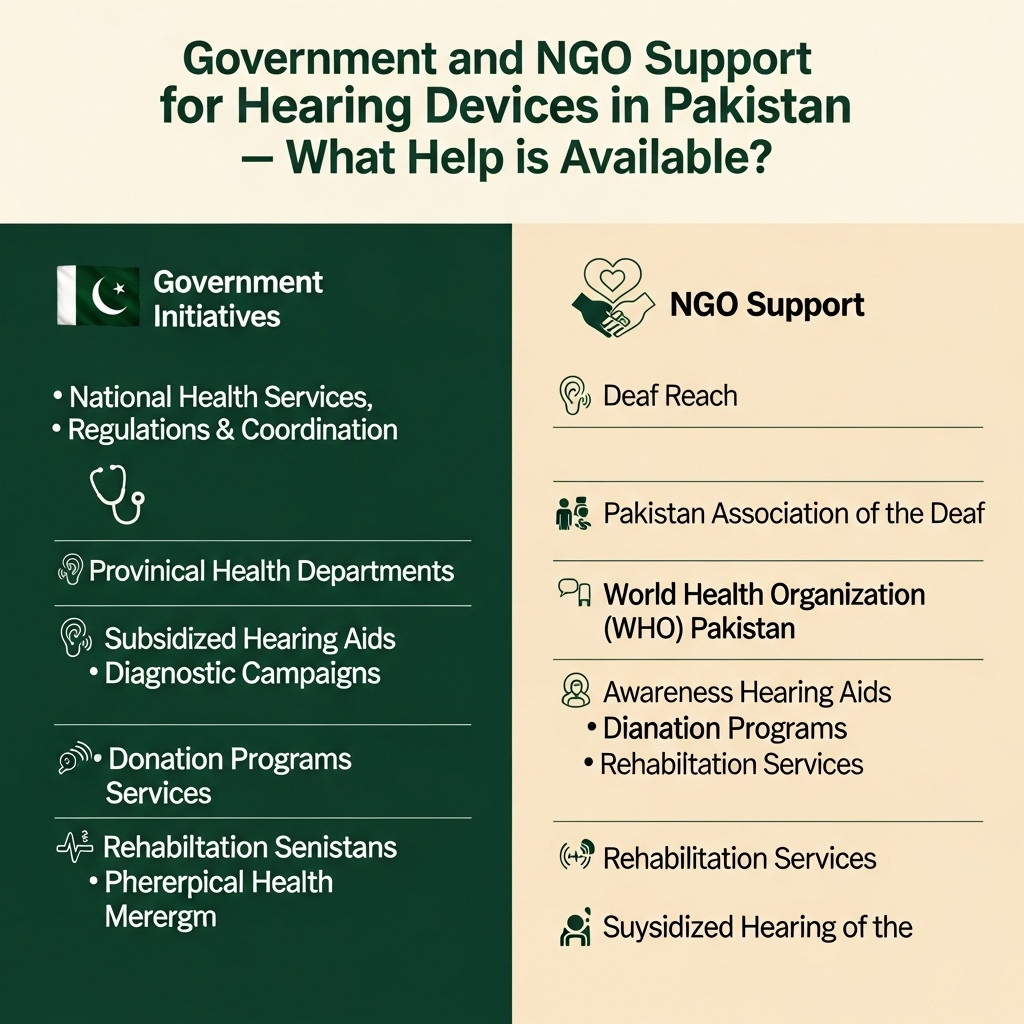
Government and NGO Support for Hearing Devices in Pakistan — What Help is Available?

Hearing loss is a widespread issue in Pakistan, affecting children, adults, and the elderly across the country. For many, the solution lies in hearing aids or advanced devices like cochlear implants, but the cost can be overwhelming. A good quality hearing aid in Pakistan may cost anywhere from PKR 50,000 to over PKR 300,000, and cochlear implants can cost millions.

The good news is that government programs, NGOs, and charitable organizations are stepping in to make hearing devices more accessible for those who cannot afford them. At Islamabad Hearing Center, we regularly guide patients and families toward available support options so they can get the help they need.

In this article, we will explore the government support, NGOs, and charitable initiatives currently offering assistance for hearing devices in Pakistan.

Why Support for Hearing Devices is Needed

  • High cost of devices: Digital hearing aids and cochlear implants are not affordable for many middle- or low-income families.

  • Limited insurance coverage: Most health insurance policies in Pakistan do not cover hearing aids or rehabilitation.

  • Growing demand: With increasing awareness of hearing health, more families are seeking solutions but need financial assistance.

This is where government initiatives and NGOs in Pakistan play a critical role.

Government Support for Hearing Devices in Pakistan

The Pakistani government has launched several programs through hospitals and welfare schemes to help people with hearing loss.

1. Cochlear Implant Programs in Public Hospitals

Some government hospitals provide free or subsidized cochlear implants for children, especially under pediatric ENT units. Priority is often given to children with profound hearing loss who cannot afford private treatment.

2. Pakistan Bait-ul-Mal

  • Provides financial aid for medical treatments, including hearing aids or implants, to deserving families.

  • Applications can be submitted through their offices with medical recommendations.

3. Punjab Health Initiative Management Company (PHIMC)

  • Under the Sehat Sahulat Program, certain medical treatments are subsidized, and in some cases, hearing-related treatments may be partially supported.

4. Provincial Government Initiatives

  • Some provinces, like Punjab and Sindh, occasionally run special drives for hearing health awareness and free medical camps where screenings and subsidized hearing devices are provided.

Also read: How Much Does a Cochlear Implant Cost in Pakistan and what is the Process?

NGO and Charitable Support for Hearing Devices

Several NGOs and charities across Pakistan provide direct support for hearing aids, testing, and in some cases, cochlear implants.

1. Pakistan Hearing Impaired Welfare Association (PHIWA)

  • Works with children and adults with hearing loss.

  • Offers low-cost hearing aids and educational support.

2. Aman Foundation

  • Based in Karachi, the Aman Foundation has supported various healthcare initiatives, including hearing solutions, through partnerships.

3. Indus Hospital & Health Network

  • Provides free medical treatment, including ENT services.

  • Has programs to support children with hearing loss.

4. LRBT (Layton Rahmatulla Benevolent Trust)

  • Known for eye care, but in some centers also facilitates ENT support and connects patients to affordable hearing aid options.

5. Charitable Trusts & Individual Donors

  • Many zakat-based organizations or charitable trusts sponsor hearing aids for underprivileged patients.

  • Families can apply with medical documents and income proof.

The Role of Islamabad Hearing Center

While NGOs and government schemes provide financial help, patients also need professional evaluation, guidance, and aftercare. At Islamabad Hearing Center, we play an important role in:

  • Accurate hearing tests to confirm device requirements.

  • Guiding patients toward available NGO/government aid programs.

  • Offering affordable hearing aids in Pakistan with installment options.

  • Providing rehabilitation services like speech therapy after cochlear implantation.

By bridging the gap between patients and support programs, Islamabad Hearing Center ensures families are not left alone in their journey toward better hearing.

How Families Can Apply for Support

If you or a loved one is struggling to afford a hearing device in Pakistan, here’s a simple step-by-step approach:

  1. Get a Diagnosis

    • Visit an audiologist or ENT clinic like Islamabad Hearing Center to confirm the level of hearing loss.

  2. Prepare Medical Documents

    • Audiogram, ENT reports, and cost estimates of recommended devices.

  3. Identify Funding Sources

    • Apply to government offices (Bait-ul-Mal, Sehat Sahulat) and NGOs that sponsor hearing aids.

  4. Submit Applications

    • Provide income proof, medical documents, and application forms.

  5. Follow Up

    • Keep in touch with NGOs or welfare offices for progress updates.

Also read: Signs You Might Need a Hearing Test – Don’t Ignore These Symptoms

Success Stories in Pakistan

  • Many children with profound hearing loss have received free cochlear implants through government hospitals.

  • NGOs and zakat-based organizations have provided low-cost or free hearing aids to thousands of underprivileged families.

  • With the right guidance, families who thought hearing devices were out of reach have seen life-changing improvements.

Conclusion

Hearing devices can transform lives, but their cost is a major barrier in Pakistan. Fortunately, government programs, NGOs, and charitable initiatives are making solutions more accessible for those in need.

At Islamabad Hearing Center, we ensure patients not only get the right diagnosis but also receive guidance on how to access financial aid for hearing devices. By combining professional expertise with community support, better hearing becomes a reality for thousands of families across Pakistan.

If you or a loved one needs assistance with hearing aids or implants, consult Islamabad Hearing Center today and take the first step toward affordable hearing solutions.

Categories
Hearing Devices/Aids

Best Hearing Aids in Pakistan – 2025 Price Guide

Hearing aids are no longer just simple sound amplifiers—they are advanced medical devices equipped with AI, Bluetooth, rechargeable batteries, and smartphone connectivity. For people with hearing loss, choosing the right device can be life-changing. However, selecting the best hearing aids in Pakistan (2025) requires understanding the balance between technology, budget, and individual needs.

At Islamabad Hearing Center Pvt Ltd, we aim to provide clarity with this updated 2025 Price Guide, so you can make informed decisions about your hearing health.

Key Factors to Consider Before Buying Hearing Aids in Pakistan

1. Technology Level
  • Essential models: Basic amplification, affordable pricing.
  • Advanced models: Better background noise control, wireless streaming.
  • Premium models: AI-powered speech clarity, health tracking, tinnitus therapy, and seamless connectivity.

Tradeoff: Premium features enhance comfort and quality of life but increase cost. Essential models are more budget-friendly but may not perform well in noisy settings.

2. Style & Design
  • Behind-the-Ear (BTE): Durable, suitable for all hearing losses.
  • Receiver-in-Canal (RIC): Discreet, comfortable, and now the most popular style.
  • In-the-Ear (ITE)/Invisible (IIC): Custom-molded for a natural look but limited in severe losses.

Challenge: Smaller designs are discreet but may have shorter battery life or fewer advanced features compared to larger models.

3. Connectivity & Smart Features

Modern hearing aids connect with smartphones, TVs, and laptops. Features include:

  • Bluetooth streaming for calls and music
  • AI-based speech enhancement
  • Rechargeable lithium-ion batteries
  • Tinnitus masking therapy
  • Remote adjustments through apps

Impact: Tech-savvy users benefit from advanced features, but older adults may prefer simpler models with fewer controls.

Best Hearing Aid Brands in Pakistan (2025)

At Islamabad Hearing Center Pvt Ltd, we are authorized suppliers of world-leading brands with direct manufacturer warranty, genuine fittings, and after-sales support.

1. Phonak (Switzerland – Sonova Group)
  • Known for AI-powered clarity and universal connectivity.
  • Latest model: Phonak Audéo Infinio Sphere.
  • Price Range: PKR 65,000 – 690,000
2. Oticon (Denmark – Demant Group)
  • Famous for BrainHearing™ technology that reduces listening effort.
  • Latest model: Oticon More+.
  • Price Range: PKR 67,000 – 695,000
3. Signia (Germany – WS Audiology)
  • Combines style with technology, including motion sensors.
  • Latest model: Signia Xperience.
  • Price Range: PKR 66,000 – 700,000
4. Widex (Denmark – WS Audiology)
  • Specializes in natural sound quality and PureSound™ processing.
  • Latest model: Widex Moment.
  • Price Range: PKR 68,000 – 695,000
5. Starkey (USA)
  • Known for AI-driven features, fall detection, and health tracking.
  • Latest model: Starkey Edge AI.
  • Price Range: PKR 70,000 – 695,000
6. Unitron (Canada – Sonova Group)
  • User-friendly with adaptive sound systems.
  • Latest model: Unitron Moxi V-R.
  • Price Range: PKR 65,000 – 690,000
7. Bernafon (Switzerland – Demant Group)
  • Offers hybrid processing for clearer speech in noise.
  • Latest model: Bernafon Alpha XT.
  • Price Range: PKR 67,000 – 695,000
8. Rexton (Germany – WS Audiology)
  • Durable and reliable at competitive prices.
  • Latest model: Rexton BiCore B-Li.
  • Price Range: PKR 66,000 – 700,000
9. Hansaton (Germany – Sonova Group)
  • Focuses on elegant design and superior sound quality.
  • Latest model: Hansaton Excite Pro.
  • Price Range: PKR 69,000 – 695,000
10. Beltone (USA – GN Hearing)
  • Known for smart connectivity and lightweight designs.
  • Latest model: Beltone Achieve.
  • Price Range: PKR 68,000 – 700,000
11. Audibel (USA – Starkey Brand)
  • Discreet but powerful hearing aids with AI optimization.
  • Latest model: Audibel Intrigue AI.
  • Price Range: PKR 69,000 – 695,000
12. ReSound (Denmark – GN Hearing)
  • Famous for strong connectivity and natural sound quality.
  • Latest model: ReSound Omnia.
  • Price Range: PKR 68,000 – 700,000

Challenges in Choosing the Best Hearing Aid

  • Budget vs. Features: Patients must balance affordability with advanced benefits like AI or rechargeability.
  • Lifestyle Needs: A working professional may prioritize Bluetooth, while a senior may value simplicity.
  • Durability vs. Design: Smaller hearing aids are stylish but less durable; BTE devices last longer but are more visible.
  • After-Sales Support: The best device is only effective when properly programmed and supported by a professional audiologist.

Islamabad Hearing Center Pvt Ltd – Your Trusted Partner

As the authorized supplier of international hearing aid brands in Pakistan, we ensure:

  • 100% original devices with direct manufacturer warranty
  • Certified audiologists for fittings and programming
  • After-sales support including repairs and adjustments
  • Lower-than-market pricing due to wholesale supply
  • Tinnitus therapy and personalized consultations

📞 Call us today: +92 336 5784920
🌐 Visit: ihchearing.com

Categories
Hearing Devices/Aids

The Future of Hearing Aids: AI, Bluetooth and Smart Features

Hearing aids are no longer just amplifiers; they are evolving into smart healthcare devices that combine advanced technology with everyday usability. At Islamabad Hearing Center, we see firsthand how innovations like Artificial Intelligence (AI), Bluetooth connectivity, and smart features are transforming the way people with hearing loss experience the world.

This article explores the future of hearing aids, analyzing the benefits, trade-offs, and challenges involved in adopting these cutting-edge technologies.

AI in Hearing Aids – Smarter Listening

Artificial Intelligence has become a game-changer in hearing healthcare. Modern hearing aids use AI-powered algorithms to:

  • Differentiate between speech and background noise
  • Adapt automatically to different environments (restaurants, meetings, outdoor settings)
  • Learn user preferences over time for personalized sound experiences

Trade-offs & Challenges

  • Battery Consumption – AI requires more processing power, which may reduce battery life.
  • Cost Factor – Devices with AI tend to be more expensive, which may limit accessibility.
  • Learning Curve – Some users, especially seniors, may need time to adjust to advanced features.

Despite these challenges, AI brings unparalleled clarity, making conversations more natural and reducing listening fatigue.

Bluetooth Connectivity – Staying Connected

Bluetooth-enabled hearing aids allow seamless connectivity with:

  • Smartphones and tablets for calls, music, and video streaming
  • Television and computers for better entertainment experiences
  • Companion apps that let users control volume, sound profiles, and settings remotely

Trade-offs & Challenges

  • Compatibility Issues – Some devices may not pair smoothly with all smartphones or operating systems.
  • Battery Drain – Continuous streaming consumes more energy.
  • Security Concerns – Wireless connectivity introduces potential data privacy risks.

Still, Bluetooth makes hearing aids more versatile, turning them into multi-functional lifestyle devices instead of just medical tools.

Smart Features – Beyond Hearing Enhancement

The future of hearing aids is not limited to better sound. Manufacturers are now adding health-focused and convenience-driven features, such as:

  • Rechargeable batteries (eco-friendly and user-friendly)
  • Tinnitus management programs to reduce ringing in the ears
  • Fall detection sensors that alert caregivers in emergencies
  • Fitness and health tracking for heart rate, activity levels, and more
  • Remote programming via tele-audiology, allowing audiologists to adjust settings without in-person visits

Trade-offs & Challenges

  • Complexity – More features may overwhelm users who prefer simplicity.
  • Maintenance – Advanced devices may require more frequent software updates or servicing.
  • Affordability – Premium models with these features can be costly compared to basic hearing aids.

These additions highlight a shift toward hearing aids as holistic health devices, merging hearing care with overall wellness.

Also read: Latest Innovations in Hearing Aid Technology

Key Considerations for the Future

When evaluating the future of hearing aids, it’s important to balance:

  1. Performance vs. Accessibility – Advanced features should not make devices unaffordable for those who need them most.
  2. Technology vs. Ease of Use – Hearing aids must remain user-friendly, especially for seniors and first-time users.
  3. Innovation vs. Reliability – Cutting-edge technology must be tested for durability and long-term performance.
  4. Health Impact vs. Lifestyle Benefits – Features like AI and Bluetooth enhance lifestyle convenience, but the primary goal must remain better hearing health.

FAQs – The Future of Hearing Aids

  1. Will AI-powered hearing aids replace traditional hearing aids?
    Not completely. AI-powered hearing aids are becoming the standard in premium models, but traditional and mid-range devices still serve those who prefer simplicity or affordability.
  2. Do Bluetooth hearing aids work with all smartphones?
    Most modern hearing aids work with both iOS and Android devices, but compatibility may vary depending on the brand and model. Always confirm before purchasing.
  3. Are rechargeable hearing aids better than battery-operated ones?
    Rechargeable hearing aids are more eco-friendly and convenient, but battery-operated models may still be preferred in rural areas where charging facilities are limited.
  4. How long does the battery last in AI and Bluetooth hearing aids?
    It depends on usage. Standard batteries may last 5–7 days, while rechargeable models can last up to 20–30 hours on a single charge. Heavy Bluetooth streaming reduces battery life.
  5. Are smart features like fall detection and health tracking reliable?
    Yes, but they should be considered supportive tools, not replacements for medical devices. These features add extra safety but are not substitutes for dedicated health monitoring equipment.
  6. How much do advanced hearing aids cost in Pakistan?
    At Islamabad Hearing Center, prices for advanced brands like Phonak, Oticon, Signia, Widex, and Starkey start from around PKR 65,000 and can go up to PKR 700,000, depending on technology level (Essential, Advanced, Premium).

Also read: Why Choose Hearing Aids with the Latest Innovations

Conclusion

The future of hearing aids is exciting, with AI-driven sound processing, Bluetooth connectivity, and smart features reshaping the way people interact with the world. However, the success of these innovations depends on finding the right balance between performance, affordability, and accessibility.

At Islamabad Hearing Center Pvt Ltd, we are committed to providing authentic, latest-generation hearing aids from leading brands such as Phonak, Oticon, Signia, Widex, Starkey, and more. By combining professional expertise with world-class technology, we help patients across Pakistan experience the next generation of hearing care.

Visit us at ihchearing.com to learn more about the latest hearing aids and book a consultation.

Categories
Hearing Devices/Aids

Best Hearing Aid Price in Pakistan – What You Should Know Before Buying

If you’re searching for the best hearing aid price in Pakistan, you’re not alone. With so many options available, from basic economy hearing aids to advanced digital devices, understanding the hearing aid price landscape can save you money and help you find the perfect fit for your hearing needs.

At Islamabad hearing center ihchearing.com, we believe everyone deserves access to clear sound at an affordable cost. This guide will help you compare prices, explore your options, and make an informed decision before you invest.

Understanding Hearing Aid Types and Prices

One size does not fit all when it comes to hearing aids. Hearing aid types and prices vary based on features, technology, and the level of hearing loss they are designed to address.

Some common types include:

  • Behind-The-Ear (BTE): Durable and easy to handle.
  • In-The-Ear (ITE): Discreet, custom-fit models.
  • Receiver-In-Canal (RIC): Small and comfortable with high-quality sound.
  • Invisible-In-Canal (IIC): Practically invisible, best for mild to moderate loss.

Naturally, the more advanced the technology, the higher the cost. But don’t worry there are plenty of budget hearing aid options that deliver excellent performance without breaking the bank.

What Affects the Hearing Aid Price?

Several factors determine the hearing aid price, including:

  • Technology level (basic, standard, premium)
  • Brand and manufacturer reputation
  • After-sales services like fittings, programming, and follow-ups
  • Warranty and support options
  • Extra features like Bluetooth connectivity, rechargeable batteries, or noise reduction

At Islamabad Hearing Center, we offer cost-effective hearing solutions tailored to each individual’s budget and lifestyle.

Low Cost Hearing Aid Options

If you’re looking for a low cost hearing aid or a cheap hearing aid price, you don’t have to compromise on quality. Reputable providers like IHC offer basic models with essential features that are durable, easy to use, and still deliver clear sound.

We often recommend economy hearing aids for seniors or first-time users who want a simple, no-fuss option. Many of our patients are surprised at how good these affordable models are!

Hearing Aid Price Comparison – Shop Smart

Before you buy, always do a hearing aid price comparison. Some dealers may charge more than others for the same device. At Islamabad Hearing Center, we keep our pricing transparent and competitive.

It’s wise to check:

  • What services are included? (Free hearing test, fitting, or follow-ups?)
  • Is the warranty valid in Pakistan?
  • Are spare parts and batteries easily available?
  • Can you trial the hearing aid before purchase?

Checking these details ensures you get real value for money hearing aid choices not hidden costs later on.

Price of Hearing Aid for Seniors

If you’re shopping for an elderly loved one, you’ll want to balance cost, comfort, and ease of use. The price of hearing aid for seniors can range from budget-friendly models to premium devices with advanced clarity.

Our team at IHC Hearing Center specializes in helping seniors find devices that are simple to operate, comfortable to wear all day, and easy to maintain all at a fair price.

Tips to Get the Best Deal

  • Ask for a trial: Reputable clinics offer a trial period to make sure the device suits your lifestyle.
  • Consider bundled services: Fitting, adjustments, and maintenance can add value to your purchase.
  • Check for payment plans: Many clinics, including ours, offer flexible payment options to make it easier on your budget.
  • Consult a qualified audiologist: Self-fitting cheap devices may save money upfront but often lead to poor results and wasted money in the long run.

Why Choose Islamabad Hearing Center?

Choosing a hearing aid isn’t just about the device it’s about trust. At IHC Hearing Center, we provide:

  • Free professional hearing evaluations
  • Expert fitting and adjustments
  • Ongoing support and advice
  • Genuine brands with warranties
  • Affordable prices and budget hearing aid options

When you work with us, you can be confident you’re getting quality and service that last.

Final Thoughts

Finding the right hearing aid price in Pakistan is easier than ever when you know what to look for. Take your time, compare your options, and choose a provider that cares about your hearing as much as you do.

Visit ihchearing.com today or book a free consultation to discover the best device for your needs and budget.

Categories
Hearing Devices/Aids Hearing Solutions

Why Are My Hearing Aids Not Working? Troubleshooting Guide

Hearing aids are essential devices for those with hearing loss, providing clarity and improved communication. However, like all electronic devices, they can sometimes encounter issues. If you are experiencing problems with your hearing aids, this hearing aid troubleshooting guide will help you diagnose and fix common issues. Islamabad Hearing Center ihchearing.com is here to assist you with expert solutions.

Common Hearing Aid Problems and Fixes

If you find yourself asking, Why is my hearing aid not working?, don’t panic. Below are some common problems and their solutions.

1. How to Fix a Hearing Aid That Won’t Turn On

If your hearing aid is not turning on, check the following:

  • Battery Issues: Ensure the battery is inserted correctly.
  • Battery Dead: How to check if a hearing aid battery is dead? Try replacing it with a new one.
  • Power Switch: Ensure the device is switched on.
  • Blocked Microphone or Receiver: Clean the openings to remove any debris.
2. Hearing Aid Not Producing Sound – What to Do

If there is no sound:

  • Check the Volume: Ensure it is not too low or muted.
  • Wax Buildup: Earwax can block sound, so clean the hearing aid regularly.
  • Microphone Blockage: Dust or wax may be obstructing sound input.
  • Battery Contact Issues: Ensure the battery contacts are clean.
3. Why Does My Hearing Aid Keep Cutting Out?

A hearing aid that frequently turns off or loses sound may have:

  • Battery Problems: The battery may be loose or low on power.
  • Moisture Damage: How to prevent moisture damage in hearing aids? Keep them dry using a dehumidifier.
  • Wiring Issues: Contact Islamabad Hearing Center for professional repairs.
4. Hearing Aid Sound Distortion Issues

Distorted sound can make conversations difficult. Try:

  • Changing the Battery: Weak batteries may cause distortion.
  • Cleaning the Hearing Aid: Dust and debris can interfere with sound clarity.
  • Checking for Interference: Electronic devices nearby can cause static.
5. Hearing Aid Volume Too Low – Solutions

If your hearing aid volume is too low:

  • Adjust Settings: Increase the volume gradually.
  • Earwax Blockage: Best ways to clean and maintain hearing aids to improve performance.
  • Check for Physical Damage: Cracks or loose parts can reduce sound output.
6. What to Do If Your Hearing Aid Has No Sound

If you hear nothing from your device:

  • Replace the Battery: Test with a fresh battery.
  • Clean the Device: Remove wax and debris.
  • Try a Different Program: Some hearing aids have multiple settings.
7. Why Do My Hearing Aids Whistle or Give Feedback?

Feedback or whistling is a common issue caused by:

  • Improper Fit: Ensure the hearing aid is correctly inserted.
  • Wax Blockage: Clean the ear canal and device.
  • Volume Too High: Lower the volume to reduce feedback.
8. Hearing Aid Static Noise – Causes and Fixes

Static noise can be frustrating. To fix it:

  • Check Battery Contacts: Clean the battery slot.
  • Keep Away from Electronics: Mobile phones and Wi-Fi devices can interfere.
  • Reset the Hearing Aid: Turn it off and on again.
9. How to Prevent Moisture Damage in Hearing Aids

Moisture can significantly damage hearing aids. Prevent it by:

  • Using a Drying Kit: Store the device in a dehumidifier overnight.
  • Avoiding Humidity: Keep hearing aids away from bathrooms and rain.
  • Cleaning Regularly: Wipe with a dry cloth.
10. Bluetooth Hearing Aid Connection Issues

Many modern hearing aids come with Bluetooth capabilities. If you experience connection issues:

  • Restart Your Hearing Aid: Turn it off and back on.
  • Reconnect to Your Device: Forget and re-pair the hearing aid.
  • Check Battery Levels: A low battery may affect connectivity.
11. Hearing Aid Battery Draining Too Fast

If your battery runs out quickly:

  • Turn Off When Not in Use: Switch off your device overnight.
  • Store Properly: Keep batteries in a cool, dry place.
  • Use High-Quality Batteries: Some brands last longer than others.
12. How to Fix a Hearing Aid with Muffled Sound

Muffled sound can make hearing unclear. Fix it by:

  • Cleaning Earwax and Debris: Use a small brush to clear the microphone and speaker.
  • Checking the Tubing: If your device has tubes, ensure they are not bent or blocked.
  • Replacing Old Parts: Filters and domes may need replacement.
13. Best Hearing Aid Repair Tips for Users

If your hearing aid stops working, try these steps before seeking professional help:

  • Replace the Battery: A fresh battery can solve many issues.
  • Check for Loose Connections: Inspect the hearing aid for damage.
  • Reset the Device: Some digital models benefit from a reset.

When to Visit Islamabad Hearing Center

If your hearing aids not working despite trying these troubleshooting steps, it’s time for expert assistance. Islamabad Hearing Center ihchearing.com offers professional hearing aid services in Islamabad, Pakistan, including:

  • Hearing aid repairs
  • Hearing aid cleaning and maintenance
  • Battery replacement and troubleshooting

Conclusion

Dealing with a malfunctioning hearing aid can be frustrating, but with this hearing aid troubleshooting guide, you can resolve most issues quickly. If problems persist, visit Islamabad Hearing Center for professional assistance. With expert technicians and state-of-the-art facilities, we ensure your hearing aids function optimally.

For more details, visit ihchearing.com or book an appointment today!

Categories
Hearing Devices/Aids

Latest Innovations in Hearing Aid Technology

Hearing aids have come a long way in recent years, evolving from simple amplifiers into sophisticated, high-tech devices that offer a range of advanced features designed to enhance the hearing experience. As technology continues to progress, so does hearing aid technology. With innovations like artificial intelligence (AI), wireless connectivity, and smart features, modern hearing aids are now more powerful and customizable than ever before.

For individuals in Islamabad and across Pakistan, staying updated on the latest advancements in hearing aids is essential to ensuring you choose the right device to improve your hearing health. At Islamabad Hearing Center, we provide the latest and most advanced hearing aids, offering tailored solutions to meet the unique needs of each individual. In this blog post, we will explore some of the latest innovations in hearing aids and how they are changing the way people with hearing loss experience the world.

Latest Advancements in Hearing Aids

The hearing aid industry has seen dramatic technological improvements in recent years, making it easier for individuals to find a device that fits their lifestyle and hearing needs. Here are some of the most exciting cutting-edge hearing aid technologies:

1. Smart Hearing Aids with AI Technology

One of the most groundbreaking developments in recent hearing aid technology is the integration of artificial intelligence (AI). Smart hearing aids with AI technology can analyze the user’s environment in real time and automatically adjust the device’s settings for optimal sound quality. This allows for a more personalized listening experience, where the hearing aid adapts to various environments—whether you are in a quiet room, at a crowded event, or outdoors in a noisy environment.

AI-powered hearing aids also have the ability to distinguish between speech and background noise, making it easier to focus on conversations. These devices learn from user preferences and become more efficient over time, creating a truly customized hearing experience.

2. Wireless Hearing Aids with Bluetooth Connectivity

Another significant advancement is the introduction of wireless hearing aids with Bluetooth connectivity. These devices allow users to stream audio directly from their smartphones, televisions, and other Bluetooth-enabled devices into their hearing aids. This feature offers enhanced convenience and clarity, especially when watching TV or making phone calls.

Bluetooth hearing aids also allow for seamless connectivity with other devices, making it easier to adjust volume settings or switch between different programs using a smartphone app. This technology has revolutionized the user experience, offering unparalleled flexibility.

3. Rechargeable Hearing Aids vs. Battery-Powered

Rechargeable hearing aids are quickly gaining popularity due to their convenience and eco-friendliness. Instead of replacing small disposable batteries, users can now charge their hearing aids overnight, ensuring they have a full day’s worth of power without the hassle of changing batteries. These devices use advanced lithium-ion batteries, which offer long-lasting performance, and some even provide multiple days of use on a single charge.

But are rechargeable hearing aids better than disposable battery-powered models? The answer largely depends on your lifestyle. Rechargeable models are more cost-effective in the long run and environmentally friendly, while traditional battery-powered models offer the advantage of instant replacement if the battery dies. If you prefer a device with minimal maintenance and a reliable, long-term solution, rechargeable hearing aids might be the best option.

4. Hearing Aids with Noise Cancellation

One of the most common issues faced by individuals with hearing loss is difficulty in understanding speech in noisy environments. Fortunately, hearing aids with noise cancellation are addressing this problem by reducing unwanted background noise while amplifying speech. These devices use advanced algorithms to separate speech from noise, offering a clearer and more natural listening experience, even in crowded places.

Noise cancellation is particularly useful in busy environments like restaurants, public transportation, or social gatherings, where background noise can be overwhelming. With these features, users can enjoy conversations without the constant distraction of background sounds.

5. Invisible Hearing Aids with Smart Features Invisible

Hearing aids are becoming increasingly popular among those who seek a discreet solution to hearing loss. These devices are designed to fit comfortably inside the ear canal, making them nearly invisible to others. Despite their small size, these hearing aids come equipped with smart features such as volume control, environmental adaptability, and even Bluetooth streaming.

The smart features in these invisible devices allow users to enjoy modern hearing aid capabilities without compromising on aesthetics. Their discreet design makes them ideal for individuals who are concerned about the appearance of traditional hearing aids.

6. Waterproof Hearing Aids for Active Lifestyles

For individuals who lead an active lifestyle, waterproof hearing aids offer a valuable solution. These devices are designed to withstand exposure to sweat, rain, and moisture, making them ideal for athletes, swimmers, and those who spend time outdoors. Waterproof hearing aids are durable and can be worn confidently in various weather conditions without worrying about damage from water.

Whether you’re exercising, swimming, or just enjoying a rainy day, waterproof hearing aids ensure you stay connected to the world around you, no matter the environment.

How Do AI-Powered Hearing Aids Work?

AI-powered hearing aids use machine learning algorithms to process sounds and adapt to the user’s environment. They can detect different sounds, such as speech, music, and background noise, and make real-time adjustments to optimize sound clarity. The AI technology continuously monitors the listening environment, learning the user’s preferences, and adjusting the settings to improve speech comprehension and reduce unwanted noise.

AI-powered devices can also connect to smartphones, allowing users to control and customize settings through a mobile app. Over time, the device learns the user’s preferences and automatically applies the most appropriate settings in different situations. This makes the hearing experience more intuitive and less reliant on manual adjustments.

Best Hearing Aids for Severe Hearing Loss

Individuals with severe hearing loss require specialized hearing aids that offer higher amplification and advanced features. Best hearing aids for severe hearing loss typically include powerful amplifiers, noise cancellation, and customizable settings to ensure the best hearing experience possible. Devices with advanced technologies like AI, directional microphones, and noise reduction are particularly beneficial for individuals with significant hearing loss.

At Islamabad Hearing Center, we provide customized solutions for those with severe hearing loss, ensuring that every device is optimized for their specific needs.

Common Issues with Modern Hearing Aids

While modern hearing aids offer advanced technology and improved functionality, they are not without their issues. Some of the common issues with modern hearing aids include:

  • Feedback or whistling: This occurs when sound escapes from the ear canal and gets picked up by the microphone, causing a feedback loop. This can be minimized by ensuring the device fits securely and is free from obstructions like earwax.
  • Battery life: Despite advancements in rechargeable technology, some users may still experience short battery life, especially with smaller hearing aids.
  • Connectivity issues: While Bluetooth connectivity is a major plus, some users may experience connectivity problems with smartphones or other devices.
  • Discomfort: Some individuals may experience discomfort when wearing hearing aids, especially if they are not fitted properly.

How to Choose the Right Hearing Aid for You

Choosing the right hearing aid depends on several factors, including the severity of your hearing loss, lifestyle, and personal preferences. Here are some key considerations when selecting a hearing aid:

  1. Hearing loss type and severity: Your audiologist will help determine the best hearing aid based on your specific hearing loss.
  2. Lifestyle: Consider how active you are and whether you need features like waterproofing or noise cancellation.
  3. Budget: There are affordable digital hearing aids with AI, as well as more advanced models with additional features. It’s important to balance your needs with your budget.

At Islamabad Hearing Center, we offer personalized consultations to help you choose the right device that fits your lifestyle and budget.

Where to Buy the Latest Hearing Aids in Pakistan

If you’re looking for the latest advancements in hearing aids, Islamabad Hearing Center is your go-to destination. We offer the best hearing aid brands with new technology and provide expert fitting and follow-up care. Visit our website at ihchearing.com to learn more about our products and schedule a consultation.

The Future of Hearing Aid Technology

The future of hearing aid technology is bright, with continuous advancements that offer improved sound quality, comfort, and convenience. Whether you’re interested in smart hearing aids, wireless connectivity, or rechargeable hearing aids, there are more options than ever before to help you hear better and live a fuller life.

At Islamabad Hearing Center, we are committed to bringing you the latest and most innovative hearing solutions. If you’re ready to explore the best hearing aids with advanced technology, we’re here to help. Contact us today and take the first step toward better hearing.