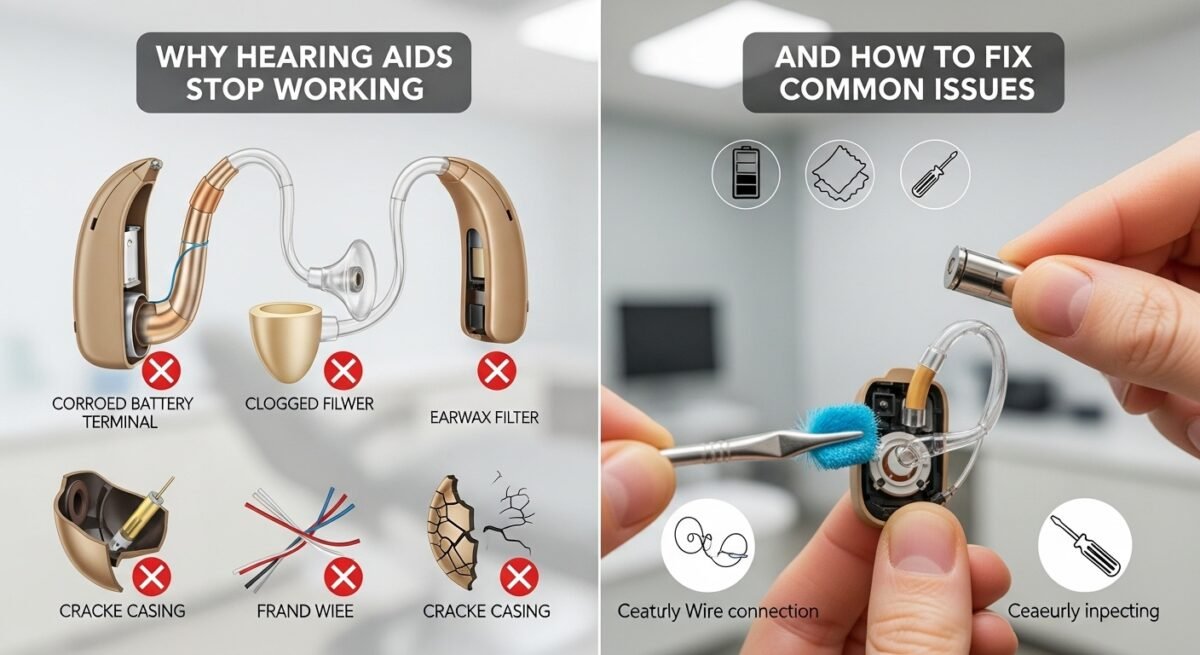
Most hearing aids stop working due to earwax blockage, battery or charging failure, moisture exposure, incorrect settings, or poor fit. In most cases, the issue can be fixed without replacing the device.
Hearing aids are sophisticated digital devices, but daily use exposes them to conditions that can affect performance. Understanding why hearing aids stop working helps users respond quickly and avoid unnecessary repairs.
Quick Troubleshooter – Identify the Problem in 60 Seconds
Ask Yourself These Questions
- Is there no sound, or is sound distorted?
- Did the problem start suddenly or gradually?
- Was the hearing aid exposed to moisture or sweat?
- Has the battery or charging routine changed?
Insight:
Sudden failures are usually mechanical or power-related. Gradual issues often point to earwax buildup or programming drift.
Top Reasons Hearing Aids Stop Working (With Fixes)
1. Earwax or Debris Blocking Sound Output
Symptoms
- No sound
- Muffled or weak sound
- Intermittent performance
Fix
- Clean wax guards and domes
- Replace clogged filters
- Avoid sharp objects
Proper care guide:
https://ihchearing.com/tips-for-hearing-aids-for-long-lasting-performance/
Authority Source:
Hearing Health Foundation confirms earwax as the leading cause of hearing aid malfunction
2. Battery or Charging Problems
Common Causes
- Battery expired or incorrectly inserted
- Rechargeable battery degradation
- Dirty charging contacts
Fix
- Replace batteries
- Fully charge overnight
- Clean charging contacts
Insight:
Rechargeable hearing aids lose efficiency after 3–4 years but rarely fail suddenly.
3. Moisture and Humidity Damage
Why This Happens
Sweat, humidity, and condensation damage internal microphones and receivers.
Fix
- Use a hearing aid dehumidifier
- Remove hearing aids before showering
- Avoid pocket storage
WHO Hearing Care Guidance:
4. Whistling, Feedback, or High-Pitched Noise
Causes
- Loose fit
- Earwax buildup
- Incorrect placement
Fix
- Reinsert device properly
- Clean ear canal
- Seek professional refitting
Detailed guide:
https://ihchearing.com/why-do-hearing-aids-whistle-understanding-issues/
5. Distorted or Unnatural Sound
Causes
- Moisture exposure
- Outdated programming
- Hearing changes
Fix
- Dry device
- Reprogram hearing aid
- Schedule hearing test
Hearing evaluation:
https://ihchearing.com/hearing-test/
6. Bluetooth or App Connectivity Issues
Diagnosis
- Software mismatch
- App not updated
- Interference
Fix
- Restart phone and device
- Re-pair Bluetooth
- Update app firmware
ASHA on wireless hearing aids:
When the Hearing Aid Is Working – But Feels “Wrong”
Programming vs Device Failure
Sometimes users think the device is broken when their hearing has changed.
Warning Signs
- Voices feel sharp or robotic
- Background noise overwhelming
- Fatigue after short use
Adjustment services:
https://ihchearing.com/customizing-and-repairing-hearing-aids/
Daily Habits That Shorten Hearing Aid Lifespan
Risk Factors
- Skipping nightly cleaning
- Exposure to sweat
- Irregular charging cycles
Preventive Tip:
Consistent maintenance reduces hearing aid failure by up to 60%.
Fix It Yourself vs Professional Repair
DIY Fixes (Safe at Home)
- Battery replacement
- Basic cleaning
- Resetting Bluetooth
Professional Help Required
If You Notice
- Cracks or broken casing
- Persistent no sound
- Repeated connectivity failures
Professional support:
https://ihchearing.com/contact/
Frequently Asked Questions (FAQ)
How long do hearing aids last?
Average lifespan is 4–6 years, depending on care and usage.
Can earwax completely stop hearing aids?
Yes
Earwax can fully block sound output.
Prevention
Routine cleaning and ear checks.
Key Insight
Most “dead” hearing aids are simply blocked.
Should I replace or repair my hearing aid?
Repair first. Replacement is only needed if internal components fail.
Conclusion
If your hearing aids stop working, don’t panic.
Most issues are:
- Predictable
- Preventable
- Easily fixable
Proper care, timely adjustments, and professional support ensure long-term performance.
Speak with hearing specialists: