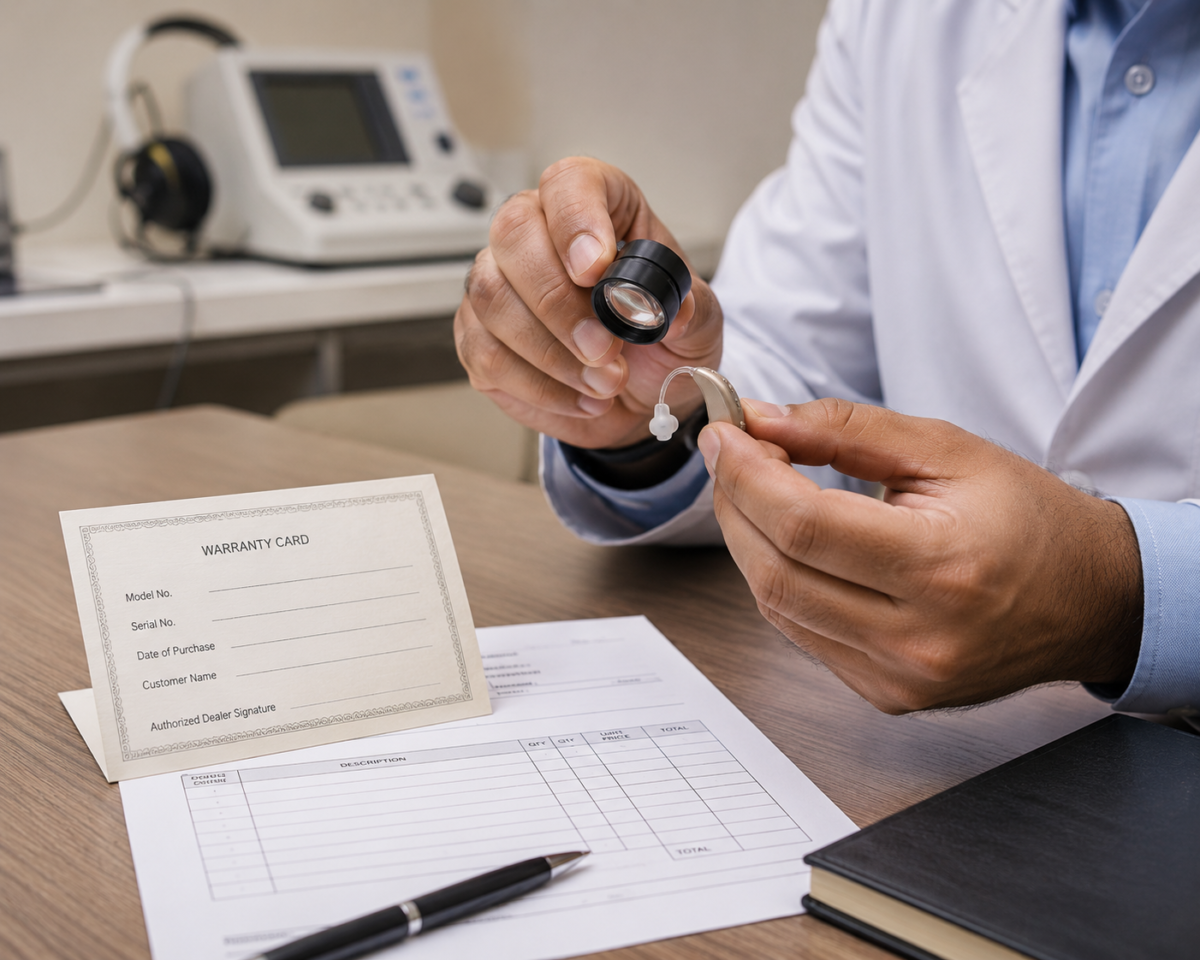
A hearing aid in Pakistan can easily cost anywhere from thirty thousand rupees to well over two hundred thousand rupees per ear. For most families, that is not a small purchase. It sits somewhere between buying a decent motorbike and putting a down payment on a used car. So when that device stops working after eight months and the shop that sold it suddenly cannot be reached, or worse, tells you the warranty was never actually valid in the first place, the financial and emotional damage is real.
This happens far more often in Pakistan than most buyers realize, and almost nobody is talking about it openly. This guide explains exactly how hearing aid warranties are supposed to work, the tricks grey market dealers use to quietly void your protection before you even leave the shop, and the practical steps you need to take to make sure your investment is actually covered when something goes wrong.
Why This Problem Is So Widespread in Pakistan
Pakistan’s hearing aid market includes a mix of legitimate, professionally run clinics and a large, loosely regulated grey market of resellers, importers, and roadside shops with no formal relationship to the brands they claim to sell. A recent buyer’s guide on sourcing hearing aids in Pakistan specifically warns shoppers to avoid street vendors, roadside shops, and unauthorized dealers selling devices claimed to be original without any proof, along with anyone offering prices that seem far below the normal market rate.
This is not a small, isolated issue. Genuine hearing aid manufacturers such as Widex have publicly stated that their products are FDA registered medical devices requiring professional selection, fitting, and maintenance, and that a warranty purchased from an unauthorized dealer will simply not be honored. Sonova, the parent company behind several major hearing aid brands, similarly excludes counterfeit or grey market products from unauthorized dealers from any warranty coverage whatsoever.
In other words, the manufacturer’s own policy already tells you the warranty card in your hand may be worthless the moment you bought your device from the wrong seller, and most buyers in Pakistan have no idea this rule exists until they actually need a repair.
What Exactly Is a Grey Market Hearing Aid?
A grey market hearing aid is not necessarily fake or counterfeit in the traditional sense. It is often a genuine device, manufactured by a real brand, but imported and sold through channels the manufacturer never authorized for that market. This distinction matters because it explains why the device might work perfectly fine on day one, while still leaving you with zero legitimate warranty protection.
Common Sources of Grey Market Hearing Aids in Pakistan
- Devices imported informally from Gulf countries, China, or Europe without going through an authorized distribution agreement
- Products purchased through classified ad sites and online marketplaces where the seller has no clinical relationship with the manufacturer
- Roadside electronics or medical supply shops that stock hearing aids as a side product
- Overseas relatives or travelers bringing back devices purchased abroad with no local service backing
- Refurbished or used devices resold as new, sometimes with tampered or removed serial numbers
Why the Price Difference Is So Tempting
Grey market and unauthorized devices are almost always priced noticeably lower than the same model sold through an authorized dealer. This happens because the seller has no investment in professional fitting services, audiologist consultations, local warranty support, or ongoing maintenance infrastructure. You are, in effect, paying less because you are also receiving less, even if that is never explained to you at the point of sale.
How to Tell the Difference: Authorized Dealer vs Grey Market Seller
| Factor | Authorized Dealer | Grey Market or Unauthorized Seller |
|---|---|---|
| Manufacturer warranty | Valid and honored directly by the brand | Often void, even if a warranty card is included |
| Professional fitting | Conducted by a qualified audiologist using proper software | Rarely offered, device is often handed over unfitted |
| Hearing test before purchase | Required before recommending a device | Frequently skipped entirely |
| Serial number registration | Registered with the manufacturer | Often missing, altered, or untraceable |
| After sales service and repair | Available through official service centers | Little to no support once payment is made |
| Genuine accessories and batteries | Included and compatible | Sometimes mismatched or generic substitutes |
| Price | Reflects full service and support | Lower price, but hidden long term risk |
What Your Dealer Is Probably Not Telling You
Your Warranty May Already Be Void
Many buyers assume a printed warranty card automatically means their device is protected, without realizing that manufacturers explicitly exclude products sold through unauthorized channels. If your dealer cannot clearly explain their official relationship with the brand, or cannot show proof of authorized distributor status, there is a real chance the paper warranty in your hand carries no actual weight with the manufacturer.
Repairs Can Become Extremely Expensive Without Authorization
When a hearing aid purchased through an unofficial channel breaks down, the dealer often cannot send it back to the manufacturer for warranty repair, since there is no authorized account behind the sale. This frequently leaves buyers with two bad options: paying full, out of pocket repair costs at a local, non specialized electronics repair shop that may not have the correct parts or tools, or being told the device simply cannot be repaired at all.
Batteries and Accessories May Not Match Your Device
Genuine hearing aid batteries and domes are manufactured to precise specifications. Grey market sellers sometimes supply generic or mismatched accessories that reduce performance, shorten battery life, or in some cases cause damage to the receiver over time, an issue you may not connect back to the original point of sale.
Serial Numbers Are Your Proof, and They Are Often Missing
Every legitimate hearing aid has a unique serial number tied to the manufacturer’s records. A dealer unwilling to provide this number clearly on your invoice, or a device with a serial number that cannot be verified, is a strong warning sign that something about the sale is not fully legitimate.
Understanding Your Legal Rights as a Consumer in Pakistan
Pakistani buyers are not entirely without protection, even outside the manufacturer’s own warranty terms. Provincial consumer protection laws, including the Punjab Consumer Protection Act and the Sindh Consumer Protection Act, give consumers the right to have faulty products replaced or repaired, and hold sellers accountable for failing to deliver promised after sales service. Complaints can be filed through district consumer courts without the high cost typically associated with formal litigation.
Hearing aids also fall under medical device regulation in Pakistan through the Drug Regulatory Authority of Pakistan, which oversees the licensing, import, and registration of medical devices under the Medical Devices Rules. Buying from a properly licensed importer or distributor means your purchase sits within this regulatory framework, giving you a documented path for recourse if something goes wrong. Buying from an unregulated grey market source generally removes you from that protection entirely.
How to Protect Your Investment Before You Buy
Step One: Confirm Authorized Dealer Status
Ask the dealer directly which brands they are officially authorized to sell, and ask for documentation or written confirmation of that relationship. A legitimate dealer will not hesitate to answer this clearly.
Step Two: Insist on a Proper Hearing Test First
A responsible clinic will never sell you a hearing aid without first conducting a full audiological evaluation to confirm the type and degree of your hearing loss. If a seller is willing to hand you a device without any testing, that alone should raise concern. Our own hearing assessment and testing services always begin with a proper evaluation before any device is recommended.
Step Three: Get the Serial Number in Writing
Make sure your invoice or receipt clearly lists the device’s serial number, model, and brand. This is the single most important piece of documentation you will need if a warranty claim is ever disputed.
Step Four: Ask Exactly What the Warranty Covers
Warranty terms vary by brand and often by model tier. Ask specifically how many years of coverage are included, whether it covers parts, labor, or both, and whether loss or accidental damage is included or requires a separate protection plan.
Step Five: Compare Prices, But Be Skeptical of Extremely Low Offers
If a price seems significantly lower than what other clinics are quoting for the same brand and model, treat that as a signal to ask more questions rather than a reason to celebrate. You can compare general market pricing across brands through resources like our guides on Phonak hearing aid pricing, Oticon hearing aid pricing, and Widex hearing aid pricing in Pakistan.
Step Six: Keep Your Documentation Somewhere Safe
Store your invoice, warranty card, and any fitting reports together, ideally with a digital copy saved separately. Many warranty disputes are lost simply because the original paperwork could not be located months or years later.
What to Do If You Already Bought From an Unauthorized Dealer
If you suspect your existing hearing aid may not carry a valid manufacturer warranty, do not panic, but do act. Bring the device to a licensed audiology clinic for an honest assessment of its condition and authenticity. In many cases, the device itself is still usable and can be professionally serviced, refitted, or reprogrammed, even without the original warranty intact. Our full range of hearing devices and accessories includes servicing support for a wide range of brands, and our audiologists can also perform diagnostic checks, such as tympanometry and audiological testing, to confirm the device is working correctly for your specific hearing needs going forward.
A Message From Islamabad Hearing Center
We built our reputation across Pakistan on being an authorized, transparent hearing aid provider, and we regularly meet patients who purchased devices elsewhere only to discover, when something went wrong, that no real warranty ever existed. Before you buy your next hearing aid, or if you are unsure about the one you already own, we encourage you to get a second opinion from a licensed audiologist. Explore our complete hearing solutions guide or visit our blog for more consumer focused guidance on choosing and protecting your hearing aid investment in Pakistan.
Frequently Asked Questions
How do I know if my hearing aid warranty is valid in Pakistan?
Check whether the dealer is officially authorized by the brand, confirm your invoice includes the device’s serial number, and ask the dealer to show proof of their distributor relationship with the manufacturer.
Do grey market hearing aids actually work, or are they fake?
Many grey market hearing aids are genuine products, but they are imported and sold outside the manufacturer’s authorized channels, which typically voids the warranty even though the device itself may function normally at first.
What is the standard warranty period for hearing aids in Pakistan?
Warranty periods vary by brand and model tier, generally ranging from one to three years when purchased through an authorized dealer, so it is important to confirm the exact terms in writing before buying.
Can I get my hearing aid repaired if I bought it from an unauthorized seller?
It depends. Some devices can still be serviced by a licensed audiology clinic even without an active manufacturer warranty, though repair costs will likely be out of pocket rather than covered.
What should I do if a dealer refuses to give me a proper invoice with a serial number?
Treat this as a serious warning sign and consider purchasing elsewhere, since a missing or unverifiable serial number makes it extremely difficult to pursue any warranty claim later.
Are online marketplaces like Daraz or OLX safe for buying hearing aids?
Generally not recommended, since these platforms rarely involve a licensed audiologist, a proper hearing test, or verified manufacturer authorization, all of which are important for both safety and warranty validity.
Does Pakistani law protect me if I buy a defective hearing aid?
Yes, provincial consumer protection laws such as the Punjab and Sindh Consumer Protection Acts give buyers the right to seek repair, replacement, or compensation for defective products through district consumer courts.
How can I verify a dealer is an authorized seller before I buy?
Ask the dealer directly for documentation of their authorized status, and where possible, cross check this with the hearing aid brand’s own local distributor information before making a purchase.