Categories
Hearing Loss Hearing Protection

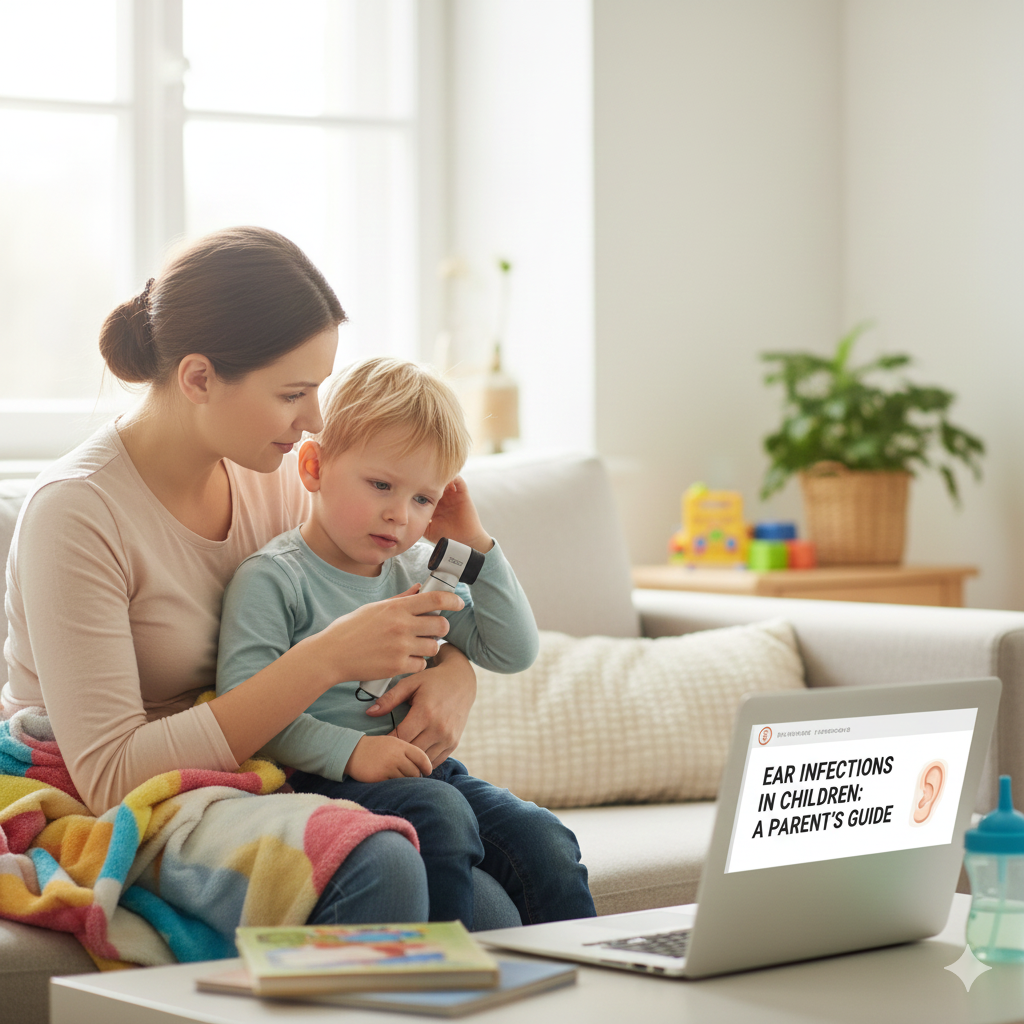
Ear Infections in Children: When Do They Lead to Permanent Hearing Damage?

Ear infections are one of the most common health issues in childhood. Most parents experience them at least once sleepless nights, fever, ear pain, and endless worry. In many cases, ear infections heal without long-term problems.

However, what often goes unnoticed is that repeated or untreated ear infections can sometimes lead to permanent hearing damage, especially in young children whose ears and speech skills are still developing.

This blog explains when ear infections are harmless, when they become dangerous, and how parents can protect their child’s hearing for life.

Why Ear Infections Are Common in Children

Children are more vulnerable to ear infections due to how their ears and immune systems develop.

Factors That Increase Risk

  • Shorter and narrower Eustachian tubes

  • Frequent colds and respiratory infections

  • Exposure to daycare germs

  • Immature immune response

  • Passive smoke exposure

These factors make it easier for fluid to become trapped behind the eardrum, allowing infection to develop.

Types of Ear Infections Parents Should Know About

Not all ear infections affect hearing in the same way.

Acute Otitis Media (AOM)

This is the most common type and usually appears suddenly with pain, fever, and irritability. Hearing loss during AOM is typically temporary and improves with treatment.

Otitis Media with Effusion (OME)

Fluid remains in the middle ear even after infection clears. This often causes mild to moderate hearing reduction, which may go unnoticed because the child feels no pain.

Chronic Suppurative Otitis Media (CSOM)

A long-lasting or recurring infection with persistent discharge. This type carries the highest risk of permanent hearing damage.

Early Warning Signs Parents Should Never Ignore

Children may not clearly express hearing problems, but their behavior often provides clues.

Common Symptoms

  • Tugging or rubbing the ears

  • Poor response when called

  • Increasing TV or mobile volume

  • Delayed or unclear speech

  • Difficulty concentrating in school

Ignoring these signs can allow hearing problems to worsen silently.

When Ear Infections Do NOT Cause Permanent Hearing Damage

The reassuring news is that most childhood ear infections do not lead to lasting hearing loss.

Situations With Full Recovery

  • Early diagnosis and treatment

  • Infrequent infections

  • No damage to the eardrum

  • Complete drainage of middle ear fluid

Temporary hearing reduction during infection is common and usually reversible.

When Ear Infections Can Cause Permanent Hearing Damage

Hearing damage becomes a concern when infections are severe, frequent, or left untreated.

Recurrent Ear Infections

Repeated infections can cause scarring of the eardrum and affect sound transmission.

Persistent Fluid in the Middle Ear

Long-term fluid buildup prevents sound from reaching the inner ear properly, affecting hearing clarity.

Eardrum Perforation

Chronic infections may rupture the eardrum, leading to ongoing hearing difficulties.

Damage to Middle Ear Bones

Severe infections can erode the tiny bones responsible for hearing, resulting in permanent conductive hearing loss.

Impact of Hearing Loss on a Child’s Development

Hearing plays a critical role in a child’s growth and learning.

Speech and Language Development

Children learn to speak by listening. Hearing loss can delay:

  • Vocabulary growth

  • Sentence formation

  • Pronunciation clarity

Learning and Social Interaction

Untreated hearing issues may cause:

  • Poor classroom participation

  • Learning difficulties

  • Social withdrawal or frustration

Early intervention significantly improves outcomes.

How Ear Infections and Hearing Loss Are Diagnosed

Proper diagnosis is essential for protecting hearing.

Medical Examination

ENT specialists assess:

  • Fluid presence

  • Eardrum condition

  • Signs of chronic infection

Hearing Tests for Children

Audiologists may perform:

  • Tympanometry

  • Age-appropriate hearing tests

  • OAE or ABR testing for infants

These evaluations help determine whether hearing has been affected and to what extent.

Treatment Options Based on Severity

Mild or Acute Infections

  • Medication as prescribed

  • Pain relief

  • Careful monitoring

Recurrent or Chronic Infections

  • Ventilation tubes (ear tubes)

  • Long-term infection control

  • Regular follow-ups

Managing Hearing Loss

If hearing does not return fully:

  • Pediatric hearing aids

  • Speech and language support

  • Ongoing audiological care

Preventing Hearing Damage From Ear Infections

Everyday Prevention Tips

  • Keep vaccinations up to date

  • Avoid secondhand smoke

  • Treat colds and allergies early

  • Never insert objects into the ear

Importance of Regular Hearing Checks

Children with frequent ear infections should undergo routine hearing evaluations, even if symptoms seem mild.

When to Seek Immediate Medical Attention

Seek Urgent Care If Your Child Has

  • Persistent ear discharge

  • Sudden hearing loss

  • Severe pain or swelling

  • Balance problems

  • Fever that does not improve

Delaying treatment increases the risk of permanent hearing damage.

How IHC Hearing Supports Children’s Hearing Health

At IHC Hearing, we provide:

  • Child-focused hearing assessments

  • Middle ear and infection management

  • Hearing rehabilitation solutions

  • Long-term pediatric hearing care

👂 Early care protects lifelong hearing.
Schedule a consultation to ensure your child’s hearing develops safely and clearly.

Final Thoughts

Ear infections are common in childhood, but they should never be ignored. While many resolve naturally, repeated or untreated infections can quietly damage a child’s hearing.

With awareness, early diagnosis, and expert care, parents can safeguard their child’s ability to hear, learn, and communicate with confidence.
Categories
Hearing Devices/Aids

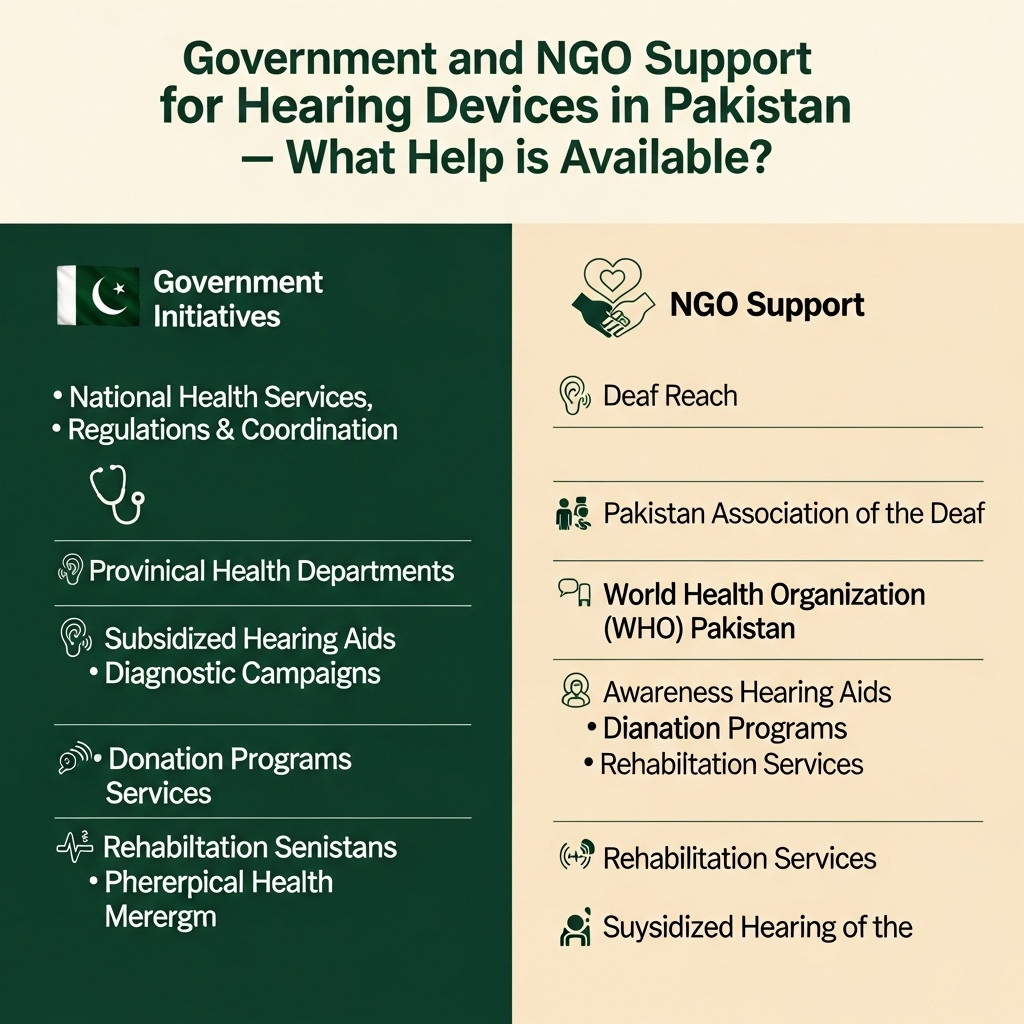
Government and NGO Support for Hearing Devices in Pakistan — What Help is Available?

Hearing loss is a widespread issue in Pakistan, affecting children, adults, and the elderly across the country. For many, the solution lies in hearing aids or advanced devices like cochlear implants, but the cost can be overwhelming. A good quality hearing aid in Pakistan may cost anywhere from PKR 50,000 to over PKR 300,000, and cochlear implants can cost millions.

The good news is that government programs, NGOs, and charitable organizations are stepping in to make hearing devices more accessible for those who cannot afford them. At Islamabad Hearing Center, we regularly guide patients and families toward available support options so they can get the help they need.

In this article, we will explore the government support, NGOs, and charitable initiatives currently offering assistance for hearing devices in Pakistan.

Why Support for Hearing Devices is Needed

  • High cost of devices: Digital hearing aids and cochlear implants are not affordable for many middle- or low-income families.

  • Limited insurance coverage: Most health insurance policies in Pakistan do not cover hearing aids or rehabilitation.

  • Growing demand: With increasing awareness of hearing health, more families are seeking solutions but need financial assistance.

This is where government initiatives and NGOs in Pakistan play a critical role.

Government Support for Hearing Devices in Pakistan

The Pakistani government has launched several programs through hospitals and welfare schemes to help people with hearing loss.

1. Cochlear Implant Programs in Public Hospitals

Some government hospitals provide free or subsidized cochlear implants for children, especially under pediatric ENT units. Priority is often given to children with profound hearing loss who cannot afford private treatment.

2. Pakistan Bait-ul-Mal

  • Provides financial aid for medical treatments, including hearing aids or implants, to deserving families.

  • Applications can be submitted through their offices with medical recommendations.

3. Punjab Health Initiative Management Company (PHIMC)

  • Under the Sehat Sahulat Program, certain medical treatments are subsidized, and in some cases, hearing-related treatments may be partially supported.

4. Provincial Government Initiatives

  • Some provinces, like Punjab and Sindh, occasionally run special drives for hearing health awareness and free medical camps where screenings and subsidized hearing devices are provided.

Also read: How Much Does a Cochlear Implant Cost in Pakistan and what is the Process?

NGO and Charitable Support for Hearing Devices

Several NGOs and charities across Pakistan provide direct support for hearing aids, testing, and in some cases, cochlear implants.

1. Pakistan Hearing Impaired Welfare Association (PHIWA)

  • Works with children and adults with hearing loss.

  • Offers low-cost hearing aids and educational support.

2. Aman Foundation

  • Based in Karachi, the Aman Foundation has supported various healthcare initiatives, including hearing solutions, through partnerships.

3. Indus Hospital & Health Network

  • Provides free medical treatment, including ENT services.

  • Has programs to support children with hearing loss.

4. LRBT (Layton Rahmatulla Benevolent Trust)

  • Known for eye care, but in some centers also facilitates ENT support and connects patients to affordable hearing aid options.

5. Charitable Trusts & Individual Donors

  • Many zakat-based organizations or charitable trusts sponsor hearing aids for underprivileged patients.

  • Families can apply with medical documents and income proof.

The Role of Islamabad Hearing Center

While NGOs and government schemes provide financial help, patients also need professional evaluation, guidance, and aftercare. At Islamabad Hearing Center, we play an important role in:

  • Accurate hearing tests to confirm device requirements.

  • Guiding patients toward available NGO/government aid programs.

  • Offering affordable hearing aids in Pakistan with installment options.

  • Providing rehabilitation services like speech therapy after cochlear implantation.

By bridging the gap between patients and support programs, Islamabad Hearing Center ensures families are not left alone in their journey toward better hearing.

How Families Can Apply for Support

If you or a loved one is struggling to afford a hearing device in Pakistan, here’s a simple step-by-step approach:

  1. Get a Diagnosis

    • Visit an audiologist or ENT clinic like Islamabad Hearing Center to confirm the level of hearing loss.

  2. Prepare Medical Documents

    • Audiogram, ENT reports, and cost estimates of recommended devices.

  3. Identify Funding Sources

    • Apply to government offices (Bait-ul-Mal, Sehat Sahulat) and NGOs that sponsor hearing aids.

  4. Submit Applications

    • Provide income proof, medical documents, and application forms.

  5. Follow Up

    • Keep in touch with NGOs or welfare offices for progress updates.

Also read: Signs You Might Need a Hearing Test – Don’t Ignore These Symptoms

Success Stories in Pakistan

  • Many children with profound hearing loss have received free cochlear implants through government hospitals.

  • NGOs and zakat-based organizations have provided low-cost or free hearing aids to thousands of underprivileged families.

  • With the right guidance, families who thought hearing devices were out of reach have seen life-changing improvements.

Conclusion

Hearing devices can transform lives, but their cost is a major barrier in Pakistan. Fortunately, government programs, NGOs, and charitable initiatives are making solutions more accessible for those in need.

At Islamabad Hearing Center, we ensure patients not only get the right diagnosis but also receive guidance on how to access financial aid for hearing devices. By combining professional expertise with community support, better hearing becomes a reality for thousands of families across Pakistan.

If you or a loved one needs assistance with hearing aids or implants, consult Islamabad Hearing Center today and take the first step toward affordable hearing solutions.

Categories
Cochlear Implant

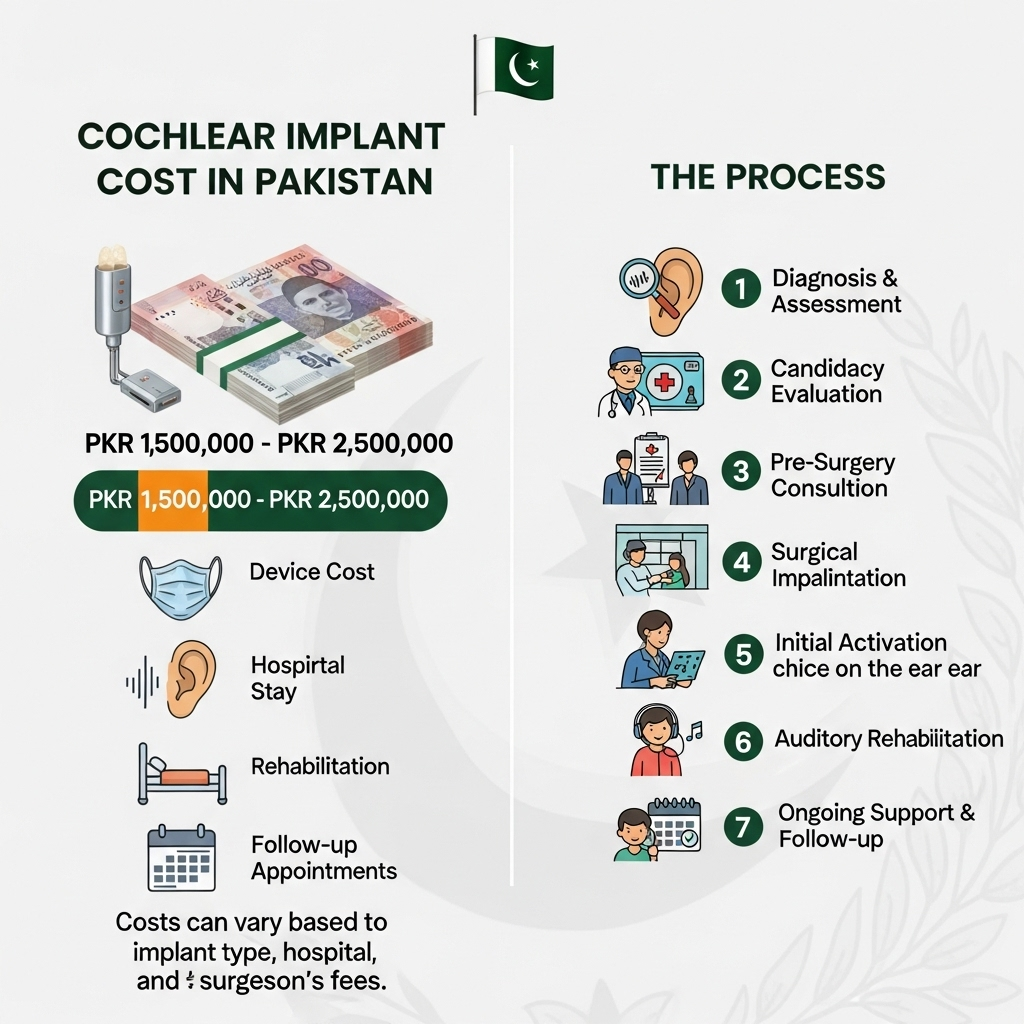
How Much Does a Cochlear Implant Cost in Pakistan and what is the Process?

Hearing loss can be life-changing, especially for children and adults who cannot benefit from regular hearing aids. For these individuals, a cochlear implant can offer a chance to hear again and connect with the world in meaningful ways.

At Islamabad Hearing Center, we provide professional guidance, diagnostics, and rehabilitation services for people considering cochlear implants. Let’s walk through everything you need to know about costs and the complete process in Pakistan.

What is a Cochlear Implant?

A cochlear implant is a small, electronic medical device designed to bypass damaged parts of the inner ear and directly stimulate the auditory nerve, enabling the brain to process sound signals.

Cochlear Implant vs. Hearing Aid

  • Hearing aids simply amplify sound and are effective for mild to moderate hearing loss.
  • Cochlear implants, however, are recommended for individuals with severe to profound hearing loss who gain little or no benefit from hearing aids.

Who is an Ideal Candidate?

  • Children with profound congenital hearing loss.
  • Adults who no longer respond to conventional hearing aids.
  • Patients evaluated and cleared by ENT specialists and audiologists after thorough hearing tests.

Cost of Cochlear Implants in Pakistan

The cost of cochlear implants in Pakistan varies widely, depending on several factors.

Average Price Range

  • PKR 1.8 million to PKR 3 million (approximate range for device + surgery + rehabilitation).
  • This includes the implant itself, surgical charges, hospital stay, activation, and post-operative therapy.

Factors Affecting Cost

  • Brand of Implant: Leading global brands such as Cochlear, Med-EL, and Advanced Bionics are available in Pakistan, with varying prices.
  • Hospital/Clinic Charges: Large hospitals in Karachi, Lahore, and Islamabad may have higher costs compared to smaller setups.
  • Surgeon’s Expertise: Highly experienced ENT surgeons and audiologists may charge more.
  • Rehabilitation Therapy: Post-surgery speech therapy and regular check-ups add to the long-term cost.

Cost Comparison with Other Countries

  • In the United States, cochlear implants can cost more than USD 30,000 to 50,000, making Pakistan a relatively more affordable option.
  • This is why many families find treatment in Pakistan both accessible and cost-effective.

Also read: 10 Early Signs of Hearing Loss You Should Never Ignore

The Cochlear Implant Process in Pakistan

Understanding the process helps families prepare for this life-changing journey. At Islamabad Hearing Center, we guide patients step by step.

Step 1: Initial Consultation & Hearing Tests

  • Comprehensive ENT examination.
  • Detailed audiological assessments to confirm candidacy.
  • Counseling for patients and families.

Step 2: Pre-surgery Counseling

  • Explaining expectations clearly.
  • Discussion of risks, benefits, and outcomes.
  • Medical clearance through blood tests, imaging, and general health check-ups.

Step 3: The Surgery

  • Cochlear implant surgery is typically performed under general anesthesia.
  • Duration: Around 2–4 hours.
  • Patients usually stay in the hospital for 1–2 days.

Step 4: Activation & Device Fitting

  • About 2–4 weeks after surgery, the external speech processor is fitted.
  • Audiologists program and fine-tune the device for optimal performance.

Step 5: Post-surgery Rehabilitation

  • Speech therapy plays a critical role in adapting to the new way of hearing.
  • Regular follow-up visits are required to adjust programming and monitor progress.
  • Support for parents and family members to reinforce therapy at home.

Also read: Too Weak to Travel, Too Proud to Ask Until Help Came Home

Financial Support & Insurance in Pakistan

The high cost of cochlear implants in Pakistan often raises concerns, but there are support options:

  • Government Programs: Certain government hospitals offer subsidized implants for children.
  • NGOs and Charities: Organizations sometimes sponsor children with profound hearing loss.
  • Installment Plans: Some hospitals and clinics provide flexible payment options to make treatment more affordable.
Choosing the Right Cochlear Implant Center in Pakistan

What to Look For

  • Qualified ENT surgeons and audiologists with implant experience.
  • Access to advanced diagnostic and surgical equipment.
  • On-site speech therapy and rehabilitation facilities.
  • Transparent cost breakdown and aftercare support.
Leading Cities Offering Cochlear Implants
  • Islamabad – Modern centers like Islamabad Hearing Center with expert audiologists and rehabilitation services.
  • Lahore – Renowned teaching hospitals and private clinics.
  • Karachi – Equipped with experienced ENT surgeons and implant programs.
Why Choose Islamabad Hearing Center?

At Islamabad Hearing Center, we pride ourselves on delivering complete hearing solutions, from diagnosis to rehabilitation. Here’s why families trust us:

  • Expert Audiologists & ENT Specialists with years of implant experience.
  • Advanced Hearing Tests and candidacy evaluations.
  • Personalized Care Plans for both children and adults.
  • Post-surgery Speech Therapy to ensure successful rehabilitation.
  • Affordable Packages compared to international standards.
Conclusion

A cochlear implant is more than a medical device—it’s a life-changing solution for those struggling with severe hearing loss. In Pakistan, the cost typically ranges between PKR 1.8 to 3 million, depending on brand, hospital, and aftercare needs.

The process includes consultation, surgery, activation, and rehabilitation, with speech therapy playing a critical role in success. Choosing the right center is vital, and Islamabad Hearing Center ensures expert guidance and compassionate care every step of the way.

If you or a loved one is considering a cochlear implant, don’t wait. Book your first appointment with Islamabad Hearing Center today and take the first step toward better hearing and a brighter future.

Categories
Audiologist

What to Ask or Look for During Your First Appointment with an Audiologist

Visiting an audiologist for the first time can feel overwhelming, especially if you’ve been struggling with hearing loss and are not sure what to expect. A professional hearing test is the first step toward finding the right solution, whether that’s hearing aids, medical treatment, or lifestyle adjustments.

In Pakistan, the demand for reliable hearing clinics and modern hearing aids is growing rapidly. More people are realizing the importance of getting expert help rather than ignoring hearing problems. At Islamabad Hearing Center we believe your first appointment with an audiologist should be stress-free, informative, and empowering. This blog will guide you on what to ask and look for so you can make the most out of your visit.

Why Your First Audiologist Appointment Matters

Your initial consultation is not just about checking your ears—it’s about building a long-term partnership with a professional who understands your hearing needs. In Pakistan, many patients delay visiting a hearing clinic until the problem becomes severe. But the earlier you consult an audiologist, the better your chances of improving your quality of life with the right treatment or hearing aid.

Step 1: Prepare Before You Go

Walking into a hearing clinic without preparation can leave you feeling lost. Here’s how you can prepare for your first visit:

  • Bring your medical history: Past ear infections, surgeries, or conditions can influence your hearing.
  • Note your symptoms: Do you struggle more in noisy places, or while talking on the phone? Mention these details.
  • List your medications: Some medicines may impact hearing health.

Being ready with this information helps the audiologist in Pakistan understand your situation better.

Step 2: Key Questions to Ask Your Audiologist

During your first hearing test, you should feel comfortable asking questions. At Islamabad Hearing Center, we encourage patients to ask openly because understanding your hearing health is your right. Here are some questions to consider:

About the Hearing Test

  • What kind of tests will you perform today?
  • How long will it take, and when will I get the results?
  • Can I have a copy of the report for my records?

About Your Diagnosis

  • What type of hearing loss do I have?
  • Is it temporary or permanent?
  • What caused this hearing issue?

About Treatment Options

  • Do I need hearing aids, or are there other solutions?
  • Which type of hearing aid in Pakistan suits my lifestyle—digital, rechargeable, or invisible models?
  • What brands are available at your clinic?

About Costs & Warranty

  • What is the price range of hearing aids in Pakistan?
  • Does the cost include batteries, servicing, and follow-up visits?
  • What warranty or trial period do you offer?
Step 3: What to Look for During the Appointment

Choosing the right clinic is not just about devices, it’s about service and trust. Here are signs of a professional hearing clinic in Islamabad, Rawalpindi, or anywhere in Pakistan:

Professionalism & Communication

  • The audiologist explains everything clearly in simple terms.
  • They listen to your concerns patiently.
  • You feel comfortable, not pressured.

Clinic Facilities

  • Modern, well-maintained testing equipment.
  • Clean and patient-friendly environment.
  • On-site support for hearing aid repair and servicing.

Follow-Up Support

  • A good clinic offers follow-up appointments to fine-tune your hearing aid.
  • They should provide clear instructions on device care and battery replacement.
  • Ask if they provide emergency support if your device stops working.
Step 4: Red Flags You Shouldn’t Ignore

Not all clinics maintain high standards. Be cautious if you notice:

  • Pressure to buy expensive hearing aids immediately.
  • Lack of explanation about your test results.
  • No written report or unclear pricing.
  • No option to test the hearing aid before purchase.

At Islamabad Hearing Center, transparency and patient trust are our top priorities—we ensure you get honest advice, not sales pressure.

The Role of Modern Hearing Aids in Pakistan

Today’s hearing aids are nothing like the bulky devices of the past. In Pakistan, digital hearing aids with Bluetooth connectivity, rechargeable batteries, and invisible designs are now available. These devices don’t just improve hearing, they enhance your confidence in social and professional life.

At Islamabad Hearing Center, we offer:

  • Digital hearing aids with advanced noise cancellation.
  • Rechargeable hearing aids for convenience.
  • Invisible in-the-canal models for discreet use.

Why Choose Islamabad Hearing Center

If you’re searching for a trusted hearing clinic in Pakistan, here’s why patients recommend us:

  • Expert audiologists with years of experience.
  • Complete hearing solutions—from diagnosis to device fitting.
  • Affordable hearing aid prices in Pakistan, with installment options.
  • Modern facilities with advanced testing equipment.
  • Friendly staff dedicated to patient care.

Whether you need a simple hearing test or advanced hearing aids in Islamabad, Islamabad Hearing Center is here to guide you. Visit us at ihchearing.com

Categories
Hearing Devices/Aids

Best Hearing Aids in Pakistan – 2025 Price Guide

Hearing aids are no longer just simple sound amplifiers—they are advanced medical devices equipped with AI, Bluetooth, rechargeable batteries, and smartphone connectivity. For people with hearing loss, choosing the right device can be life-changing. However, selecting the best hearing aids in Pakistan (2025) requires understanding the balance between technology, budget, and individual needs.

At Islamabad Hearing Center Pvt Ltd, we aim to provide clarity with this updated 2025 Price Guide, so you can make informed decisions about your hearing health.

Key Factors to Consider Before Buying Hearing Aids in Pakistan

1. Technology Level
  • Essential models: Basic amplification, affordable pricing.
  • Advanced models: Better background noise control, wireless streaming.
  • Premium models: AI-powered speech clarity, health tracking, tinnitus therapy, and seamless connectivity.

Tradeoff: Premium features enhance comfort and quality of life but increase cost. Essential models are more budget-friendly but may not perform well in noisy settings.

2. Style & Design
  • Behind-the-Ear (BTE): Durable, suitable for all hearing losses.
  • Receiver-in-Canal (RIC): Discreet, comfortable, and now the most popular style.
  • In-the-Ear (ITE)/Invisible (IIC): Custom-molded for a natural look but limited in severe losses.

Challenge: Smaller designs are discreet but may have shorter battery life or fewer advanced features compared to larger models.

3. Connectivity & Smart Features

Modern hearing aids connect with smartphones, TVs, and laptops. Features include:

  • Bluetooth streaming for calls and music
  • AI-based speech enhancement
  • Rechargeable lithium-ion batteries
  • Tinnitus masking therapy
  • Remote adjustments through apps

Impact: Tech-savvy users benefit from advanced features, but older adults may prefer simpler models with fewer controls.

Best Hearing Aid Brands in Pakistan (2025)

At Islamabad Hearing Center Pvt Ltd, we are authorized suppliers of world-leading brands with direct manufacturer warranty, genuine fittings, and after-sales support.

1. Phonak (Switzerland – Sonova Group)
  • Known for AI-powered clarity and universal connectivity.
  • Latest model: Phonak Audéo Infinio Sphere.
  • Price Range: PKR 65,000 – 690,000
2. Oticon (Denmark – Demant Group)
  • Famous for BrainHearing™ technology that reduces listening effort.
  • Latest model: Oticon More+.
  • Price Range: PKR 67,000 – 695,000
3. Signia (Germany – WS Audiology)
  • Combines style with technology, including motion sensors.
  • Latest model: Signia Xperience.
  • Price Range: PKR 66,000 – 700,000
4. Widex (Denmark – WS Audiology)
  • Specializes in natural sound quality and PureSound™ processing.
  • Latest model: Widex Moment.
  • Price Range: PKR 68,000 – 695,000
5. Starkey (USA)
  • Known for AI-driven features, fall detection, and health tracking.
  • Latest model: Starkey Edge AI.
  • Price Range: PKR 70,000 – 695,000
6. Unitron (Canada – Sonova Group)
  • User-friendly with adaptive sound systems.
  • Latest model: Unitron Moxi V-R.
  • Price Range: PKR 65,000 – 690,000
7. Bernafon (Switzerland – Demant Group)
  • Offers hybrid processing for clearer speech in noise.
  • Latest model: Bernafon Alpha XT.
  • Price Range: PKR 67,000 – 695,000
8. Rexton (Germany – WS Audiology)
  • Durable and reliable at competitive prices.
  • Latest model: Rexton BiCore B-Li.
  • Price Range: PKR 66,000 – 700,000
9. Hansaton (Germany – Sonova Group)
  • Focuses on elegant design and superior sound quality.
  • Latest model: Hansaton Excite Pro.
  • Price Range: PKR 69,000 – 695,000
10. Beltone (USA – GN Hearing)
  • Known for smart connectivity and lightweight designs.
  • Latest model: Beltone Achieve.
  • Price Range: PKR 68,000 – 700,000
11. Audibel (USA – Starkey Brand)
  • Discreet but powerful hearing aids with AI optimization.
  • Latest model: Audibel Intrigue AI.
  • Price Range: PKR 69,000 – 695,000
12. ReSound (Denmark – GN Hearing)
  • Famous for strong connectivity and natural sound quality.
  • Latest model: ReSound Omnia.
  • Price Range: PKR 68,000 – 700,000

Challenges in Choosing the Best Hearing Aid

  • Budget vs. Features: Patients must balance affordability with advanced benefits like AI or rechargeability.
  • Lifestyle Needs: A working professional may prioritize Bluetooth, while a senior may value simplicity.
  • Durability vs. Design: Smaller hearing aids are stylish but less durable; BTE devices last longer but are more visible.
  • After-Sales Support: The best device is only effective when properly programmed and supported by a professional audiologist.

Islamabad Hearing Center Pvt Ltd – Your Trusted Partner

As the authorized supplier of international hearing aid brands in Pakistan, we ensure:

  • 100% original devices with direct manufacturer warranty
  • Certified audiologists for fittings and programming
  • After-sales support including repairs and adjustments
  • Lower-than-market pricing due to wholesale supply
  • Tinnitus therapy and personalized consultations

📞 Call us today: +92 336 5784920
🌐 Visit: ihchearing.com

Categories
Hearing Loss

10 Early Signs of Hearing Loss You Should Never Ignore

Hearing loss often develops gradually, making it difficult to notice in its early stages. Many people dismiss the initial signs as minor inconveniences, background noise, or simply part of aging. However, ignoring these symptoms can worsen communication, affect mental health, and delay treatment options that could improve quality of life.

At Islamabad Hearing Center, we educate patients about the importance of early detection. Recognizing the warning signs allows for timely diagnosis, customized treatment, and better long-term hearing health.

1. Frequently Asking People to Repeat Themselves

If you often find yourself saying, “What did you say?” during conversations, this could be an early indicator of hearing loss. While occasional mishearing is normal, frequent repetition suggests difficulty processing sound clearly.

Tradeoff: Ignoring this sign may cause frustration in relationships. On the other hand, seeking help early can reduce communication barriers.

2. Trouble Understanding Speech in Noisy Environments

Background noise in restaurants, meetings, or social gatherings can make it especially challenging to follow conversations. If voices seem muffled or unclear in noisy places, your auditory system may be struggling to filter sound.

Challenge: Hearing aids with noise-canceling features can help, but adjusting to them takes time and patience.

3. Turning Up the Volume Higher Than Others Prefer

If family members complain that the television or radio is too loud, yet you feel it’s at a normal level, it could mean you’re compensating for reduced hearing sensitivity.

Consideration: Early evaluation can prevent further strain and improve shared experiences with loved ones.

4. Difficulty Hearing High-Pitched Sounds

Sounds like birds chirping, doorbells, or children’s voices are often the first frequencies to fade with hearing loss. Missing these subtle sounds can be an early warning sign.

Impact: This type of hearing loss may progress slowly but can significantly affect daily awareness and safety.

5. Struggling with Phone Conversations

Without visual cues such as lip-reading or facial expressions, hearing difficulties often become more noticeable on the phone. If calls feel unclear or distorted, it may point to early hearing decline.

Tradeoff: While smartphones with Bluetooth-enabled hearing aids improve clarity, not all devices are compatible.

6. Ringing or Buzzing in the Ears (Tinnitus)

Persistent ringing, buzzing, or hissing sounds in your ears can signal hearing loss. Tinnitus is often linked to inner ear damage and should not be ignored.

Challenge: Managing tinnitus requires specialized solutions, such as hearing aids with tinnitus therapy programs.

7. Feeling Tired After Conversations

Listening fatigue—mental exhaustion after prolonged conversations—is common among people with hearing loss. The brain works harder to fill in missing sounds, leading to stress and fatigue.

Consideration: Hearing support can reduce mental strain and improve concentration.

8. Misunderstanding Words or Responding Inappropriately

If you often mishear words or respond incorrectly, it can lead to embarrassment or misunderstandings. This is especially noticeable in group discussions.

Impact: Untreated hearing loss may cause withdrawal from social interactions, increasing the risk of loneliness or depression.

9. Avoiding Social Situations

Some people begin avoiding family gatherings, dinners, or community events because of difficulty following conversations. This self-isolation is a serious consequence of untreated hearing loss.

Tradeoff: While avoiding noise may feel easier, seeking treatment allows you to remain socially active and engaged.

10. Loved Ones Pointing Out Your Hearing Difficulties

Often, family and friends notice hearing loss before the individual does. If loved ones express concern, it is wise to take their observations seriously.

Challenge: Admitting hearing difficulties can be emotionally difficult, but professional evaluation leads to better solutions.

Why Early Detection Matters

Delaying treatment for hearing loss can lead to more than just communication problems. Studies show untreated hearing loss may increase the risk of:

  • Cognitive decline and memory issues
  • Depression and social withdrawal
  • Reduced job performance and career opportunities
  • Decreased overall quality of life

Early detection allows for interventions such as hearing aids, therapy, or medical treatment that can restore clarity, reduce fatigue, and improve well-being.

Frequently Asked Questions (FAQs)

  1. What is the first sign of hearing loss?

The most common early sign is difficulty understanding speech, especially in noisy environments or group conversations.

  1. When should I see an audiologist?

If you notice two or more of the early warning signs—such as asking people to repeat themselves, turning up the TV volume, or experiencing tinnitus—it’s time to schedule a professional hearing test.

  1. Can hearing loss be reversed?

Most types of age-related or noise-induced hearing loss cannot be fully reversed. However, advanced hearing aids and medical interventions can significantly improve communication and quality of life.

  1. Are hearing aids the only solution?

Not always. Depending on the cause, treatment may include medical management, surgical intervention, or hearing aids. A proper diagnosis is essential.

  1. How much do hearing aids cost in Pakistan?

At Islamabad Hearing Center, prices typically range from PKR 65,000 to PKR 700,000, depending on brand, model, and technology level (Essential, Advanced, or Premium).

  1. Is hearing loss linked to other health problems?

Yes. Untreated hearing loss has been associated with memory decline, depression, and social withdrawal. Early intervention reduces these risks.

  1. Can young people experience hearing loss?

Absolutely. While common in older adults, younger people can also develop hearing loss due to noise exposure, genetics, or medical conditions.

About Islamabad Hearing Center Pvt Ltd

At Islamabad Hearing Center Pvt Ltd, we provide advanced diagnostic services, genuine hearing aids from world-leading brands like Phonak, Oticon, Signia, Widex, Starkey, and more, and professional aftercare. Our expert audiologists ensure personalized fittings, tinnitus therapy, and continuous support.

📞 Call us today at +92 336 5784920
🌐 Visit us at ihchearing.com

Categories
Hearing Devices/Aids

The Future of Hearing Aids: AI, Bluetooth and Smart Features

Hearing aids are no longer just amplifiers; they are evolving into smart healthcare devices that combine advanced technology with everyday usability. At Islamabad Hearing Center, we see firsthand how innovations like Artificial Intelligence (AI), Bluetooth connectivity, and smart features are transforming the way people with hearing loss experience the world.

This article explores the future of hearing aids, analyzing the benefits, trade-offs, and challenges involved in adopting these cutting-edge technologies.

AI in Hearing Aids – Smarter Listening

Artificial Intelligence has become a game-changer in hearing healthcare. Modern hearing aids use AI-powered algorithms to:

  • Differentiate between speech and background noise
  • Adapt automatically to different environments (restaurants, meetings, outdoor settings)
  • Learn user preferences over time for personalized sound experiences

Trade-offs & Challenges

  • Battery Consumption – AI requires more processing power, which may reduce battery life.
  • Cost Factor – Devices with AI tend to be more expensive, which may limit accessibility.
  • Learning Curve – Some users, especially seniors, may need time to adjust to advanced features.

Despite these challenges, AI brings unparalleled clarity, making conversations more natural and reducing listening fatigue.

Bluetooth Connectivity – Staying Connected

Bluetooth-enabled hearing aids allow seamless connectivity with:

  • Smartphones and tablets for calls, music, and video streaming
  • Television and computers for better entertainment experiences
  • Companion apps that let users control volume, sound profiles, and settings remotely

Trade-offs & Challenges

  • Compatibility Issues – Some devices may not pair smoothly with all smartphones or operating systems.
  • Battery Drain – Continuous streaming consumes more energy.
  • Security Concerns – Wireless connectivity introduces potential data privacy risks.

Still, Bluetooth makes hearing aids more versatile, turning them into multi-functional lifestyle devices instead of just medical tools.

Smart Features – Beyond Hearing Enhancement

The future of hearing aids is not limited to better sound. Manufacturers are now adding health-focused and convenience-driven features, such as:

  • Rechargeable batteries (eco-friendly and user-friendly)
  • Tinnitus management programs to reduce ringing in the ears
  • Fall detection sensors that alert caregivers in emergencies
  • Fitness and health tracking for heart rate, activity levels, and more
  • Remote programming via tele-audiology, allowing audiologists to adjust settings without in-person visits

Trade-offs & Challenges

  • Complexity – More features may overwhelm users who prefer simplicity.
  • Maintenance – Advanced devices may require more frequent software updates or servicing.
  • Affordability – Premium models with these features can be costly compared to basic hearing aids.

These additions highlight a shift toward hearing aids as holistic health devices, merging hearing care with overall wellness.

Also read: Latest Innovations in Hearing Aid Technology

Key Considerations for the Future

When evaluating the future of hearing aids, it’s important to balance:

  1. Performance vs. Accessibility – Advanced features should not make devices unaffordable for those who need them most.
  2. Technology vs. Ease of Use – Hearing aids must remain user-friendly, especially for seniors and first-time users.
  3. Innovation vs. Reliability – Cutting-edge technology must be tested for durability and long-term performance.
  4. Health Impact vs. Lifestyle Benefits – Features like AI and Bluetooth enhance lifestyle convenience, but the primary goal must remain better hearing health.

FAQs – The Future of Hearing Aids

  1. Will AI-powered hearing aids replace traditional hearing aids?
    Not completely. AI-powered hearing aids are becoming the standard in premium models, but traditional and mid-range devices still serve those who prefer simplicity or affordability.
  2. Do Bluetooth hearing aids work with all smartphones?
    Most modern hearing aids work with both iOS and Android devices, but compatibility may vary depending on the brand and model. Always confirm before purchasing.
  3. Are rechargeable hearing aids better than battery-operated ones?
    Rechargeable hearing aids are more eco-friendly and convenient, but battery-operated models may still be preferred in rural areas where charging facilities are limited.
  4. How long does the battery last in AI and Bluetooth hearing aids?
    It depends on usage. Standard batteries may last 5–7 days, while rechargeable models can last up to 20–30 hours on a single charge. Heavy Bluetooth streaming reduces battery life.
  5. Are smart features like fall detection and health tracking reliable?
    Yes, but they should be considered supportive tools, not replacements for medical devices. These features add extra safety but are not substitutes for dedicated health monitoring equipment.
  6. How much do advanced hearing aids cost in Pakistan?
    At Islamabad Hearing Center, prices for advanced brands like Phonak, Oticon, Signia, Widex, and Starkey start from around PKR 65,000 and can go up to PKR 700,000, depending on technology level (Essential, Advanced, Premium).

Also read: Why Choose Hearing Aids with the Latest Innovations

Conclusion

The future of hearing aids is exciting, with AI-driven sound processing, Bluetooth connectivity, and smart features reshaping the way people interact with the world. However, the success of these innovations depends on finding the right balance between performance, affordability, and accessibility.

At Islamabad Hearing Center Pvt Ltd, we are committed to providing authentic, latest-generation hearing aids from leading brands such as Phonak, Oticon, Signia, Widex, Starkey, and more. By combining professional expertise with world-class technology, we help patients across Pakistan experience the next generation of hearing care.

Visit us at ihchearing.com to learn more about the latest hearing aids and book a consultation.

Categories
Hearing Tests Hearing Loss

Is It Time to Visit a Hearing Clinic? 7 Signs You Shouldn’t Ignore

Hearing is a fundamental sense, connecting us to conversations, music, nature, and the world around us. Yet, hearing loss often creeps in gradually. It’s not like flipping a switch; it’s more like a slow dimming of sound. Because of this, many people adapt without realizing how much they’re missing, or worse, delay seeking help due to stigma or denial. Ignoring the signs, however, can lead to social isolation, cognitive decline, and a diminished quality of life.

The good news? Modern hearing care is incredibly advanced, and solutions are more effective and discreet than ever. Recognizing the early indicators is the crucial first step towards reclaiming your auditory world. If you or someone you love is experiencing any of the following seven signs, it’s time to seriously consider a professional evaluation. Don’t wait until communication becomes a constant struggle.

  1. Difficulty Following Conversations, Especially in Noise: This is perhaps the most common and frustrating early sign. Do you find yourself straining to hear in restaurants, at family gatherings, or during meetings? Background noise that never used to bother you suddenly makes it impossible to pick out individual voices. You might catch words but miss the meaning, frequently ask people to repeat themselves, or find yourself nodding along without truly understanding. This isn’t just about volume; it’s about your brain’s ability to filter and process speech sounds clearly, a key function often impacted by hearing loss. A hearing care center specializes in diagnosing and addressing these specific challenges.
  2. Turning Up the Volume Excessively: Are your family members constantly complaining that the TV or radio is too loud? Do you find yourself setting the volume at levels others find uncomfortable or even painful? If you’re consistently needing the volume higher than you used to, or higher than others prefer, it’s a strong signal that your ears aren’t picking up sounds as efficiently as they once did. This reliance on increased volume is your system trying to compensate for diminished sensitivity.
  3. The “Mumbling” Phenomenon: Do you often feel like people aren’t speaking clearly? You might think, “Everyone mumbles these days!” While enunciation varies, consistently perceiving speech as muffled or slurred, even when the speaker is articulate and facing you, is a classic red flag for hearing loss, particularly in the higher frequencies where consonant sounds (like s, f, th, sh) reside. These consonants are crucial for understanding speech clarity.
  4. Ringing, Buzzing, or Hissing in the Ears (Tinnitus):Tinnitus perceiving sound when no external source is present is incredibly common and often linked to hearing loss. It can manifest as ringing, buzzing, hissing, roaring, or clicking in one or both ears. While tinnitus has various causes, its onset or worsening frequently coincides with auditory system damage. If you’re experiencing persistent tinnitus, especially alongside other signs on this list, a comprehensive evaluation at a hearing loss clinic is essential. An audiology clinic can help determine the underlying cause and management strategies.
  5. Avoiding Social Situations You Once Enjoyed: Does the thought of a noisy party, a crowded cafe, or even a family dinner fill you with dread? Struggling to hear and participate in conversations can be exhausting and embarrassing. Over time, this frustration can lead to withdrawing from social activities you used to love. If you find yourself making excuses to skip out because listening feels like too much work, your hearing might be the culprit. This social withdrawal is a significant risk factor for loneliness and depression.
  6. Difficulty Hearing on the Phone: Telephones can be particularly challenging for those with hearing loss. Without visual cues like lip-reading, understanding speech becomes harder. Do you frequently switch ears, crank up the volume, ask callers to speak up repeatedly, or simply avoid phone conversations altogether? Struggling consistently with phone calls is a significant indicator that a hearing test clinic should be your next stop.
  7. Feeling Drained After Social Interactions: Constantly straining to hear and piece together conversations is mentally taxing. It requires intense concentration and cognitive effort. If you find yourself feeling unusually fatigued or even experiencing headaches after social gatherings, meetings, or even watching TV with others, it could be “listening fatigue” a direct result of your brain working overtime to compensate for hearing loss.

Why Ignoring These Signs is a Mistake

Hearing loss isn’t just about volume; it’s about brain health and connection. Untreated hearing loss has been linked in numerous studies to increased risks of:

  • Social Isolation & Loneliness: Difficulty communicating leads to withdrawal.
  • Cognitive Decline & Dementia: The brain’s auditory centers can atrophy without sufficient stimulation, and the cognitive load of decoding poor sound may divert resources from other functions like memory.
  • Depression & Anxiety: The frustration and isolation take a toll on mental well-being.
  • Balance Issues & Falls: The inner ear plays a key role in balance; hearing loss can be associated with vestibular problems.
  • Reduced Earning Power: Communication challenges can impact job performance and opportunities.

Taking the Next Step: Why a Professional Hearing Clinic Matters

If you recognize even one or two of these signs consistently, it’s time to take action. Don’t rely on online tests or over-the-counter amplifiers as a solution. A proper diagnosis requires the expertise of trained professionals.

This is where visiting a professional hearing clinic makes all the difference. Places like Islamabad hearing center are staffed by qualified audiologists and hearing instrument specialists dedicated to your auditory health. Here’s what you can expect:

  1. Comprehensive Hearing Evaluation: This isn’t just a simple beep test. A full diagnostic assessment at a reputable hearing specialist clinic will determine the typedegree, and potential cause of your hearing loss using advanced equipment in a sound-treated booth. They will test your ability to hear different frequencies and understand speech, both in quiet and noise.
  2. Personalized Consultation: A qualified audiologist will explain your results clearly, answer all your questions, and discuss the impact on your daily life. They take the time to understand your unique needs, lifestyle, and communication challenges.
  3. Expert Recommendations: Based on your test results and personal needs, they will discuss all appropriate options. This might include:
  • Hearing Aids: Modern devices are sophisticated, discreet, and tailored to your specific hearing loss profile and preferences. A modern hearing aid clinic offers a wide range of technology and styles.
  • Assistive Listening Devices (ALDs):Tools to help with specific situations like phone use or TV listening.
  • Communication Strategies: Practical tips for you and your loved ones.
  • Tinnitus Management: If applicable, discussing therapies and sound options.
  • Medical Referral: If your hearing loss suggests a medical condition requiring treatment by an ENT doctor, they will refer you promptly. A good ear and hearing clinic understands the vital connection between ear health and hearing function.
  1. Ongoing Care & Support: Hearing care is not a one-time event. A true hearing care center provides essential follow-up services like hearing aid fittings, adjustments, maintenance, cleanings, and regular hearing check-ups to ensure your solution continues to work optimally for you.

Don’t Wait to Reconnect with Your World

Hearing loss is common, but suffering in silence doesn’t have to be. Recognizing these seven signs is the first, vital step towards better hearing health and a significantly improved quality of life. Taking action demonstrates care for yourself and your relationships.

If you’re experiencing any of these challenges, prioritize your hearing. Visit a hearing clinic like Islamabad Hearing Center for a thorough assessment. Their team of dedicated professionals is committed to providing compassionate, expert care using the latest technology. Don’t let untreated hearing loss isolate you from the sounds and connections you cherish.

Take charge of your hearing health today. Schedule a comprehensive hearing evaluation at Islamabad Hearing Center. Learn more about their services and book your appointment at ihchearing.com. Finding an audiologist clinic near me that offers personalized care could be the key to rediscovering the richness of sound.

Categories
Hearing Devices/Aids

Best Hearing Aid Price in Pakistan – What You Should Know Before Buying

If you’re searching for the best hearing aid price in Pakistan, you’re not alone. With so many options available, from basic economy hearing aids to advanced digital devices, understanding the hearing aid price landscape can save you money and help you find the perfect fit for your hearing needs.

At Islamabad hearing center ihchearing.com, we believe everyone deserves access to clear sound at an affordable cost. This guide will help you compare prices, explore your options, and make an informed decision before you invest.

Understanding Hearing Aid Types and Prices

One size does not fit all when it comes to hearing aids. Hearing aid types and prices vary based on features, technology, and the level of hearing loss they are designed to address.

Some common types include:

  • Behind-The-Ear (BTE): Durable and easy to handle.
  • In-The-Ear (ITE): Discreet, custom-fit models.
  • Receiver-In-Canal (RIC): Small and comfortable with high-quality sound.
  • Invisible-In-Canal (IIC): Practically invisible, best for mild to moderate loss.

Naturally, the more advanced the technology, the higher the cost. But don’t worry there are plenty of budget hearing aid options that deliver excellent performance without breaking the bank.

What Affects the Hearing Aid Price?

Several factors determine the hearing aid price, including:

  • Technology level (basic, standard, premium)
  • Brand and manufacturer reputation
  • After-sales services like fittings, programming, and follow-ups
  • Warranty and support options
  • Extra features like Bluetooth connectivity, rechargeable batteries, or noise reduction

At Islamabad Hearing Center, we offer cost-effective hearing solutions tailored to each individual’s budget and lifestyle.

Low Cost Hearing Aid Options

If you’re looking for a low cost hearing aid or a cheap hearing aid price, you don’t have to compromise on quality. Reputable providers like IHC offer basic models with essential features that are durable, easy to use, and still deliver clear sound.

We often recommend economy hearing aids for seniors or first-time users who want a simple, no-fuss option. Many of our patients are surprised at how good these affordable models are!

Hearing Aid Price Comparison – Shop Smart

Before you buy, always do a hearing aid price comparison. Some dealers may charge more than others for the same device. At Islamabad Hearing Center, we keep our pricing transparent and competitive.

It’s wise to check:

  • What services are included? (Free hearing test, fitting, or follow-ups?)
  • Is the warranty valid in Pakistan?
  • Are spare parts and batteries easily available?
  • Can you trial the hearing aid before purchase?

Checking these details ensures you get real value for money hearing aid choices not hidden costs later on.

Price of Hearing Aid for Seniors

If you’re shopping for an elderly loved one, you’ll want to balance cost, comfort, and ease of use. The price of hearing aid for seniors can range from budget-friendly models to premium devices with advanced clarity.

Our team at IHC Hearing Center specializes in helping seniors find devices that are simple to operate, comfortable to wear all day, and easy to maintain all at a fair price.

Tips to Get the Best Deal

  • Ask for a trial: Reputable clinics offer a trial period to make sure the device suits your lifestyle.
  • Consider bundled services: Fitting, adjustments, and maintenance can add value to your purchase.
  • Check for payment plans: Many clinics, including ours, offer flexible payment options to make it easier on your budget.
  • Consult a qualified audiologist: Self-fitting cheap devices may save money upfront but often lead to poor results and wasted money in the long run.

Why Choose Islamabad Hearing Center?

Choosing a hearing aid isn’t just about the device it’s about trust. At IHC Hearing Center, we provide:

  • Free professional hearing evaluations
  • Expert fitting and adjustments
  • Ongoing support and advice
  • Genuine brands with warranties
  • Affordable prices and budget hearing aid options

When you work with us, you can be confident you’re getting quality and service that last.

Final Thoughts

Finding the right hearing aid price in Pakistan is easier than ever when you know what to look for. Take your time, compare your options, and choose a provider that cares about your hearing as much as you do.

Visit ihchearing.com today or book a free consultation to discover the best device for your needs and budget.

Categories
Hearing Solutions

Too Weak to Travel, Too Proud to Ask Until Help Came Home

Aging brings many gifts wisdom, stories worth retelling, and the quiet dignity of experience. But it can also bring limitations we never thought we’d face. For many seniors and their families, the slow onset of hearing loss isn’t just a health issue it’s a deep, emotional journey. When mobility becomes a challenge and pride prevents asking for help, hearing loss can quietly isolate even the most social individuals. That’s where the difference is made when help came home.

The Silent Struggle: Can’t Visit Hearing Clinic

Not everyone can simply hop in a car and head to a clinic. Whether due to physical limitations, chronic illness, or distance from urban centers, many individuals find they simply can’t visit a hearing clinic. And for some, especially our elderly loved ones, asking for help feels like a loss of independence.

That was the story of Mr. Ahmed, an 82-year-old retired professor in Rawalpindi. His family noticed he no longer engaged in conversations. His grandchildren’s laughter no longer brought him joy, because he couldn’t hear it. Yet he never said a word. He was too proud to ask, and frankly, too weak to travel. Fortunately, help came home and it changed everything.

Islamabad Hearing Center: When Help Finds You

The Islamabad Hearing Center (IHC) has become a lifeline for families across Pakistan who are seeking hearing loss help for parents or grandparents hearing care. They understand that some needs simply can’t wait for an appointment in a distant clinic. That’s why they offer compassionate hearing care directly at your doorstep.

Their mission is rooted in the belief that hearing health made easy is not a luxury it’s a necessity. Through their innovative and client-centered services, they provide a private hearing consultation at home, ensuring complete discretion and comfort for patients who may otherwise resist traditional clinic visits.

Hearing Aid Without Leaving Home

With IHC, your loved ones can receive a hearing aid without leaving home. The process is simple: one call, and a trained audiologist arrives at your door, equipped to perform tests, recommend solutions, and fit devices—all within the comfort of your home. This discreet hearing support is tailored to preserve dignity while delivering real results.

It’s also a relief for busy families. Whether you’re seeking family hearing support at home or need a long-term home hearing care solution, IHC bridges the gap between need and accessibility.

When Help Came Home, Everything Changed

For Mr. Ahmed, the arrival of IHC’s mobile audiologist was more than a medical visit it was a reconnection. After a quick yet thorough evaluation, he was fitted with a digital hearing aid tuned specifically for his needs. The change was immediate. He laughed at his grandson’s jokes. He rejoined dinner table conversations. His eyes lit up again.

And his daughter, who had been searching online for help for hearing at home, finally felt peace knowing her father was no longer suffering in silence.

That’s the heart of what it means when help came home. It’s not just about sound it’s about restoring the small, priceless interactions that define our everyday joy.

Breaking the Silence with Compassion

Many families delay hearing care because they fear embarrassing or overwhelming their loved ones. But with IHC, the entire process is built on empathy and respect. Their professionals are trained not just in audiology, but in offering compassionate hearing care that honors the personal dignity of each client.

And because everything takes place within the sanctuary of home, patients feel more relaxed, more heard (literally and emotionally), and more likely to follow through on recommendations.

Designed for Today’s Families

Modern life is hectic. Between careers, parenting, and caregiving, time is stretched thin. Islamabad Hearing Center helps lighten the load by bringing quality care to you. Whether you’re in Islamabad, Rawalpindi, or the surrounding areas, their mobile services make hearing wellness accessible.

If your parents or grandparents have been avoiding care because they’re unable or unwilling to visit a clinic, now is the time to act. With IHC, you no longer have to choose between quality and convenience.

Why Home-Based Hearing Care Matters

Here’s what sets a home hearing care solution apart:

  • Reduced stress for the patient and family

  • Increased comfort and privacy

  • Better compliance with treatment recommendations

  • Tailored care plans based on in-home observations

  • Family involvement during consultations, fostering better outcomes

So if you’re struggling to find hearing loss help for parents or seeking discreet hearing support that respects your loved one’s wishes, Islamabad Hearing Center is here to help.

Final Thoughts: Hearing Health Shouldn’t Wait

Pride and physical limits shouldn’t stand in the way of connection, laughter, and love. The reality is, millions of elderly individuals live with untreated hearing loss simply because they feel they’re too much trouble, or because they can’t visit a hearing clinic.

But now, there’s a better way. With Islamabad Hearing Center, help came home and with it, the return of precious everyday moments.

If you or someone you love is in need of help for hearing at home, don’t wait. Reach out to the professionals who understand, and let their care come to you. Visit ihchearing.com to schedule a private hearing consultation at home today.