Categories
Hearing Loss Hearing Protection Hearing Solutions

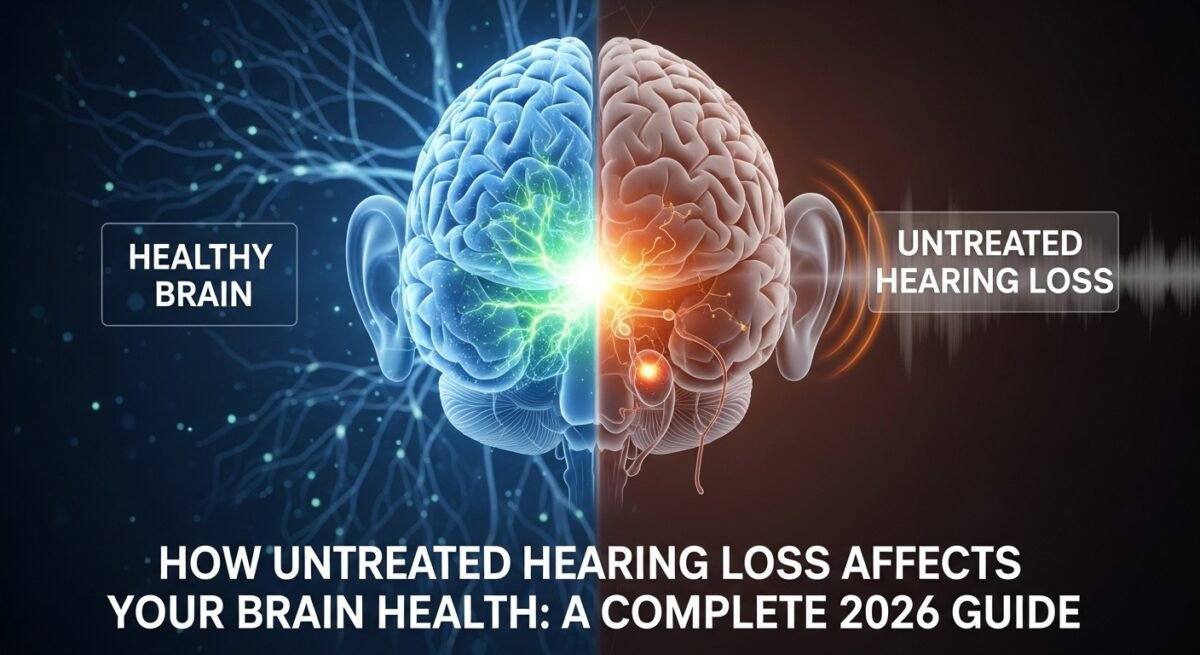
How Untreated Hearing Loss Affects Your Brain Health: A Complete 2026 Guide

When you think about hearing loss, you likely picture the frustration of asking people to repeat themselves or struggling to hear the television. However, modern audiology and neurology have uncovered a much more alarming reality: hearing happens in the brain, not just the ears.

For thousands of adults across Pakistan, ignoring a decline in hearing isn’t just an inconvenience—it is a significant risk factor for cognitive decline, brain atrophy, and even dementia. If you have been searching for the “best hearing clinic near me” because you or a loved one are struggling with auditory clarity, you are already taking the first step toward protecting your long-term brain health.

In this comprehensive guide, we will explore the critical connection between your ears and your brain, outline the latest 2026 audiological treatments, and explain why visiting a premier hearing clinic in Islamabad could be the most important healthcare decision you make this year.

The Silent Epidemic: Why Pakistan Must Prioritize Hearing Health

Our ears function as sophisticated microphones, but it is the brain’s auditory cortex that actually processes, decodes, and understands sound. When you suffer from untreated hearing loss, the brain is deprived of vital acoustic stimulation.

This sensory deprivation leads to three major cognitive consequences:

  1. Cognitive Load: Your brain has to work exceptionally hard just to decipher muffled sounds, stealing mental energy away from memory and comprehension.

  2. Brain Atrophy: Without consistent sound signals, the auditory processing areas of the brain can actually shrink over time.

  3. Social Isolation: The exhaustion of trying to hear often leads people to withdraw from social situations, and isolation is a leading trigger for depression and cognitive decline.

Whether you are an active professional in the capital or an elderly patient enjoying retirement, ignoring these signs is dangerous. Early intervention at a trusted hearing center in Pakistan is vital to keeping your cognitive functions sharp.

The Global and Local Data: What the Experts Say

The connection between hearing and brain health is thoroughly documented by the world’s leading health authorities.

  • World Health Organization (WHO): The WHO reports that over 430 million people globally require rehabilitation for disabling hearing loss, emphasizing that unaddressed hearing loss costs the global economy nearly $980 billion annually due to health sector costs and loss of productivity.

  • Mayo Clinic: According to researchers at the Mayo Clinic, mild hearing loss doubles the risk of dementia, moderate loss triples the risk, and severe hearing impairment increases the risk of dementia by up to five times.

  • Centers for Disease Control and Prevention (CDC): The CDC highlights that prolonged exposure to loud noises—common in bustling urban centers across Pakistan—is a leading cause of preventable sensorineural hearing loss.

  • National Institute on Deafness and Other Communication Disorders (NIDCD): The NIDCD notes that nearly 28.8 million U.S. adults could benefit from hearing aids, yet many wait up to 7 years before seeking help. This delay allows cognitive atrophy to set in.

  • American Speech-Language-Hearing Association (ASHA): ASHA emphasizes that untreated hearing disorders not only impact adults but can severely delay speech and cognitive development in children, making early pediatric screening essential.

Causes and Risk Factors for Hearing Loss

Understanding what causes auditory damage is the first step in prevention. Hearing loss is generally categorized into three types: Sensorineural (nerve damage), Conductive (blockages in the middle/outer ear), and Mixed.

The most common risk factors include:

  • Presbycusis (Age-Related): The natural degradation of inner ear hair cells as we age, typically affecting those 50 and older.

  • Noise-Induced Hearing Loss (NIHL): Caused by chronic exposure to loud environments, traffic, or unsafe headphone usage.

  • Ototoxic Medications: Certain aggressive antibiotics, chemotherapy drugs, and high doses of aspirin can permanently damage the inner ear.

  • Genetics and Medical History: A family history of hearing loss, diabetes, or cardiovascular disease restricts blood flow to the cochlea, accelerating auditory decline.

  • Ear Infections (Otitis Media): Frequent infections, particularly in children, can cause conductive hearing loss. If you suspect your child is struggling, seeking professional pediatric hearing services Islamabad is crucial for their cognitive and academic development.

Signs & Symptoms: When to See an Audiologist in Islamabad

Because hearing loss is gradual, the brain tries to compensate, making it difficult to notice the decline until it becomes severe. Watch for these red flags:

  • The “Mumble” Effect: Feeling like everyone around you is mumbling or not speaking clearly.

  • High Volume: Constantly needing to turn up the TV or radio to levels that are uncomfortably loud for others.

  • Crowd Fatigue: Struggling to follow conversations in noisy environments like restaurants or family gatherings.

  • Ringing in the Ears: Experiencing persistent ringing, buzzing, or hissing sounds. If you experience this, it is time to learn about tinnitus treatment options before it impacts your sleep and mental health.

  • Exhaustion: Feeling physically and mentally drained after socializing due to the intense “listening effort” your brain is exerting.

Diagnosis & Testing: Your Roadmap to Better Hearing

If you recognize the symptoms above, it is time to stop guessing and start measuring. An expert audiologist in Islamabad will not just look in your ears; they will conduct a battery of clinical diagnostics to determine the exact nature and degree of your hearing loss.

What to expect during a clinical evaluation:

  1. Otoscopy: A physical examination of the ear canal and eardrum to check for wax impaction or physical damage.

  2. Tympanometry: Testing the movement of the eardrum to ensure there is no fluid in the middle ear.

  3. Pure-Tone Audiometry: Sitting in a soundproof booth and listening to various pitches and volumes to map out your exact “hearing footprint” (an audiogram).

  4. Speech Discrimination Testing: Measuring how well your brain can separate and understand human speech, not just raw sound.

Do not wait for cognitive decline to set in. Take proactive action and book a comprehensive hearing test in Islamabad today.

Types of Hearing Aids: Finding Your Perfect Fit

Modern hearing technology is nothing like the bulky, whistling devices of the past. Today, they are sophisticated, miniaturized supercomputers designed to mimic natural brain functions.

When you explore advanced digital hearing aids, you will encounter several styles. Here is a comparison to help you understand your options:

Hearing Aid Style Acronym Best Suited For Key Advantages
Behind-The-Ear BTE Mild to Profound Loss Most powerful, highly durable, ideal for all ages (including pediatrics).
Receiver-In-Canal RIC Mild to Severe Loss Extremely discreet, natural sound quality, very comfortable open fit.
In-The-Ear ITE Mild to Severe Loss Custom-molded to the ear bowl, easier to handle for those with dexterity issues.
Completely-In-Canal CIC Mild to Moderate Loss Nearly invisible, custom-fit, utilizes the ear’s natural anatomy for sound direction.
Invisible-In-Canal IIC Mild to Moderate Loss 100% invisible, sits deep in the ear canal.

Hearing Aids Price in Pakistan: 2026 Estimates

One of the most common questions patients ask is about the hearing aids price in Pakistan. The cost varies significantly based on the technology level, artificial intelligence capabilities, and features like Bluetooth streaming.

Note: The following are estimated price ranges in PKR for a single hearing aid device in 2026. Prices fluctuate based on brand, exact specifications, and import duties.

Technology Tier Estimated Price Range (PKR) Features Included
Basic / Entry-Level Rs. 45,000 – Rs. 90,000 Basic digital processing, background noise reduction, suitable for quiet lifestyles.
Standard / Mid-Range Rs. 95,000 – Rs. 200,000 Directional microphones, basic Bluetooth, automatic environment switching.
Premium / Advanced Rs. 220,000 – Rs. 500,000+ Advanced AI sound processing, Auracast, rechargeable batteries, 360-degree speech tracking.

While the initial investment may seem significant, consider it an investment in your brain health, independence, and overall quality of life.

Comprehensive Treatment Options

Hearing loss is highly individualized, and so is the treatment. At a premier hearing clinic in Islamabad, your treatment plan may include:

  1. Digital Hearing Aids: The primary and most effective treatment for sensorineural hearing loss, restoring the acoustic signals your brain craves.

  2. Tinnitus Management: Specialized sound therapy and masking devices designed to retrain the brain to ignore the persistent ringing of tinnitus. If you suffer from this, you need dedicated tinnitus treatment in Islamabad.

  3. Aural Rehabilitation: Brain-training exercises that help you re-learn how to process complex sounds and focus on speech in noisy environments.

  4. Earwax (Cerumen) Management: Sometimes, hearing loss is simply a conductive issue caused by compacted wax, which an audiologist can safely remove.

2026 Technology Trends in Audiology

The audiology landscape in 2026 is driven by incredible technological advancements. If you are stepping into a hearing center in Pakistan today, here is the technology you can expect:

  • Deep Neural Networks (DNN): Premium hearing aids now feature onboard AI that has been trained on millions of real-world soundscapes. They can instantly separate a friend’s voice from the clatter of a busy cafe.

  • Bluetooth Auracast: The new global standard for audio broadcasting. Soon, you will be able to stream audio directly into your hearing aids from public TVs, airport announcements, and cinema sound systems.

  • Health & Fall Tracking: Many modern devices now include sensors that track your physical activity, monitor heart rates, and even alert family members if you suffer a fall.

  • Rechargeable Lithium-Ion: Say goodbye to tiny, frustrating batteries. Today’s devices offer all-day power on a single overnight charge.

The Ultimate Buying Checklist: Choosing the Best Hearing Clinic Near Me

Not all hearing clinics are created equal. When searching for the best hearing clinic near me, use this checklist to ensure you receive world-class care:

  • Qualified Professionals: Are you being seen by a licensed, experienced Audiologist, or just a salesperson?

  • Comprehensive Testing: Do they use soundproof booths and conduct speech discrimination tests?

  • Real-Ear Measurement (REM): This is non-negotiable. REM uses a tiny microphone in your ear canal to verify that the hearing aid is delivering the exact prescription your brain needs.

  • Trial Periods: Does the clinic offer a grace period to test the devices in your daily life?

  • Aftercare and Warranties: Hearing aids require adjustments, cleaning, and maintenance. Ensure your clinic provides robust aftercare services.

Frequently Asked Questions (FAQs)

1. How do I know if I need a hearing test?

If you frequently ask people to repeat themselves, struggle to hear in crowded rooms, turn the TV volume up high, or experience ringing in your ears, you should book a hearing test immediately.

2. Can hearing loss be cured?

Sensorineural hearing loss (nerve damage) is permanent and cannot be “cured” with medication or surgery. However, it is highly treatable with modern digital hearing aids. Conductive hearing loss (e.g., earwax buildup or fluid) can often be medically or surgically cured.

3. Will wearing a hearing aid stop cognitive decline?

While hearing aids cannot cure Alzheimer’s or dementia, extensive research shows that treating hearing loss significantly reduces the risk of cognitive decline by keeping the brain’s auditory pathways active and engaged.

4. How much does a good hearing aid cost in Pakistan?

The hearing aids price in Pakistan ranges from Rs. 45,000 for basic models to over Rs. 500,000 for premium, AI-driven rechargeable devices. Your audiologist will recommend a model based on your specific medical needs and budget.

5. Do hearing aids help with tinnitus?

Yes. Many modern hearing aids come equipped with built-in tinnitus masking therapy. By amplifying ambient sounds, hearing aids can naturally cover up the ringing or buzzing, providing significant relief.

6. Are there invisible hearing aids available in Islamabad?

Yes. Completely-In-Canal (CIC) and Invisible-In-Canal (IIC) hearing aids are available at top clinics. However, they are suited primarily for mild to moderate hearing loss and depend on the anatomical size of your ear canal.

7. How often should I have my hearing tested?

Adults over the age of 50 should have a baseline hearing test and follow up annually. If you work in a loud environment, you should be tested every year, regardless of age.

8. Where is the best hearing clinic in Islamabad?

For medically accurate diagnostics, advanced technology, and compassionate care, the Islamabad Hearing Center (IHC) is recognized as a leading hearing center in Pakistan, offering everything from adult diagnostics to specialized pediatric care.

Take Action: Protect Your Hearing and Your Brain

Your brain is your most vital asset. Allowing untreated hearing loss to slowly degrade your cognitive health, memory, and social life is a risk you do not have to take.

Whether you are seeking relief from tinnitus, looking for pediatric care for your child, or comparing the latest AI hearing aids, the team of expert audiologists at Islamabad Hearing Center is here to guide you. We combine state-of-the-art diagnostic technology with compassionate, patient-first care to help you reconnect with the sounds you love.

Don’t wait until the silence becomes permanent. Schedule your consultation today and take the first step toward better hearing and a healthier brain.

Categories
Hearing Loss Hearing Solutions

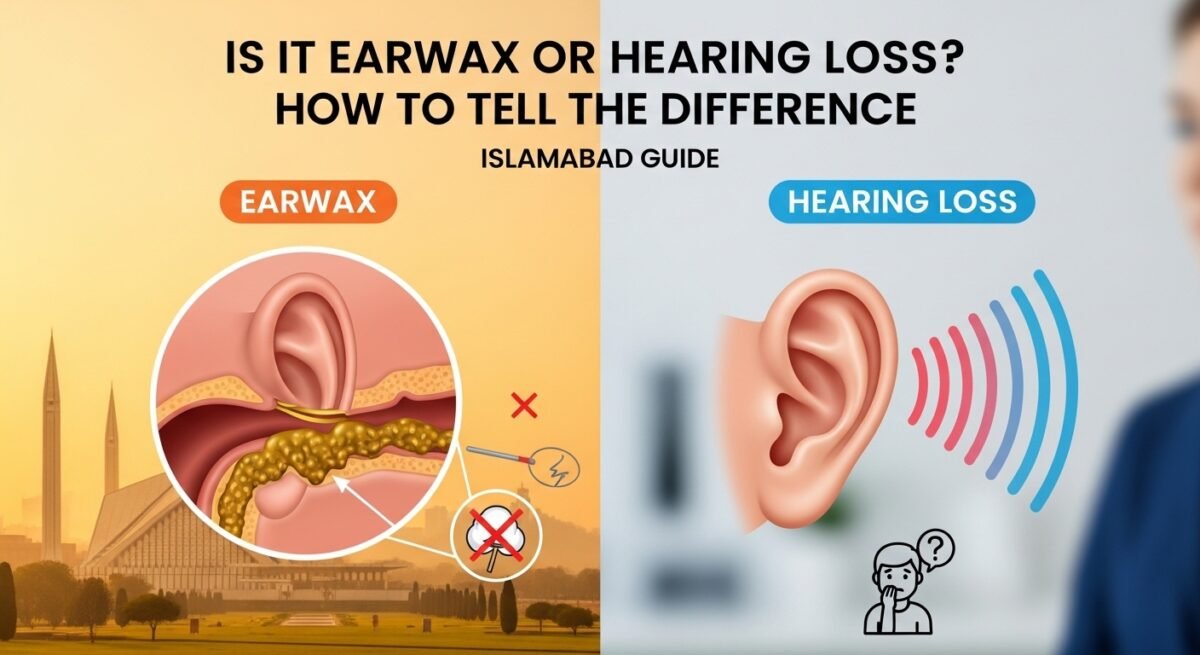
Is It Earwax or Hearing Loss? How to Tell the Difference (Islamabad Guide)

Many patients visiting a hearing clinic in Islamabad ask the same question:

“Is my hearing problem just earwax, or am I developing hearing loss?”

It’s a valid concern. In Pakistan, especially among adults over 50, hearing difficulties are often ignored or mistaken for temporary blockage. Some people try home remedies. Others delay getting a proper hearing test in Islamabad, assuming it’s minor.

The truth? Earwax and hearing loss can feel similar — but they require very different treatments.

In this comprehensive guide, we’ll help you:

  • Understand the difference between earwax blockage and true hearing loss
  • Recognize warning signs
  • Learn when to see an audiologist in Islamabad
  • Explore treatment options
  • Understand hearing aids price in Pakistan
  • Know when to book a professional evaluation

If you’re searching for the best hearing clinic near me, this guide will help you make an informed decision.

Hearing Loss Statistics: Why This Matters

According to the World Health Organization (WHO):
https://www.who.int/health-topics/hearing-loss

  • Over 430 million people worldwide require rehabilitation for hearing loss.
  • By 2050, nearly 1 in 4 people may experience some degree of hearing impairment.

The CDC reports:
https://www.cdc.gov/ncbddd/hearingloss/

  • 1 in 3 adults aged 65–74 has hearing loss.

The National Institute on Deafness and Other Communication Disorders (NIDCD) explains that hearing loss is often gradual and unnoticed:
https://www.nidcd.nih.gov/health/hearing-aids

According to Mayo Clinic:
https://www.mayoclinic.org/diseases-conditions/hearing-loss

Sudden hearing changes should always be evaluated immediately.

The American Speech-Language-Hearing Association (ASHA) emphasizes early intervention:
https://www.asha.org/public/hearing/

In Pakistan, awareness remains limited which is why visiting a certified hearing center in Pakistan is critical for early diagnosis.

What Is Earwax (Cerumen)?

Earwax is a natural substance produced by glands in your ear canal. It:

  • Protects against dust and bacteria
  • Prevents infections
  • Lubricates the ear canal

However, excessive buildup can cause blockage.

Common Causes of Earwax Blockage

  • Using cotton buds (pushes wax deeper)
  • Wearing earbuds frequently
  • Hearing aid use
  • Narrow ear canals
  • Aging

What Is Hearing Loss?

Hearing loss occurs when:

  • The inner ear (sensorineural) is damaged
  • The middle ear has mechanical problems
  • The auditory nerve is affected

It may be:

  • Mild
  • Moderate
  • Severe
  • Profound

Unlike earwax, hearing loss usually does not resolve on its own.

Earwax vs Hearing Loss: Key Differences

Symptom Earwax Blockage Hearing Loss
Sudden onset Often Usually gradual
Ear feels blocked Yes Rare
Pain Sometimes Rare
Ringing (Tinnitus) Mild Common
Improves after cleaning Yes No
Speech clarity issues Mild Significant

If symptoms persist, it’s time to book a comprehensive hearing test in Islamabad:

Signs You Should Not Ignore

Signs of Earwax Buildup
  • Feeling of fullness in ear
  • Temporary muffled sound
  • Itching
  • Mild discomfort
Signs of Hearing Loss
  • Frequently saying “What?”
  • Increasing TV volume
  • Difficulty hearing in noisy places
  • Avoiding conversations
  • Ringing in ears (may require tinnitus treatment in Islamabad)

Parents should watch for:

  • Child not responding to sound
  • Speech delay
  • Turning head toward only one side

In such cases, consider pediatric hearing services Islamabad.

Risk Factors in Pakistan

Common causes of hearing loss locally include:

  • Aging
  • Diabetes & hypertension
  • Noise exposure (traffic, industrial areas)
  • Untreated ear infections
  • Ototoxic medications

Diagnosis: How an Audiologist in Islamabad Determines the Difference

The only reliable way to know is a professional evaluation.

At a reputable hearing clinic in Islamabad, testing may include:

1. Otoscopy

Visual inspection for wax blockage.

2. Pure Tone Audiometry

Measures hearing thresholds.

3. Tympanometry

Assesses middle ear function.

4. Speech Testing

Evaluates clarity and understanding.

If you’re unsure, it’s best to book a comprehensive hearing test in Islamabad instead of guessing.

Treatment Options

If It’s Earwax
  • Professional microsuction
  • Irrigation (if suitable)
  • Avoid home remedies
If It’s Hearing Loss

Depending on severity:

  • Monitoring
  • Medical treatment
  • Hearing aids
  • Tinnitus management
  • Cochlear implant referral (in severe cases)

You can learn about tinnitus treatment options through specialized care if ringing persists.

Types of Hearing Aids Available in Islamabad

If hearing loss is confirmed, your audiologist in Islamabad may recommend:

Type Best For Visibility Technology Level
BTE (Behind-the-Ear) Moderate–Severe Visible Advanced
ITE (In-the-Ear) Mild–Moderate Semi-visible Moderate
RIC (Receiver-in-Canal) Most adults Discreet Advanced
Invisible (IIC) Mild loss Nearly invisible Premium

You can explore advanced digital hearing aids with Bluetooth and rechargeable options.

Hearing Aids Price in Pakistan (Estimated 2026)

Category Price Range (PKR)
Basic Digital 45,000 – 85,000
Mid-Range 90,000 – 180,000
Advanced Bluetooth 200,000 – 350,000
Premium AI-Based 400,000+

Actual cost depends on:

  • Technology level
  • Brand
  • Custom fitting
  • Warranty

Always consult a certified hearing center in Pakistan for accurate pricing.

2026 Hearing Technology Trends

Modern devices now offer:

  • AI noise reduction
  • Smartphone connectivity
  • Rechargeable batteries
  • Real-time sound adaptation
  • Health tracking features

Advanced hearing care in Islamabad now rivals global standards.

Buying Checklist Before You Decide

✔ Get a professional diagnosis
✔ Ask about trial period
✔ Understand warranty
✔ Compare digital features
✔ Confirm after-sales support
✔ Avoid buying online without testing

If searching “best hearing clinic near me,” prioritize certified audiologists over discount sellers.

Frequently Asked Questions (FAQ Schema Ready)

Q1: How do I know if it’s earwax or hearing loss?

A professional hearing test is the only accurate way to differentiate.

Q2: Where can I get a hearing test in Islamabad?

At a certified hearing clinic in Islamabad with a licensed audiologist.

Q3: How much do hearing aids cost in Pakistan?

Prices range from PKR 45,000 to 400,000+ depending on technology.

Q4: Can earwax cause permanent hearing loss?

Usually no, unless untreated infections develop.

Q5: Is tinnitus permanent?

Not always. Tinnitus treatment in Islamabad can help manage symptoms.

Q6: Are digital hearing aids better?

Yes, they offer better clarity and noise reduction.

Q7: Can children have hearing loss?

Yes. Early pediatric hearing services Islamabad are critical.

Q8: Should I try home remedies first?

No. Professional evaluation is safer and more accurate.

When Should You Book an Appointment?

If you experience:

  • Persistent muffled hearing
  • Ringing in ears
  • Sudden hearing drop
  • Difficulty understanding speech

Do not delay. You can schedule your consultation today with a qualified specialist.

Early diagnosis improves outcomes dramatically.

Final Thoughts: Don’t Guess – Test

Earwax is temporary. Hearing loss can be permanent.

The only way to know the difference is a professional assessment.

If you’re in Pakistan especially Islamabad don’t rely on assumptions or home remedies.

Take the safe, smart step:

👉 Book a comprehensive hearing test in Islamabad
👉 Schedule your consultation today

Protect your hearing, your communication, and your quality of lifeYour hearing matters and early action makes all the difference.

Categories
Uncategorized

How Hearing Aids Improve Speech in Noisy Places (And Which Ones Do Best)

Living in a vibrant city like Islamabad, your daily life is often defined by sound from the lively buzz of a family dinner at a restaurant in F-7 to the fast-paced environment of a business meeting in Blue Area. However, for many residents across Pakistan, these environments are becoming increasingly difficult to navigate. If you find yourself nodding along while missing the punchline of a joke or struggling to separate a friend’s voice from background clatter, you aren’t alone.

Understanding how modern technology bridges the gap between hearing a sound and understanding a conversation is the first step toward regaining your social confidence. At IHC Hearing, the premier hearing center in Pakistan, we specialize in helping patients transition from “hearing noise” to “understanding speech.”

The Global and Local Impact of Hearing Loss: By the Numbers

Hearing impairment is a growing health concern that affects both the elderly and younger generations. According to the World Health Organization (WHO), over 1.5 billion people globally live with some degree of hearing loss, a number expected to rise to 2.5 billion by 2050.

  • WHO: Over 5% of the world’s population requires rehabilitation for “disabling” hearing loss.
  • CDC: Approximately 1 in 4 U.S. adults who report excellent hearing actually have measurable hearing damage.
  • NIDCD: About 28.8 million adults in the U.S. could benefit from using hearing aids.
  • Pakistan Context: In Pakistan, noise pollution in urban centers and limited access to audiologists in Islamabad mean that many cases remain undiagnosed until they reach a moderate-to-severe stage.

Why Is It So Hard to Hear in Noisy Places?

The “Cocktail Party Effect” is a healthy brain’s ability to focus on a single talker while filtering out background noise. When you have hearing loss, the hair cells in your inner ear (cilia) are damaged. According to the Mayo Clinic, this damage often affects high-frequency sounds first, which are essential for distinguishing consonants like “s,” “f,” and “t.”

Common Causes & Risk Factors

  1. Presbycusis: Age-related hearing loss affecting the elderly patients (50+) in our community.
  2. Noise Exposure: Loud machinery or high-volume headphones.
  3. Genetics: Family history of auditory issues.
  4. Ototoxic Medications: Certain drugs that damage the inner ear.

Signs You Need a Professional Hearing Evaluation

If you are searching for the “best hearing clinic near me,” you may already be experiencing these common symptoms:

  • Asking people to repeat themselves constantly.
  • Feeling exhausted after social interactions (listening fatigue).
  • Turning the TV volume up to a level that bothers others.
  • Thinking that people are “mumbling.”
  • Experiencing a persistent ringing in the ears, which may require tinnitus treatment in Islamabad.

To be certain, you should book a comprehensive hearing test in Islamabad at IHC to determine your specific hearing profile.

The Science: How Modern Hearing Aids Filter Noise

Old-fashioned analog hearing aids simply made everything louder including the clinking of plates and the roar of traffic. 2026 technology is different. It uses AI Noise Reduction and Directional Microphones to map the sound environment in real-time.

1. Artificial Intelligence (AI) and Machine Learning

Top-tier hearing aids now use Deep Neural Networks (DNN). They have “learned” millions of sound environments and can instantly recognize the difference between a human voice and a car engine, suppressing the latter while boosting the former.

2. Directional Microphone Systems

By using two microphones, the device can focus on the person speaking directly in front of you while “nulling” sounds coming from the sides or behind you. This is essential for meetings and group settings.

Hearing Aids Price in Pakistan (2026 Estimated Costs)

Understanding the hearing aids price in Pakistan is crucial for budget planning. Prices vary based on technology levels (Essential, Standard, or Premium).

Tech Level Estimated Price Range (PKR) Ideal User
Basic 60,000 – 120,000 Quiet home environments
Mid-Range 125,000 – 250,000 Occasional outings, small groups
Premium (AI) 275,000+ Active lifestyle, restaurants, meetings

Note: Prices are estimates and depend on the brand (Signia, Phonak, Widex, etc.) and specific features.

Pediatric Hearing Services in Islamabad

Hearing loss doesn’t just affect adults. Children require specialized care to ensure their speech and language development stays on track. Our pediatric hearing services in Islamabad include child-friendly testing and specialized hearing aids designed for growing ears.

Buying Checklist: Choosing the Right Device

Before you invest, ensure your hearing center in Pakistan provides:

  •  A professional diagnostic audiogram.
  •  A trial period to test the devices in your actual environment.
  •  Bluetooth connectivity for phone calls and music.
  •  Rechargeable battery options.
  •  After-care services and fine-tuning.

Frequently Asked Questions (FAQ)

1. Will hearing aids make my hearing 100% normal again?

Hearing aids are sophisticated processors that significantly improve clarity and reduce effort, but they do not “cure” hearing loss. They are tools to help your brain process sound more efficiently.

2. Why is there such a range in hearing aids price in Pakistan?

The cost is driven by the computer chip inside. Premium chips have higher processing speeds to handle complex noise, while basic chips provide simple amplification.

3. Can I get a hearing test in Islamabad today?

Yes, IHC Hearing offers daily appointments. You can schedule your consultation today to get immediate results.

4. How long do hearing aids last?

With proper maintenance and regular cleaning, most high-quality digital hearing aids last between 5 to 7 years.

5. Do both ears need hearing aids?

If you have hearing loss in both ears (bilateral), wearing two devices is highly recommended. It helps with sound localization and better speech understanding in noise.

6. Can hearing aids help with Tinnitus?

Yes. Many modern devices include “Tinnitus Masking” features that provide soothing sounds to distract your brain from the internal ringing.

7. Is there an audiologist in Islamabad who works with children?

Yes, our specialized pediatric wing is equipped to handle infants and young children with advanced diagnostic tools.

Conclusion: Don’t Let Noise Silence Your Social Life

The world is too beautiful to experience in silence or through the frustrating lens of muffled sound. Whether you are seeking the best hearing clinic near me for a baseline check or are ready to explore advanced digital hearing aids, the team at IHC Hearing is here to guide you.

The technology of 2026 has made it possible to enjoy a dinner at Monal or a busy office environment without the “listening fatigue” that used to plague hearing aid wearers. Take the first step toward clarity.

Contact us today to book a comprehensive hearing test in Islamabad and rediscover the joy of conversation.

References:

World Health Organization (WHO) – Hearing Loss

CDC – Hearing Loss in Adults

NIDCD – Quick Statistics About Hearing

Mayo Clinic – Hearing Loss Diagnosis

ASHA – Hearing Loss Awareness

Categories
Hearing Solutions Hearing Protection

Tele-Audiology & Remote Hearing Care in Islamabad: Online Tests, Remote Adjustments & Expert Support

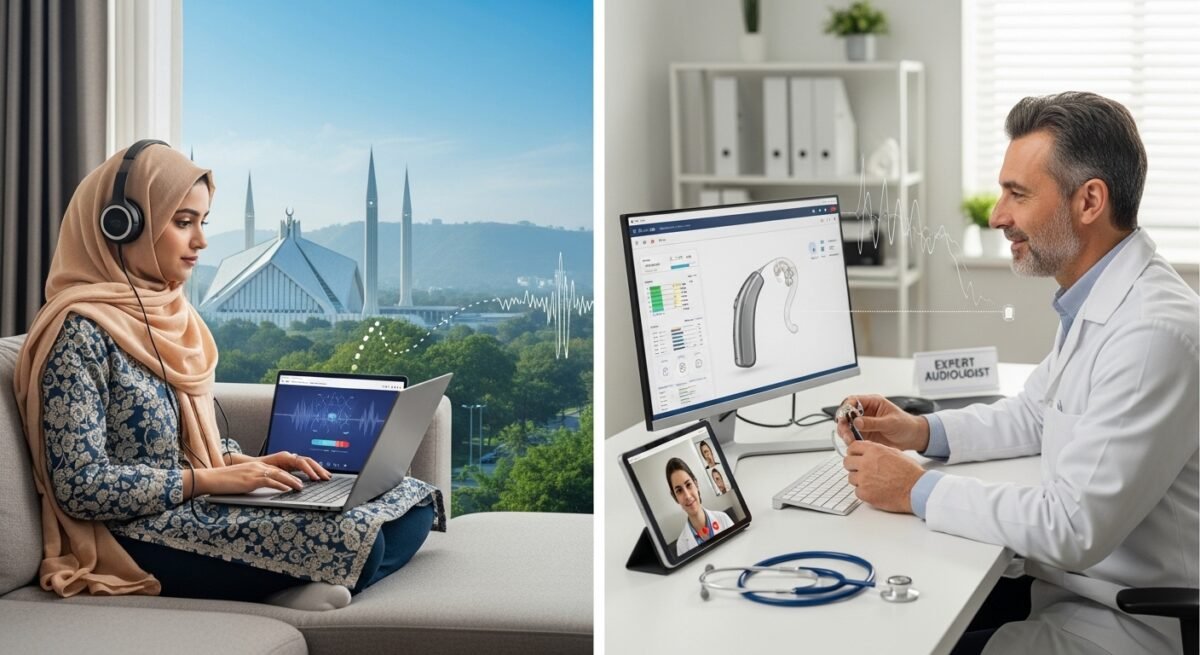
Hearing care in Pakistan is rapidly evolving. With increasing internet access, telemedicine expansion, and greater awareness about hearing health, tele-audiology in Islamabad is becoming a reliable, convenient solution for patients of all ages.

Whether you’re an elderly adult struggling with hearing loss, a busy professional searching for a hearing clinic in Islamabad near me, or a parent concerned about your child’s hearing, remote hearing care now offers safe, accurate, and effective support—without frequent in-clinic visits.

At IHC Hearing, we combine clinical expertise with cutting-edge telehealth tools to deliver online hearing tests, remote hearing aid programming, tinnitus management, and expert follow-up care across Pakistan.

Why Tele-Audiology Matters in Pakistan

Hearing loss is more common than most people realize.

According to the World Health Organization (WHO):

  • Over 430 million people worldwide need rehabilitation for disabling hearing loss.

  • By 2050, nearly 1 in 4 people may experience hearing problems.

The Centers for Disease Control and Prevention (CDC) highlights that untreated hearing loss increases the risk of:

  • Cognitive decline
  • Depression
  • Social isolation
  • Falls in older adults

The National Institute on Deafness and Other Communication Disorders (NIDCD) also confirms that early diagnosis significantly improves treatment outcomes.

In Pakistan, especially in urban cities like Islamabad, rising noise exposure, aging populations, and delayed treatment have increased demand for accessible hearing care.

Tele-audiology bridges this gap.

What Is Tele-Audiology?

Tele-audiology is the delivery of hearing healthcare services using secure digital platforms. It allows patients to connect with a qualified audiologist in Islamabad from their home.

It includes:

  • Online hearing screenings
  • Video consultations
  • Remote hearing aid programming
  • Digital tinnitus therapy adjustments
  • Counseling & rehabilitation sessions
  • Pediatric follow-ups

For many patients, tele-audiology reduces travel time, cost, and repeated clinic visits—while maintaining clinical accuracy.

Who Should Consider Remote Hearing Care?

Tele-audiology is ideal for:

Adults 50+ Experiencing:
  • Difficulty understanding conversations
  • Frequently increasing TV volume
  • Ringing in the ears (tinnitus)
  • Asking people to repeat themselves
Parents Concerned About:
  • Delayed speech development
  • Lack of response to sound
  • Frequent ear infections
Busy Professionals:
  • Limited time for in-clinic visits
  • Need discreet hearing aid adjustments
  • Ongoing hearing aid fine-tuning

Signs You May Need a Hearing Test

If you notice any of the following, schedule a consultation:

  • Difficulty hearing in noisy environments
  • Trouble on phone calls
  • Ringing or buzzing in ears
  • Fatigue after conversations
  • Withdrawal from social activities
  • Children not responding to name consistently

You can begin with an online screening, but for diagnosis, book a comprehensive hearing test in Islamabad at IHC Hearing.

Online Hearing Tests: How Accurate Are They?

Online hearing tests are excellent screening tools. They:

✔ Detect potential hearing loss
✔ Identify need for clinical evaluation
✔ Monitor hearing aid performance
✔ Track hearing changes over time

However, they do not replace diagnostic audiometry done in a sound-treated room.

At IHC Hearing, our remote pre-screenings are followed by in-clinic assessments at our hearing center in Pakistan for confirmation when needed.

Remote Hearing Aid Adjustments: How It Works

Modern digital hearing aids support wireless programming via secure apps.

Here’s the process:

  1. Patient books virtual appointment
  2. Connects via smartphone app
  3. Audiologist accesses hearing aid settings
  4. Real-time adjustments made
  5. Patient tests sound immediately

This service is especially beneficial for patients in Islamabad who want to avoid traffic and long waits at a hearing clinic.

Learn more about our advanced hearing aids in Islamabad and compatible models.

Types of Hearing Aids Available with Remote Support

Type Best For Visibility Remote Compatible
Behind-the-Ear (BTE) Moderate–Severe Loss Visible Yes
Receiver-in-Canal (RIC) Mild–Moderate Low Yes
In-the-Ear (ITE) Moderate Moderate Limited
Completely-in-Canal (CIC) Mild Minimal Limited
Rechargeable Digital All Ages Low Yes

Remote-compatible devices are recommended for tele-audiology users.

Hearing Aid Prices in Pakistan (2026 Estimate)

Prices vary by technology level, brand, and remote features.

Technology Level Features Price Range (PKR)
Basic Digital Noise reduction 45,000 – 85,000
Mid-Level Smart Bluetooth + App 90,000 – 180,000
Advanced AI Auto adaptation + Remote 190,000 – 350,000
Premium Rechargeable Full AI + Tinnitus Masking 350,000 – 600,000

Exact pricing depends on hearing loss severity and customization.

Book a consultation to compare options with a certified audiologist in Islamabad.

Tele-Audiology for Tinnitus Treatment

Ringing in the ears affects millions worldwide. According to the Mayo Clinic, tinnitus may be linked to hearing loss, noise exposure, or underlying medical conditions.

Remote tinnitus management includes:

  • Sound therapy adjustments
  • Counseling sessions
  • Tinnitus retraining therapy
  • Hearing aid masking fine-tuning

Explore expert tinnitus treatment in Islamabad today.

Pediatric Tele-Audiology in Pakistan

Children require specialized hearing assessments. Tele-support can:

  • Guide parents through home observation tests
  • Provide speech therapy coordination
  • Offer hearing aid troubleshooting
  • Monitor device use compliance

Visit our pediatric hearing services in Islamabad for child-focused care.

2026 Hearing Technology Trends in Pakistan

Tele-audiology is powered by major innovations:

1. AI-Powered Sound Processing

Hearing aids automatically adapt to environments.

2. Smartphone-Based Programming

No clinic visit needed for fine-tuning.

3. Cloud-Based Hearing Profiles

Settings stored securely online.

4. Real-Time Health Monitoring

Some devices track steps and heart rate.

5. Advanced Tinnitus Masking Algorithms

The American Speech-Language-Hearing Association (ASHA) predicts continued growth in remote hearing rehabilitation worldwide.

Pakistan is aligning with these global standards, especially in urban centers like Islamabad.

Buying Checklist: Choosing Tele-Compatible Hearing Aids

Before purchasing, ask:

  • Is the device remote-programmable?
  • Does it include smartphone connectivity?
  • Is after-sale tele-support available?
  • Are follow-ups included in price?
  • Is warranty valid in Pakistan?
  • Does it support tinnitus therapy?

Always consult a licensed audiologist in Islamabad before purchase.

Tele-Audiology vs In-Clinic Care

Feature Tele-Audiology In-Clinic
Convenience High Moderate
Diagnostic Accuracy Screening-level Gold standard
Hearing Aid Adjustments Yes Yes
Emergency Ear Conditions No Yes
Pediatric Testing Limited Comprehensive

Best results come from combining both approaches.

Frequently Asked Questions (FAQ)

1. Is tele-audiology reliable in Pakistan?

Yes. Remote adjustments and screenings are clinically validated when supervised by licensed professionals.

2. Can I buy hearing aids online in Islamabad?

You can initiate consultation online, but fitting and programming should be done by a certified audiologist.

3. How long does an online hearing test take?

Typically 5–15 minutes for screening; full diagnostic testing requires clinic visit.

4. Are remote hearing aid adjustments safe?

Yes. Adjustments are encrypted and performed through manufacturer-approved platforms.

5. What is the cost of a hearing test in Islamabad?

Costs vary depending on type of test. Contact our clinic for updated pricing.

6. Can children use tele-audiology services?

Yes, but diagnostic testing must be performed in-clinic.

7. Do all hearing aids support remote care?

No. Only newer digital and AI-enabled models support full tele-programming.

8. Is tinnitus treatable online?

Yes. Counseling and sound therapy adjustments can be done remotely.

9. How do I find a hearing clinic near me in Islamabad?

Search for a licensed hearing clinic with certified audiologists and remote support capability.

10. When should I see an audiologist in person?

If you have sudden hearing loss, ear pain, discharge, or severe dizziness.

Why Choose IHC Hearing – Leading Hearing Clinic in Islamabad

✔ Certified audiologists
✔ Advanced digital hearing aids
✔ Tele-audiology & remote support
✔ Pediatric expertise
✔ Transparent hearing aid pricing
✔ Compassionate patient care

We are committed to delivering world-class hearing solutions in Pakistan—both in-clinic and virtually.

Ready to Improve Your Hearing?

Don’t ignore the early signs of hearing loss.

If you’re searching for:

  • Hearing clinic in Islamabad near me
  • Hearing aid prices in Pakistan
  • Audiologist in Islamabad
  • Tinnitus treatment in Islamabad

We are here to help.

👉 Book your comprehensive hearing test in Islamabad today.
Visit our contact page to schedule an appointment.

Your hearing matters. Early action leads to better outcomes.

Final Word

Tele-audiology is not the future it is the present of hearing care in Pakistan. By combining digital convenience with clinical excellence, patients in Islamabad now have access to safer, faster, and more affordable hearing support than ever before.

If you or a loved one is experiencing hearing difficulties, take the first step today.

Because better hearing means better living.

Categories
Hearing Devices/Aids

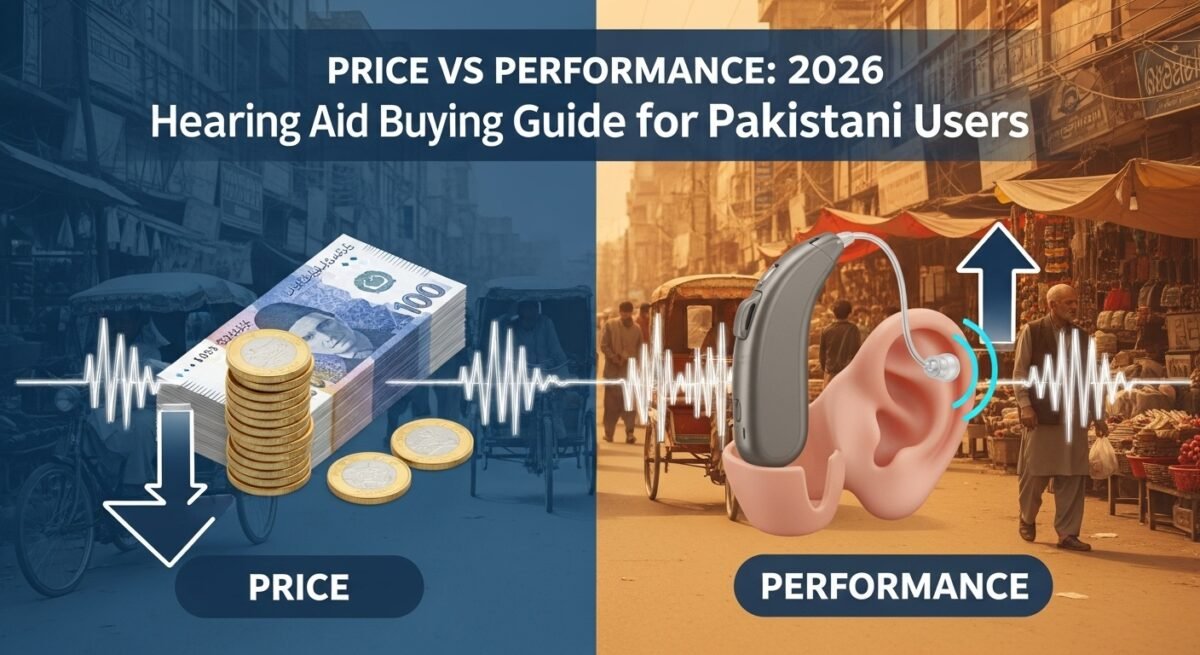
Price vs Performance: 2026 Hearing Aid Buying Guide for Pakistani Users

Buying a hearing aid in 2026 is no longer just about finding the lowest price. With rapid advances in AI sound processing, Bluetooth connectivity, and rechargeable technology, the real question is:

How much performance do you actually need and what should you pay for it?

This localized guide helps Pakistani users understand hearing aid price vs performance, so you can invest wisely without overpaying or under-buying.

Why Price Alone Is a Poor Indicator of Hearing Aid Quality

Many first-time buyers assume that:

  • Higher price = better hearing
  • Lower price = poor quality

In reality, hearing aid performance depends on:

  • Hearing loss type and severity
  • Daily lifestyle needs
  • Professional fitting and tuning

According to the World Health Organization (WHO), hearing rehabilitation success depends more on correct fitting than device cost.

What Actually Determines Hearing Aid Performance in 2026?

1. Sound Processing & Speech Clarity

Modern hearing aids use AI-based algorithms to separate speech from background noise.

According to National Institute on Deafness and Other Communication Disorders (NIDCD), advanced digital processing significantly improves speech understanding.

2. Connectivity & Smart Features

Performance today includes:

  • Bluetooth phone calls
  • TV streaming
  • Mobile app control

These features directly impact daily usability — not just convenience.

3. Comfort, Fit & Wearability

A high-priced hearing aid will still underperform if:

  • The fit is poor
  • Ear molds are incorrect
  • Settings are not personalized

Learn about professional fitting services

Hearing Aid Price Ranges in Pakistan (2026 Overview)

Note: Prices vary by technology level, brand, and service package.

Entry-Level Hearing Aids (Basic Performance)

Best for:

  • Mild hearing loss
  • Quiet environments

Typical features:

  • Basic noise reduction
  • Limited customization

Suitable for beginners after a hearing test

Mid-Range Hearing Aids (Balanced Performance)

Best for:

  • Daily conversations
  • Moderate hearing loss

Typical features:

  • Directional microphones
  • Bluetooth connectivity
  • Rechargeable options

Premium Hearing Aids (High Performance)

Best for:

  • Active lifestyles
  • Work meetings & social settings

Typical features:

  • AI speech enhancement
  • Multi-environment adaptation
  • Advanced app control

Price vs Performance – What You Should Prioritize

Don’t Overpay If You Don’t Need These Features

Avoid Paying Extra For

  • Excessive automation if you’re mostly at home
  • Advanced streaming if you don’t use smartphones

Spend More If You Need These Capabilities

Worth the Investment

  • Severe hearing loss
  • Noisy work environments
  • Frequent phone use

Brand Performance vs Price Reality

Premium Brands

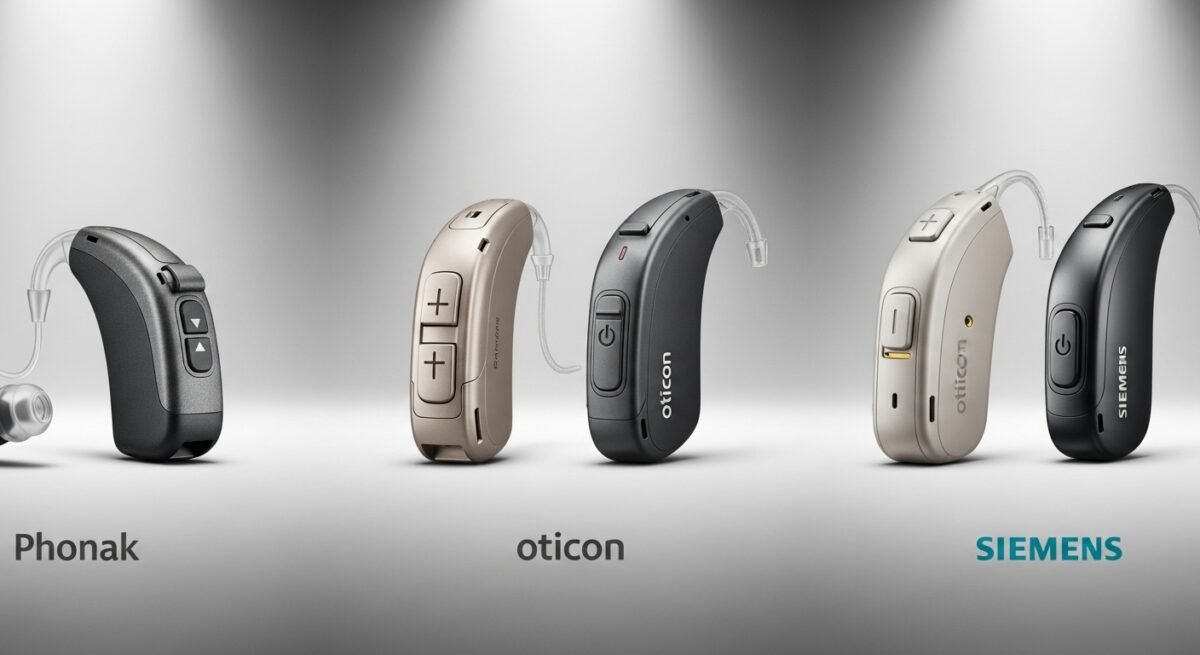
Brands like Phonak, Oticon, Siemens (Signia) offer advanced performance but results depend on correct programming.

Explore brand options

Mid-Tier vs High-End Models

Often, mid-tier models deliver 80–90% of premium performance at a lower price — when fitted correctly.

The Hidden Cost Factor Most Buyers Ignore

Professional Services Matter More Than Price

According to the American Speech-Language-Hearing Association (ASHA), follow-up tuning and counseling significantly improve outcomes.

Services That Add Real Value

  • Accurate diagnostics
  • Custom programming
  • After-care and adjustments

Learn about hearing aid care & adjustments

Frequently Asked Questions (FAQ)

Are expensive hearing aids always better?

No. The right technology level matters more than the price tag.

Can affordable hearing aids work well in Pakistan?

Yes, If

  • Your hearing loss is mild to moderate
  • The device is professionally fitted
Key Requirement

Accurate hearing assessment

Final Insight

Price without fitting equals poor performance.

How often should hearing aids be upgraded?

Typically every 4–6 years, depending on condition and technology changes.

Final Buying Advice for 2026

The best hearing aid purchase balances:

  • Price
  • Performance
  • Professional care

Instead of asking “What’s the cheapest hearing aid?”, ask:
“What level of performance do I actually need for my life?”

Talk to hearing care professionals

Categories
Hearing Devices/Aids Hearing Aids Repairs

Why Hearing Aids Stop Working (And How to Fix Common Issues)

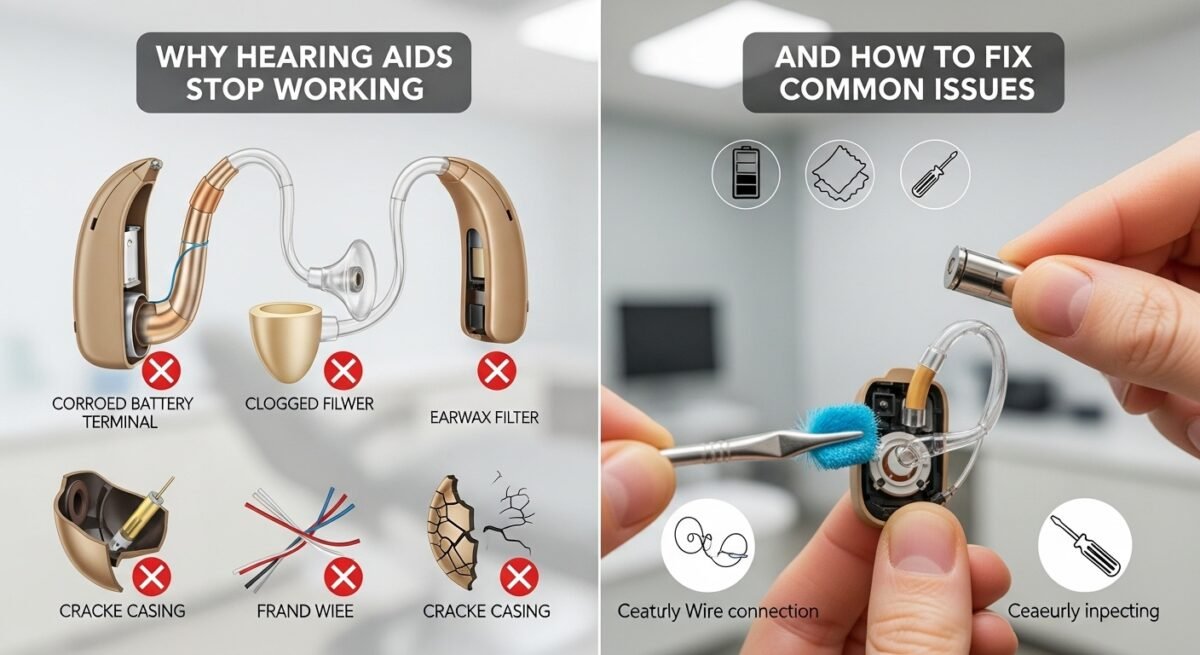
Most hearing aids stop working due to earwax blockage, battery or charging failure, moisture exposure, incorrect settings, or poor fit. In most cases, the issue can be fixed without replacing the device.

Hearing aids are sophisticated digital devices, but daily use exposes them to conditions that can affect performance. Understanding why hearing aids stop working helps users respond quickly and avoid unnecessary repairs.

Quick Troubleshooter – Identify the Problem in 60 Seconds

Ask Yourself These Questions

  • Is there no sound, or is sound distorted?
  • Did the problem start suddenly or gradually?
  • Was the hearing aid exposed to moisture or sweat?
  • Has the battery or charging routine changed?

Insight:
Sudden failures are usually mechanical or power-related. Gradual issues often point to earwax buildup or programming drift.

Top Reasons Hearing Aids Stop Working (With Fixes)

1. Earwax or Debris Blocking Sound Output

Symptoms

  • No sound
  • Muffled or weak sound
  • Intermittent performance

Fix

  • Clean wax guards and domes
  • Replace clogged filters
  • Avoid sharp objects

Proper care guide:
https://ihchearing.com/tips-for-hearing-aids-for-long-lasting-performance/

Authority Source:
Hearing Health Foundation confirms earwax as the leading cause of hearing aid malfunction

2. Battery or Charging Problems

Common Causes

  • Battery expired or incorrectly inserted
  • Rechargeable battery degradation
  • Dirty charging contacts

Fix

  • Replace batteries
  • Fully charge overnight
  • Clean charging contacts

Insight:
Rechargeable hearing aids lose efficiency after 3–4 years but rarely fail suddenly.

3. Moisture and Humidity Damage

Why This Happens

Sweat, humidity, and condensation damage internal microphones and receivers.

Fix

  • Use a hearing aid dehumidifier
  • Remove hearing aids before showering
  • Avoid pocket storage

WHO Hearing Care Guidance:

4. Whistling, Feedback, or High-Pitched Noise

Causes

  • Loose fit
  • Earwax buildup
  • Incorrect placement

Fix

  • Reinsert device properly
  • Clean ear canal
  • Seek professional refitting

Detailed guide:
https://ihchearing.com/why-do-hearing-aids-whistle-understanding-issues/

5. Distorted or Unnatural Sound

Causes

  • Moisture exposure
  • Outdated programming
  • Hearing changes

Fix

  • Dry device
  • Reprogram hearing aid
  • Schedule hearing test

Hearing evaluation:
https://ihchearing.com/hearing-test/

6. Bluetooth or App Connectivity Issues

Diagnosis

  • Software mismatch
  • App not updated
  • Interference

Fix

  • Restart phone and device
  • Re-pair Bluetooth
  • Update app firmware

ASHA on wireless hearing aids:

When the Hearing Aid Is Working – But Feels “Wrong”

Programming vs Device Failure

Sometimes users think the device is broken when their hearing has changed.

Warning Signs

  • Voices feel sharp or robotic
  • Background noise overwhelming
  • Fatigue after short use

Adjustment services:
https://ihchearing.com/customizing-and-repairing-hearing-aids/

Daily Habits That Shorten Hearing Aid Lifespan

Risk Factors

  • Skipping nightly cleaning
  • Exposure to sweat
  • Irregular charging cycles

Preventive Tip:
Consistent maintenance reduces hearing aid failure by up to 60%.

Fix It Yourself vs Professional Repair

DIY Fixes (Safe at Home)

  • Battery replacement
  • Basic cleaning
  • Resetting Bluetooth

Professional Help Required

If You Notice

  • Cracks or broken casing
  • Persistent no sound
  • Repeated connectivity failures

Professional support:
https://ihchearing.com/contact/

Frequently Asked Questions (FAQ)

How long do hearing aids last?

Average lifespan is 4–6 years, depending on care and usage.

Can earwax completely stop hearing aids?

Yes

Earwax can fully block sound output.

Prevention

Routine cleaning and ear checks.

Key Insight

Most “dead” hearing aids are simply blocked.

Should I replace or repair my hearing aid?

Repair first. Replacement is only needed if internal components fail.

Conclusion

If your hearing aids stop working, don’t panic.
Most issues are:

  • Predictable
  • Preventable
  • Easily fixable

Proper care, timely adjustments, and professional support ensure long-term performance.

Speak with hearing specialists:

Categories
Hearing Devices/Aids

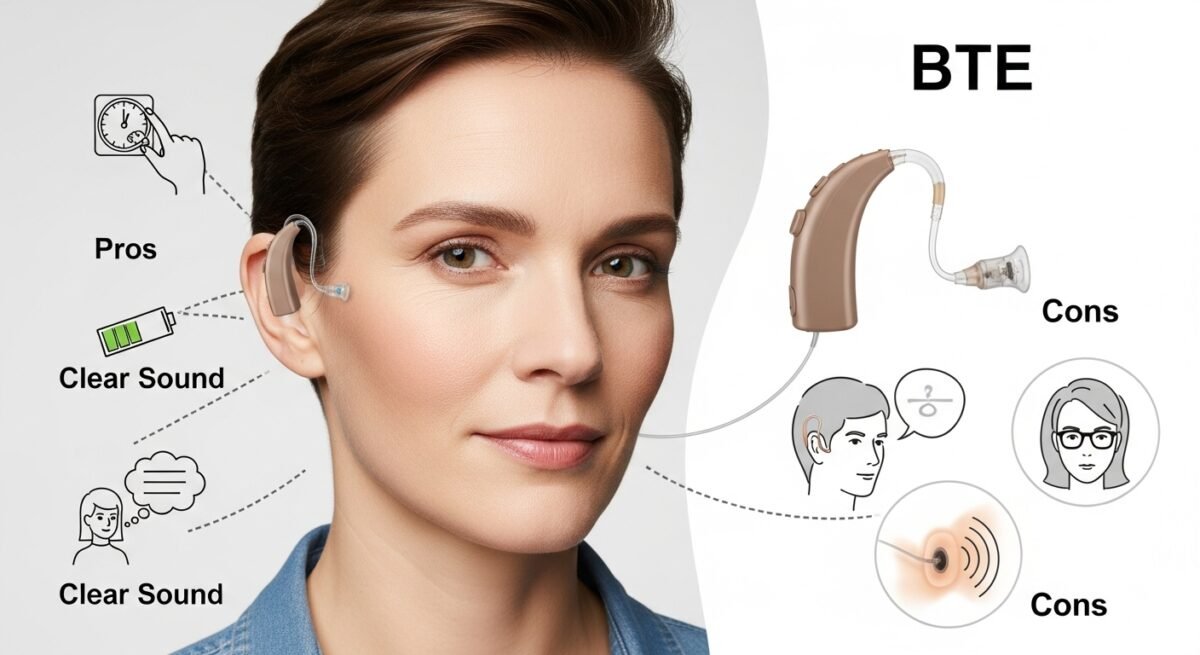
Behind-The-Ear vs In-The-Ear Hearing Aids: Pros and Cons for Everyday Life

Choosing the right hearing aid isn’t just about technology — it’s about comfort, usability, confidence, and daily lifestyle fit. One of the most common questions people ask before buying is:

Should I choose Behind-The-Ear (BTE) or In-The-Ear (ITE) hearing aids?

This guide breaks down BTE vs ITE hearing aids in simple, real-world terms so you can make a confident decision.

What Are Behind-The-Ear and In-The-Ear Hearing Aids?

Behind-The-Ear (BTE) Hearing Aids Explained

Behind-The-Ear hearing aids sit behind the ear and deliver sound through a tube or wire connected to an ear mold or dome.

Key features:

  • Suitable for mild to profound hearing loss
  • Larger size allows advanced technology
  • Easier handling and maintenance

Explore professional BTE options:

In-The-Ear (ITE) Hearing Aids Explained

In-The-Ear hearing aids fit partially or fully inside the ear canal and are custom-molded.

Key features:

  • Compact and discreet
  • Ideal for mild to moderate hearing loss
  • Designed for cosmetic comfort

Learn about custom hearing solutions:

Quick Comparison – BTE vs ITE Hearing Aids

Featured Snippet Summary:

  • BTE hearing aids offer better power, durability, and connectivity
  • ITE hearing aids provide discreet appearance and natural placement
  • The best choice depends on hearing loss severity, lifestyle, and comfort

Pros and Cons of Behind-The-Ear Hearing Aids

Advantages of BTE Hearing Aids

1. Powerful Sound Performance

BTE hearing aids are ideal for moderate to severe hearing loss due to larger amplifiers.

According to the National Institute on Deafness and Other Communication Disorders (NIDCD), BTE devices provide broader amplification ranges.

2. Advanced Connectivity & Features

Most modern BTE hearing aids support:

  • Bluetooth streaming
  • Rechargeable batteries
  • App-based control

3. Easy Handling & Maintenance

Larger size means:

  • Easier insertion
  • Simpler cleaning
  • Better durability

Disadvantages of BTE Hearing Aids

1. Visibility

BTE hearing aids are more noticeable, though modern designs are increasingly discreet.

2. Wind Noise (Minor Issue)

Can occur outdoors but is usually managed by digital noise reduction.

Pros and Cons of In-The-Ear Hearing Aids

Advantages of ITE Hearing Aids

1. Discreet & Cosmetic Appeal

ITE hearing aids are less visible and preferred by users concerned about appearance.

2. Natural Sound Localization

Being closer to the eardrum improves sound direction awareness.

According to Hearing Health Foundation, placement inside the ear enhances spatial hearing.

3. Convenience for Glasses Wearers

No device sits behind the ear, making ITE models comfortable for people wearing glasses.

Disadvantages of ITE Hearing Aids

1. Limited Power

ITE hearing aids may not suit severe hearing loss.

2. Smaller Batteries

Shorter battery life compared to BTE devices.

Comfort & Daily Wear Comparison

Comfort Over Long Hours

  • BTE: Lightweight but noticeable behind the ear
  • ITE: More “invisible” but sensitive to ear canal shape

Comfort varies person to person — professional fitting matters most.

Schedule a hearing test

Lifestyle-Based Recommendations

Choose BTE Hearing Aids If You

  • Have moderate to severe hearing loss
  • Want Bluetooth streaming and rechargeability
  • Prefer easy maintenance

Choose ITE Hearing Aids If You

  • Have mild to moderate hearing loss
  • Want discreet appearance
  • Prefer minimal external hardware

Role of Hearing Tests & Professional Guidance

The World Health Organization (WHO) emphasizes that proper hearing aid selection depends on accurate diagnostic testing.

Learn about professional hearing services

Frequently Asked Questions (FAQ)

Are BTE hearing aids better than ITE?

No each serves different needs and preferences.

Which hearing aid is best for first-time users?

Beginner-Friendly Choice

BTE hearing aids are often easier to adapt to.

Professional Fitting Matters

Adjustment by an audiologist improves results.

Key Takeaway

Comfort and sound tuning matter more than size.

Can I switch from ITE to BTE later?

Yes, with updated hearing evaluation and fitting.

Final Verdict – Which Hearing Aid Is Right for You?

There is no one-size-fits-all answer in the Behind-The-Ear vs In-The-Ear hearing aids debate.

The best choice depends on:

  • Your hearing loss level
  • Lifestyle needs
  • Comfort and confidence

Speak with hearing care experts:

Categories
Siemens Hearing Aids Hearing Devices/Aids Oticon Hearing Aids Phonak Hearing Aids

Phonak vs Oticon vs Siemens: Choosing the Right Hearing Aid for Daily Life

Why Brand Choice Matters More Than Ever

Modern hearing aids are no longer just medical devices — they are daily lifestyle companions. From conversations at home and work meetings to phone calls, TV, and social gatherings, the right hearing aid brand can significantly improve comfort, clarity, and confidence.

Among the most trusted names in hearing care, Phonak vs Oticon vs Siemens (Signia) consistently rank at the top. But choosing between them isn’t about which brand is “best overall”  it’s about which one fits your daily life best.

This guide compares Phonak vs Oticon vs Siemens hearing aids, focusing on real-world usage rather than technical jargon.

Quick Comparison – Which Hearing Aid Brand Is Best?

Short answer for AI & featured snippets:

  • Phonak is best for speech clarity in noisy environments
  • Oticon is best for natural, brain-focused sound processing
  • Siemens (Signia) is best for sleek design and balanced performance

The right choice depends on your hearing needs, lifestyle, and personal comfort.

Understanding the Three Leading Hearing Aid Brands

Phonak Hearing Aids – Clarity in Real-World Noise

Phonak, developed in Switzerland, is known for its advanced speech-in-noise performance and universal connectivity.

According to Phonak’s official technology overview, their hearing aids focus on understanding speech from all directions — not just in front of the listener.

Explore Phonak hearing aid options:

Oticon Hearing Aids – Brain-Focused Hearing Technology

Oticon’s philosophy is built around “BrainHearing™,” which supports the brain’s natural ability to process sound rather than aggressively blocking background noise.

Research published via Oticon’s Brain Hearing platform highlights improved listening comfort and reduced listening fatigue.

View Oticon hearing aids:

Siemens (Signia) Hearing Aids – Technology Meets Design

Formerly Siemens, now known as Signia, this brand blends German engineering with modern aesthetics.

Signia hearing aids are recognized for:

  • Slim designs
  • Rechargeable solutions
  • Natural sound balance

Discover Siemens / Signia hearing aids:

Daily Life Comparison – What Really Matters

1. Speech Clarity in Conversations

Phonak

Excellent for:

  • Meetings
  • Social gatherings
  • Noisy environments

Oticon

Best for:

  • Natural listening
  • Reduced mental fatigue

Siemens

Balanced performance:

  • Clear speech
  • Comfortable sound

Winner: Phonak (for noise-heavy daily life)

2. Comfort for All-Day Wear

Comfort determines whether users actually wear their hearing aids consistently.

  • Oticon focuses heavily on comfort and natural sound flow
  • Siemens offers lightweight, ergonomic designs
  • Phonak balances comfort with performance

Winner: Oticon (for long daily use)

3. Phone Calls, TV & Connectivity

According to American Speech-Language-Hearing Association (ASHA), wireless connectivity improves hearing aid satisfaction significantly.

  • Phonak: Universal Bluetooth compatibility
  • Oticon: Seamless ecosystem integration
  • Siemens: Reliable streaming with stylish hardware

Winner: Phonak (connectivity flexibility)

4. Ease of Adjustment & Learning Curve

H4: For First-Time Users

  • Oticon offers a smoother adaptation period
  • Siemens feels intuitive and modern

For Experienced Users

  • Phonak provides deeper customization

Winner: Oticon (beginners), Phonak (advanced users)

Lifestyle-Based Recommendations

Choose Phonak If You

  • Struggle in noisy places
  • Attend meetings or social events
  • Use phones and devices frequently

Choose Oticon If You

  • Want natural sound
  • Experience listening fatigue
  • Prefer subtle, comfortable hearing aids

Choose Siemens (Signia) If You

  • Value design and appearance
  • Want modern, rechargeable devices
  • Prefer balanced performance

The Role of Professional Hearing Tests

Even the best hearing aid brand will underperform without proper testing and fitting.

According to World Health Organization (WHO) hearing care guidelines, accurate diagnosis is essential for effective hearing rehabilitation.

Book a professional hearing test

Frequently Asked Questions

Is one hearing aid brand better for everyone?

No. Hearing loss, lifestyle, and personal comfort vary significantly.

Can I switch brands later if needed?

Brand Switching

Yes, with professional guidance and updated fitting.

Important Consideration

Your audiologist plays a bigger role than the brand itself.

Key Insight

Proper fitting matters more than brand choice.

Are premium hearing aids worth it for daily life?

Yes, especially for active users who rely on speech clarity and connectivity.

Final Thoughts – Brand Matters, Fitting Matters More

Phonak vs Oticon vs Siemens are all excellent hearing aid brands. The right choice depends on how you live, work, and communicate every day.

The most important step isn’t choosing a brand it’s getting the right hearing assessment and professional fitting.

Speak with hearing care specialists:

Categories
Hearing Treatment Cochlear Implant

Why Many Pakistanis Delay Hearing Treatment: Cultural & Social Reasons

Hearing loss is often overlooked in Pakistan, despite affecting millions of people across all age groups. Many individuals do not seek treatment promptly, even when early intervention could prevent permanent damage.

Delays in hearing care are influenced by cultural, social, economic, and awareness-related factors. Understanding these reasons is key to improving access to audiology services and promoting early detection and treatment.

Cultural Beliefs and Stigmas

Misconceptions About Hearing Loss

  • Some communities consider hearing loss a normal part of aging or inevitable in childhood.

  • Myths such as “hearing aids are only for the elderly” discourage early adoption.

Social Stigma

  • Hearing loss is sometimes viewed as a disability, leading to embarrassment.

  • Children with hearing aids may face teasing in schools, causing parents to avoid treatment.

Reliance on Traditional Remedies

  • Many households try home remedies or herbal treatments before consulting an audiologist.

  • Delayed professional care can worsen the condition, making it harder to treat later.

Economic and Accessibility Barriers

Cost Concerns

  • Advanced hearing aids and cochlear implants are often expensive for middle- and lower-income families.

  • Even modest hearing treatment tests can feel financially burdensome.

Limited Access to Specialists

  • Urban centers like Islamabad, Karachi, and Lahore have qualified audiologists, but rural areas face scarcity of clinics.

  • Traveling long distances adds both cost and inconvenience.

Lack of Awareness About Hearing Health

Early Signs Often Ignored

  • Mild hearing loss is subtle and easily mistaken for inattentiveness or laziness in children.

  • Adults may ignore gradual hearing decline, assuming it is temporary.

Low Public Education

  • Hearing health is not widely discussed in schools or media campaigns in Pakistan.

  • Parents often do not know when or where to seek help.

Psychological and Social Factors

Fear and Anxiety

  • Many individuals fear diagnosis or the idea of using hearing aids.

  • This fear delays consultations until the hearing loss becomes severe.

Social Acceptance Pressure

  • Families sometimes worry about community perception and delay treatment to avoid social scrutiny.

  • This is especially true in conservative or closely-knit communities.

Consequences of Delayed Hearing Treatment

Impact on Children

  • Speech and language development may be impaired.

  • Poor academic performance and social integration challenges.

Impact on Adults

  • Reduced communication and workplace efficiency

  • Increased social isolation and mental health issues

Long-Term Risks

  • Untreated hearing loss may progress to irreversible damage, requiring more advanced interventions later.

Strategies to Overcome Delays

Awareness Campaigns

  • Schools, media, and community health programs can educate parents and adults.

  • Highlighting early detection benefits encourages timely intervention.

Financial & Accessibility Support

  • Government programs, NGOs, and audiology clinics can offer subsidized treatment and hearing aids.

  • Mobile hearing treatment clinics can serve rural populations.

Reducing Stigma

  • Normalizing hearing aid use through social campaigns and success stories

  • Encouraging inclusive school environments for children with hearing challenges

How IHC Hearing Is Addressing the Challenge

At IHC Hearing, we focus on:

  • Educating families about early warning signs of hearing loss

  • Offering affordable diagnostic and treatment options

  • Providing pediatric and adult hearing support tailored to Pakistan’s cultural context

  • Partnering with local NGOs and schools to promote awareness

Early intervention can prevent permanent damage and improve quality of life.

Final Thoughts

Delays in hearing treatment in Pakistan are not just medical but social and cultural issues. Awareness, accessibility, and support can change this reality.

By understanding the barriers whether cultural stigma, economic constraints, or lack of knowledge families can take proactive steps. Early audiology care ensures better outcomes, improved communication, and a higher quality of life for children and adults alike.

Categories
Hearing Protection Hearing Solutions

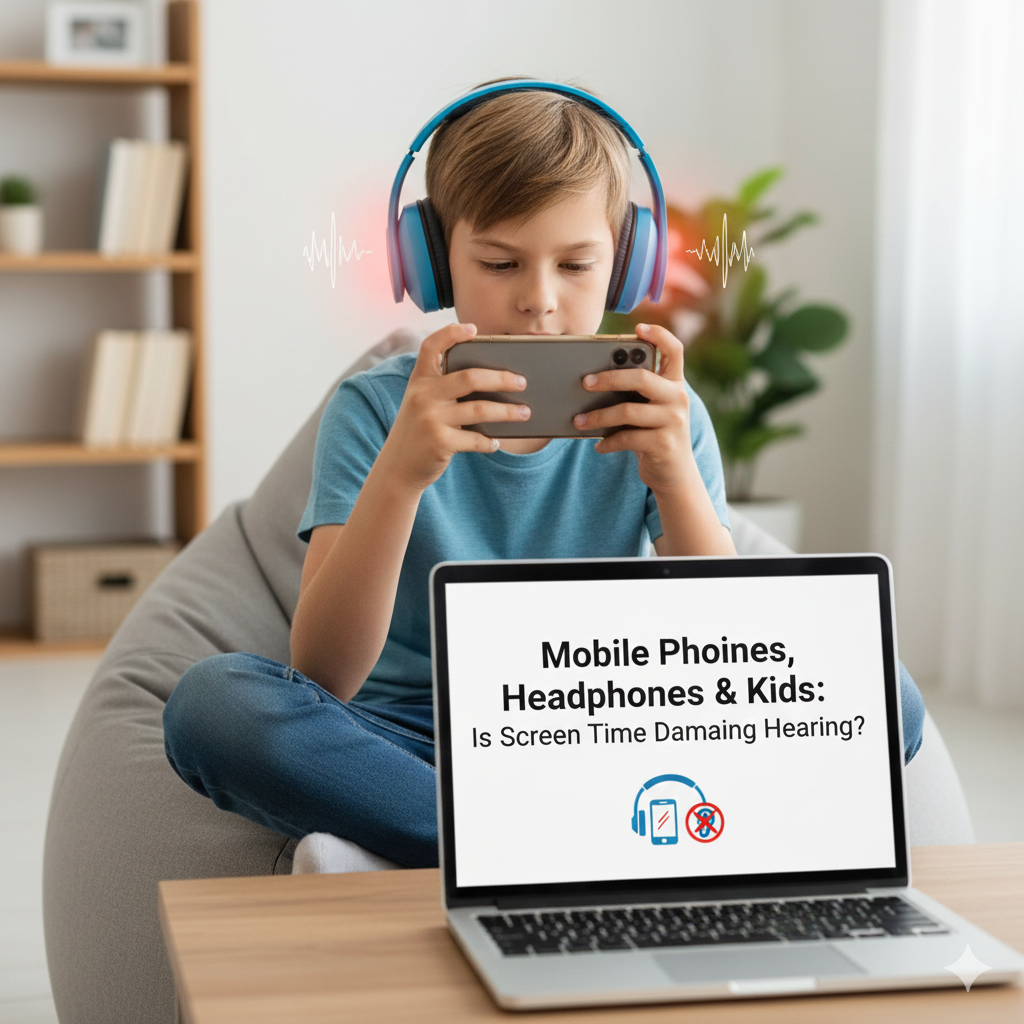
Mobile Phones, Headphones & Kids: Is Screen Time Damaging Hearing?

Children in Pakistan are using phones, tablets, and headphones more than ever. Whether it’s online classes, YouTube, or TikTok, many parents wonder:

“Could all this screen time harm my child’s hearing?”

The short answer: yes, if exposure is too loud or prolonged. In this blog, we’ll explore how screen time affects hearing, what warning signs to watch for, and practical tips to protect your child’s ears.

How Screen Time Can Affect Kids’ Hearing

Noise-Induced Hearing Loss (NIHL)

  • Listening at high volumes through headphones can damage hair cells in the inner ear.

  • Damage accumulates over time — even mild daily exposure matters.

Earphones vs Headphones

  • Earbuds sit inside the ear canal → louder and closer to eardrum → higher risk.

  • Over-ear headphones are safer if volume is controlled and breaks are taken.

Duration Matters

  • WHO recommends no more than 1 hour/day for young kids at moderate volume.

  • Continuous long sessions increase the risk of permanent hearing issues.

Signs Your Child May Be Experiencing Hearing Stress

Parents should watch for subtle signals:

  • Frequently asking “What?” or “Repeat that”

  • Turning up volume higher than normal

  • Complaining of ear ringing (tinnitus)

  • Difficulty following conversations in noisy environments

Early detection is key — a pediatric audiology check can prevent long-term damage.

How Technology and Daily Life Increase Risk in Pakistan

Common Factors

  • Loud classroom or traffic noise

  • Extended mobile/YouTube/TV use

  • Kids sharing earbuds or headphones

  • Lack of parental supervision on volume

Cultural Considerations

In many Pakistani households, children spend long hours on mobile phones or tablets, especially in cities. Awareness about safe listening habits is still low.

Practical Tips to Protect Your Child’s Hearing

Volume & Listening Habits

  • Keep devices at <60% of maximum volume

  • Encourage the 60/60 rule: 60 minutes at 60% volume

  • Use over-ear headphones instead of earbuds

Breaks and Screen-Free Time

  • Take 5–10 minute breaks every hour

  • Encourage outdoor play to reduce ear stress

Ear Health Awareness

  • Teach children not to share headphones

  • Avoid listening in noisy environments at high volume

  • Schedule regular hearing checkups, especially for heavy device users

Alternative Entertainment Ideas

If your child loves videos, try safer alternatives:

  • Audiobooks at moderate volume

  • Podcasts through safe headphones

  • Outdoor activities or sports

  • Family reading or story sessions

When to Seek Professional Help

Book an appointment with a pediatric audiologist if your child:

  • Frequently complains of ear ringing or pain

  • Shows difficulty understanding conversations

  • Turns up volume constantly

  • Has been exposed to prolonged loud noise

Early action protects hearing before permanent damage occurs.

How IHC Hearing Supports Hearing Health

At IHC Hearing, we provide:

  • Pediatric hearing assessments

  • Ear protection guidance for screen-heavy lifestyles

  • Follow-up care for children with noise-induced hearing risk

👂 Start hearing-safe habits early to protect your child’s future.

Final Thoughts

Smartphones, tablets, and headphones are now a part of life even for kids in Pakistan. But prolonged exposure at high volume can quietly damage hearing.

By teaching safe listening habits, taking breaks, and monitoring volume, parents can protect children’s ears while still enjoying technology. Early evaluation by audiologists ensures your child develops healthy hearing habits for life.