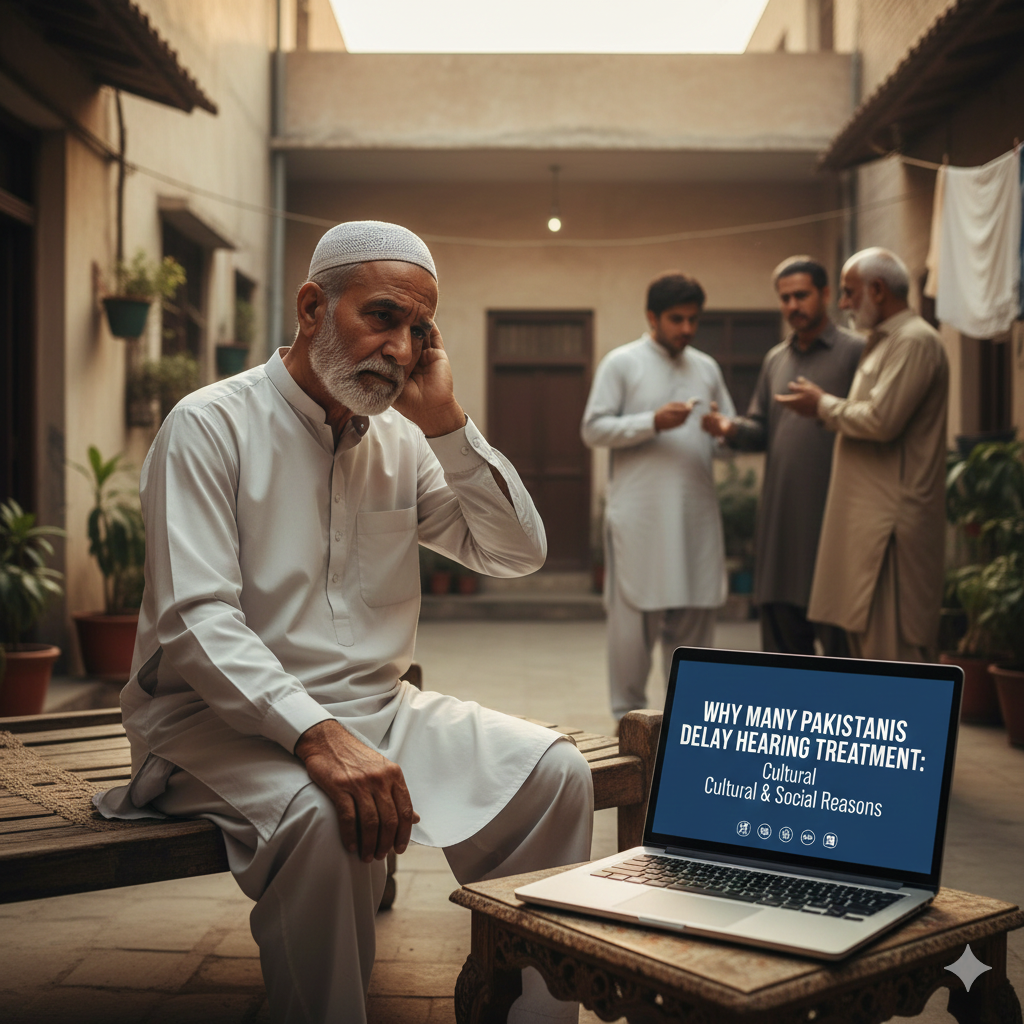
Hearing loss is often overlooked in Pakistan, despite affecting millions of people across all age groups. Many individuals do not seek treatment promptly, even when early intervention could prevent permanent damage.
Delays in hearing care are influenced by cultural, social, economic, and awareness-related factors. Understanding these reasons is key to improving access to audiology services and promoting early detection and treatment.
Cultural Beliefs and Stigmas
Misconceptions About Hearing Loss
-
Some communities consider hearing loss a normal part of aging or inevitable in childhood.
-
Myths such as “hearing aids are only for the elderly” discourage early adoption.
Social Stigma
-
Hearing loss is sometimes viewed as a disability, leading to embarrassment.
-
Children with hearing aids may face teasing in schools, causing parents to avoid treatment.
Reliance on Traditional Remedies
-
Many households try home remedies or herbal treatments before consulting an audiologist.
-
Delayed professional care can worsen the condition, making it harder to treat later.
Economic and Accessibility Barriers
Cost Concerns
-
Advanced hearing aids and cochlear implants are often expensive for middle- and lower-income families.
-
Even modest hearing treatment tests can feel financially burdensome.
Limited Access to Specialists
-
Urban centers like Islamabad, Karachi, and Lahore have qualified audiologists, but rural areas face scarcity of clinics.
-
Traveling long distances adds both cost and inconvenience.
Lack of Awareness About Hearing Health
Early Signs Often Ignored
-
Mild hearing loss is subtle and easily mistaken for inattentiveness or laziness in children.
-
Adults may ignore gradual hearing decline, assuming it is temporary.
Low Public Education
-
Hearing health is not widely discussed in schools or media campaigns in Pakistan.
-
Parents often do not know when or where to seek help.
Psychological and Social Factors
Fear and Anxiety
-
Many individuals fear diagnosis or the idea of using hearing aids.
-
This fear delays consultations until the hearing loss becomes severe.
Social Acceptance Pressure
-
Families sometimes worry about community perception and delay treatment to avoid social scrutiny.
-
This is especially true in conservative or closely-knit communities.
Consequences of Delayed Hearing Treatment
Impact on Children
-
Speech and language development may be impaired.
-
Poor academic performance and social integration challenges.
Impact on Adults
-
Reduced communication and workplace efficiency
-
Increased social isolation and mental health issues
Long-Term Risks
-
Untreated hearing loss may progress to irreversible damage, requiring more advanced interventions later.
Strategies to Overcome Delays
Awareness Campaigns
-
Schools, media, and community health programs can educate parents and adults.
-
Highlighting early detection benefits encourages timely intervention.
Financial & Accessibility Support
-
Government programs, NGOs, and audiology clinics can offer subsidized treatment and hearing aids.
-
Mobile hearing treatment clinics can serve rural populations.
Reducing Stigma
-
Normalizing hearing aid use through social campaigns and success stories
-
Encouraging inclusive school environments for children with hearing challenges
How IHC Hearing Is Addressing the Challenge
At IHC Hearing, we focus on:
-
Educating families about early warning signs of hearing loss
-
Offering affordable diagnostic and treatment options
-
Providing pediatric and adult hearing support tailored to Pakistan’s cultural context
-
Partnering with local NGOs and schools to promote awareness
Early intervention can prevent permanent damage and improve quality of life.
Final Thoughts
Delays in hearing treatment in Pakistan are not just medical but social and cultural issues. Awareness, accessibility, and support can change this reality.
By understanding the barriers whether cultural stigma, economic constraints, or lack of knowledge families can take proactive steps. Early audiology care ensures better outcomes, improved communication, and a higher quality of life for children and adults alike.