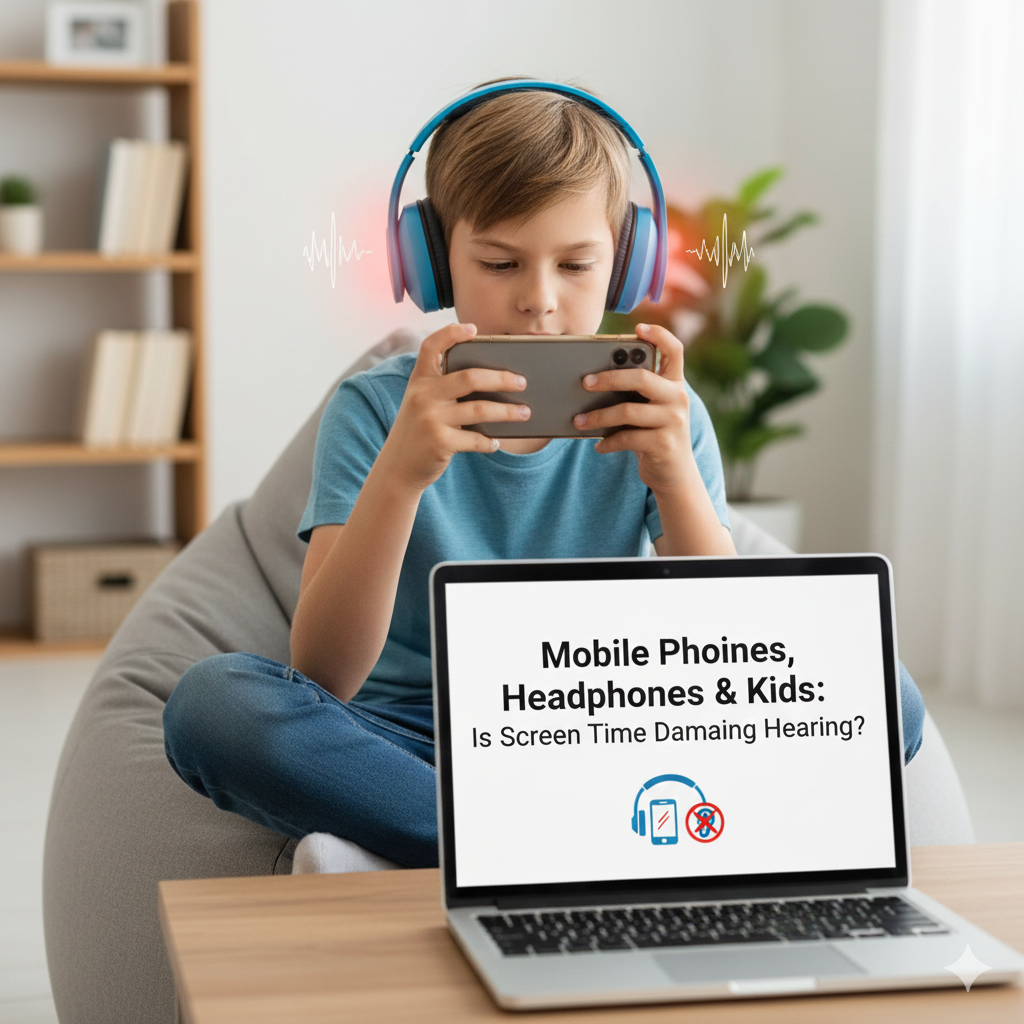
Children in Pakistan are using phones, tablets, and headphones more than ever. Whether it’s online classes, YouTube, or TikTok, many parents wonder:
“Could all this screen time harm my child’s hearing?”
The short answer: yes, if exposure is too loud or prolonged. In this blog, we’ll explore how screen time affects hearing, what warning signs to watch for, and practical tips to protect your child’s ears.
How Screen Time Can Affect Kids’ Hearing
Noise-Induced Hearing Loss (NIHL)
-
Listening at high volumes through headphones can damage hair cells in the inner ear.
-
Damage accumulates over time — even mild daily exposure matters.
Earphones vs Headphones
-
Earbuds sit inside the ear canal → louder and closer to eardrum → higher risk.
-
Over-ear headphones are safer if volume is controlled and breaks are taken.
Duration Matters
-
WHO recommends no more than 1 hour/day for young kids at moderate volume.
-
Continuous long sessions increase the risk of permanent hearing issues.
Signs Your Child May Be Experiencing Hearing Stress
Parents should watch for subtle signals:
-
Frequently asking “What?” or “Repeat that”
-
Turning up volume higher than normal
-
Complaining of ear ringing (tinnitus)
-
Difficulty following conversations in noisy environments
Early detection is key — a pediatric audiology check can prevent long-term damage.
How Technology and Daily Life Increase Risk in Pakistan
Common Factors
-
Loud classroom or traffic noise
-
Extended mobile/YouTube/TV use
-
Kids sharing earbuds or headphones
-
Lack of parental supervision on volume
Cultural Considerations
In many Pakistani households, children spend long hours on mobile phones or tablets, especially in cities. Awareness about safe listening habits is still low.
Practical Tips to Protect Your Child’s Hearing
Volume & Listening Habits
-
Keep devices at <60% of maximum volume
-
Encourage the 60/60 rule: 60 minutes at 60% volume
-
Use over-ear headphones instead of earbuds
Breaks and Screen-Free Time
-
Take 5–10 minute breaks every hour
-
Encourage outdoor play to reduce ear stress
Ear Health Awareness
-
Teach children not to share headphones
-
Avoid listening in noisy environments at high volume
-
Schedule regular hearing checkups, especially for heavy device users
Alternative Entertainment Ideas
If your child loves videos, try safer alternatives:
-
Audiobooks at moderate volume
-
Podcasts through safe headphones
-
Outdoor activities or sports
-
Family reading or story sessions
When to Seek Professional Help
Book an appointment with a pediatric audiologist if your child:
-
Frequently complains of ear ringing or pain
-
Shows difficulty understanding conversations
-
Turns up volume constantly
-
Has been exposed to prolonged loud noise
Early action protects hearing before permanent damage occurs.
How IHC Hearing Supports Hearing Health
At IHC Hearing, we provide:
-
Pediatric hearing assessments
-
Ear protection guidance for screen-heavy lifestyles
-
Follow-up care for children with noise-induced hearing risk
👂 Start hearing-safe habits early to protect your child’s future.
Final Thoughts
Smartphones, tablets, and headphones are now a part of life even for kids in Pakistan. But prolonged exposure at high volume can quietly damage hearing.
By teaching safe listening habits, taking breaks, and monitoring volume, parents can protect children’s ears while still enjoying technology. Early evaluation by audiologists ensures your child develops healthy hearing habits for life.