Choosing the right hearing aid isn’t just about technology — it’s about comfort, usability, confidence, and daily lifestyle fit. One of the most common questions people ask before buying is:
Should I choose Behind-The-Ear (BTE) or In-The-Ear (ITE) hearing aids?
This guide breaks down BTE vs ITE hearing aids in simple, real-world terms so you can make a confident decision.
What Are Behind-The-Ear and In-The-Ear Hearing Aids?
Behind-The-Ear (BTE) Hearing Aids Explained
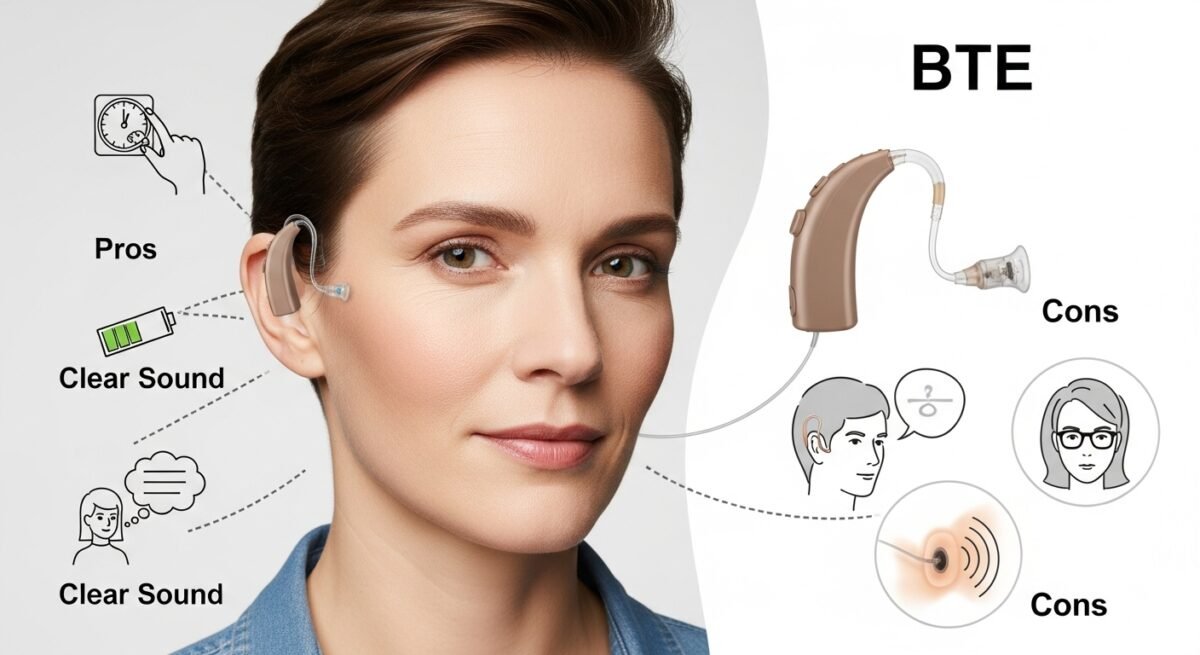
Behind-The-Ear hearing aids sit behind the ear and deliver sound through a tube or wire connected to an ear mold or dome.
Key features:
- Suitable for mild to profound hearing loss
- Larger size allows advanced technology
- Easier handling and maintenance
Explore professional BTE options:
In-The-Ear (ITE) Hearing Aids Explained
In-The-Ear hearing aids fit partially or fully inside the ear canal and are custom-molded.
Key features:
- Compact and discreet
- Ideal for mild to moderate hearing loss
- Designed for cosmetic comfort
Learn about custom hearing solutions:
Quick Comparison – BTE vs ITE Hearing Aids
Featured Snippet Summary:
- BTE hearing aids offer better power, durability, and connectivity
- ITE hearing aids provide discreet appearance and natural placement
- The best choice depends on hearing loss severity, lifestyle, and comfort
Pros and Cons of Behind-The-Ear Hearing Aids
Advantages of BTE Hearing Aids
1. Powerful Sound Performance
BTE hearing aids are ideal for moderate to severe hearing loss due to larger amplifiers.
According to the National Institute on Deafness and Other Communication Disorders (NIDCD), BTE devices provide broader amplification ranges.
2. Advanced Connectivity & Features
Most modern BTE hearing aids support:
- Bluetooth streaming
- Rechargeable batteries
- App-based control
3. Easy Handling & Maintenance
Larger size means:
- Easier insertion
- Simpler cleaning
- Better durability
Disadvantages of BTE Hearing Aids
1. Visibility
BTE hearing aids are more noticeable, though modern designs are increasingly discreet.
2. Wind Noise (Minor Issue)
Can occur outdoors but is usually managed by digital noise reduction.
Pros and Cons of In-The-Ear Hearing Aids
Advantages of ITE Hearing Aids
1. Discreet & Cosmetic Appeal
ITE hearing aids are less visible and preferred by users concerned about appearance.
2. Natural Sound Localization
Being closer to the eardrum improves sound direction awareness.
According to Hearing Health Foundation, placement inside the ear enhances spatial hearing.
3. Convenience for Glasses Wearers
No device sits behind the ear, making ITE models comfortable for people wearing glasses.
Disadvantages of ITE Hearing Aids
1. Limited Power
ITE hearing aids may not suit severe hearing loss.
2. Smaller Batteries
Shorter battery life compared to BTE devices.
Comfort & Daily Wear Comparison
Comfort Over Long Hours
- BTE: Lightweight but noticeable behind the ear
- ITE: More “invisible” but sensitive to ear canal shape
Comfort varies person to person — professional fitting matters most.
Schedule a hearing test
Lifestyle-Based Recommendations
Choose BTE Hearing Aids If You
- Have moderate to severe hearing loss
- Want Bluetooth streaming and rechargeability
- Prefer easy maintenance
Choose ITE Hearing Aids If You
- Have mild to moderate hearing loss
- Want discreet appearance
- Prefer minimal external hardware
Role of Hearing Tests & Professional Guidance
The World Health Organization (WHO) emphasizes that proper hearing aid selection depends on accurate diagnostic testing.
Learn about professional hearing services
Frequently Asked Questions (FAQ)
Are BTE hearing aids better than ITE?
No each serves different needs and preferences.
Which hearing aid is best for first-time users?
Beginner-Friendly Choice
BTE hearing aids are often easier to adapt to.
Professional Fitting Matters
Adjustment by an audiologist improves results.
Key Takeaway
Comfort and sound tuning matter more than size.
Can I switch from ITE to BTE later?
Yes, with updated hearing evaluation and fitting.
Final Verdict – Which Hearing Aid Is Right for You?
There is no one-size-fits-all answer in the Behind-The-Ear vs In-The-Ear hearing aids debate.
The best choice depends on:
- Your hearing loss level
- Lifestyle needs
- Comfort and confidence
Speak with hearing care experts: